History
Hammersmith United Charities supports people in Hammersmith.
The Charity was set up in 1618 after chancellor to the Bishop of London, Dr Thomas Edwards, donated £100 (about £10,000 in today’s money) to the poor of Fulham to buy them lands. Two years later, Bishop John King, Bishop of London (after whom the main street in Hammersmith is named), donated £20 for a similar purpose. These two sums were added together and Dr Edwards and Bishop King’s Fulham Charity was established.
Much later, in 1834, the hamlet of Hammersmith became a separate parish to Fulham. The Charity Commissioners ordered that the income and assets from the combined charities of Dr Edwards and Bishop King should be divided equally between a Fulham and Hammersmith branch. The Hammersmith branch formed the ‘root’ of Hammersmith United Charities.
Other benefactors in the 17th century established charities which had a common goal: the relief of poverty or the care and wellbeing of the elderly poor of Hammersmith. These benefactors included Edward Latymer (1624), William Payne (1626), Thomas Iles (1635), Thomas Collop (1645), Nathaniel Dauncer (1656) and Sir Nicholas Crispe (1665). In the 1700s, charities were established by Sarah Goudge (1759), John Powell (1773) and Henry Webb (1793) and, in the 1800s, by the Waste Land Almshouses (1810), John Brown (1822), Peter Brown (1833), Mrs Harriet Clancy (1844), Dr John Betts (1859) and William Smith (1865). In the early 1900s, bequests were made by Ellen Graves (1932) and Maria Eliza Morris (1948).
In June 1923, the Charity Commissioners decreed that all these charities should come together under the name of Hammersmith United Charities.
Our connection with many of our benefactors remains today. Latymer Upper School and the Bishop of Kensington both nominate a Trustee for the Board and one of our almshouses is named after John Betts.
We continue to work closely with our sister charity, Dr Edwards and Bishop King’s Fulham Charity, to support people across the London Borough of Hammersmith and Fulham.
Find out more
- Learn more about us and what we do
- Meet our team, trustees and partners
- Support us
- Contact us


 Christmas is considered a time of togetherness, where we join friends and family to eat mince pies, play games, pull a cracker and celebrate. However,
 The Tree of Life project is building on an existing W12Together service – its annual Christmas dinner for care leavers. Jenny shares, “The White City dinner launched two years ago through Gold from the Stone – a charity set up by the poet Lemn Sissay to make sure that care leavers have a space to go on Christmas Day, where they can have dinner and feel part of the community. If you live in W12 and you are a care-experienced young person, there will always be a place at our table.”
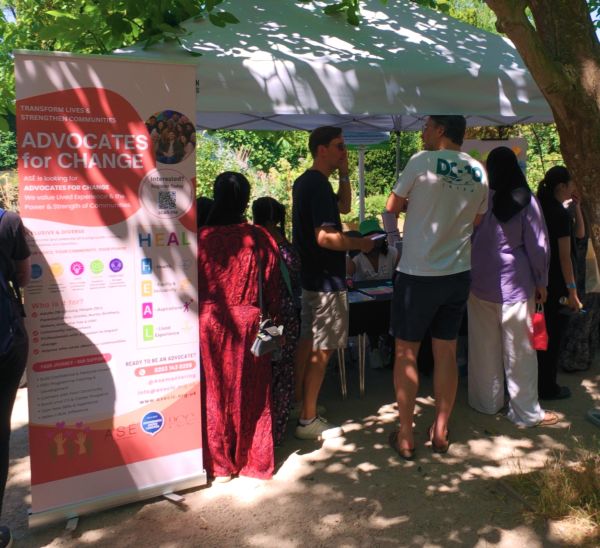 i-MATTER: Health & Wellbeing & Tackling Inequalities
