Facebook Twitter Instagram

The Violence Intervention Project

“The way they want to be seen is driven by the need to protect themselves, to keep themselves safe.”

The Violence Intervention Project (the V.I.P) works with children and young people, aged 12 to 26, who have entered the youth criminal justice system because of their violent behaviour.

Most of the charity’s clients are boys and young men who have experienced adverse childhood experiences. Head of Therapeutic Operations, Ashley McMahon, shares, “These are vulnerable young people, but no one thinks they’re vulnerable; most people think they’re monsters. No one thinks about the abuse, the trauma, the vulnerability.

“These young people have usually experienced violence within the home setting, generally perpetrated against their mothers and themselves by males. There’s a prevalence of mental health issues within the families and often undiagnosed neurodevelopmental issues. There’s also poverty; one boy we saw recently hadn’t eaten for three days.

“They’re stepping out with all these vulnerabilities, and no idea of what safety looks like. When your home environment is really unsafe, violence becomes normalised and everybody is a threat. If you don’t believe that someone will come and help you in a dangerous situation, then picking up a knife or a gun to keep yourself safe seems a logical response. One boy told me that the reason he’s so violent is because he wants to protect his friends the way he wishes he’d been protected. Some of the men he’s attacked are three times his size.”
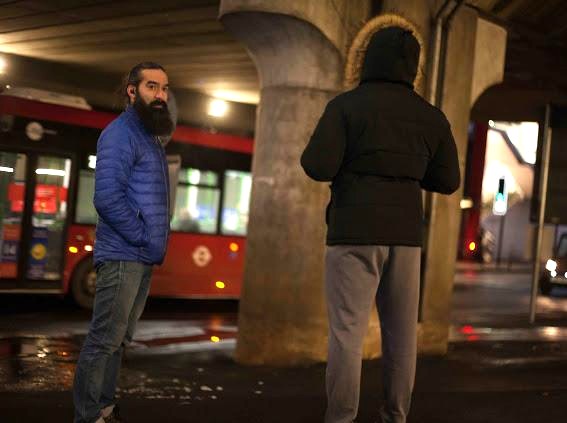
A man and teenage boy talking in the street. The boy has his hood us and back to the camera. “The relationship is the intervention.”

As Ashley says, “How do you become a man when the only men in your life have been monstrous and dangerous?

“Our intervention, which we call urban therapy, is around therapeutically trained practitioners building relationships with young people, to offer them a relational experience of somebody who is attentive, predictable, consistent and caring. The relationship is the intervention.

“We meet the young people out in the community, in spaces where they feel comfortable, rather than expecting them to come to a traditional clinic setting. The aim is to build long-term relationships so that we can support these vulnerable adolescents through the process of growth and development into adulthood. It’s a privilege to be invited into their lives, because they do everything they can to keep people away.”

The V.I.P also works with the people who have a direct impact on these young people’s lives, such as teachers and families. Supporting mothers is often a crucial part of the process, as they’ve often experienced domestic abuse and may be struggling with substance abuse, all of which has become normalised for the young person. By helping to change the eco-system that surrounds the young person, the charity can make a greater impact on their life.
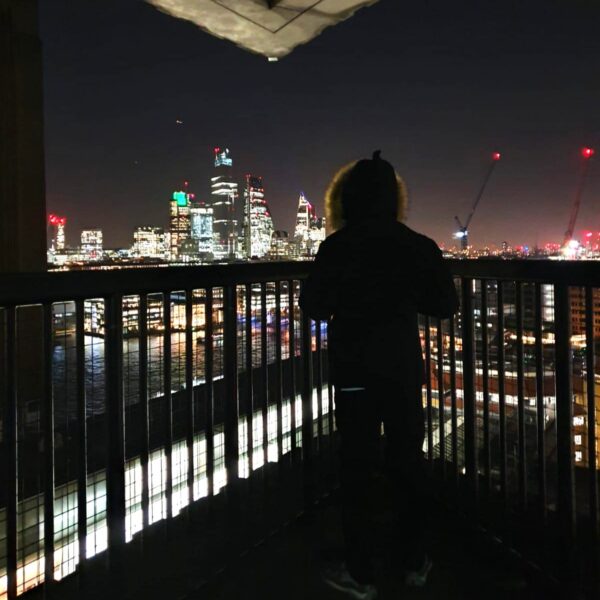
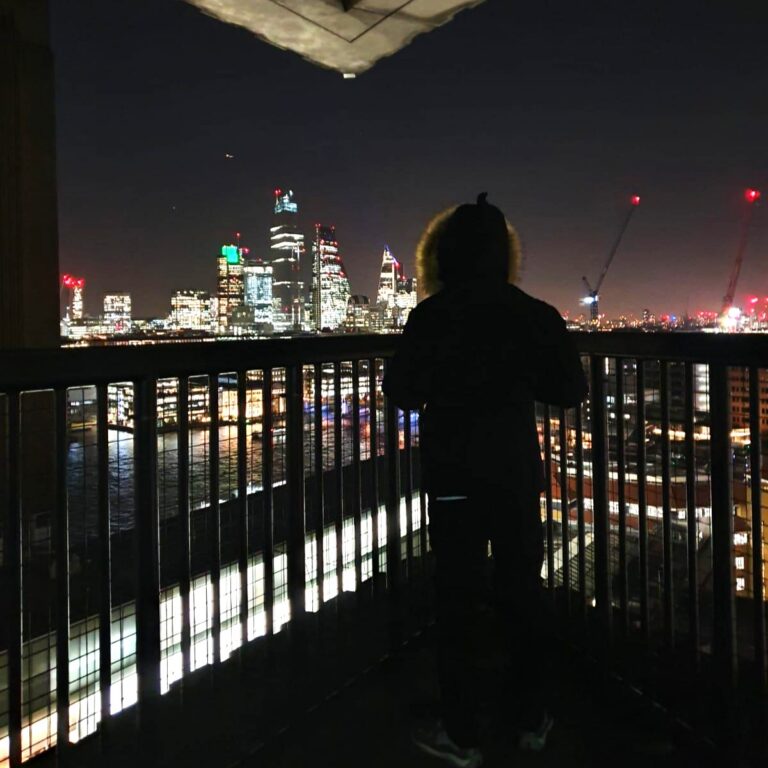
A teenager with his back to the camera, looking out over the Thames at the city lights

The way they want to be seen is driven by the need to protect themselves.”

The V.I.P recognises that the violence shown by young people is usually related to a sense of shame. The abuse and trauma they’ve experienced has resulted in severely low self-esteem. If the people who were supposed to care for and protect them didn’t, what does that say about them?

Ashley explains, “Shame is a massive part of what drives our young people’s behaviour – this idea of feeling exposed and doing everything they can to prevent people from seeing their vulnerability. They want to be seen as powerful and in control – somebody that you wouldn’t want to cross.

We help them to recognise that the way they want to be seen is driven by the need to protect themselves, to keep themselves safe, to feel in control and to feel that they have agency in the world.

“As human beings, we’re so dependent on relationships in order to function and to thrive. This ‘protective armour’ that our young people wear stops them from connecting to others. We help them to put down that armour.”

“A lot of these young people can’t imagine a future.”

Ashley shares, “What trauma does to the human brain and the nervous system, is it prevents you from moving forward. A lot of these young people can’t imagine a future because they don’t feel safe enough and don’t believe that they have control over their lives.”

The V.I.P aims to give young people a purpose and show them that a better future is possible. In many cases, this means helping them to get back into school or on a training course and arranging work experience.

Most of the charity’s clients are living in poverty, so enabling them to make money, legally, is crucial. Another key benefit of education and employment is that the young people’s social networks are extended, helping to reduce their isolation and their reliance on gangs.

V.I.P Voice

The V.I.P is one of our Flexible 3 Year Grant holders, receiving £45,000, split over three years. The charity has used some of the money to set up V.I.P Voice – a small committee of former service users. Ashley explains, “These are people in their 20s who have been on a journey with us for several years. They’ve been able to work through their traumas, work through their shame, build positive relationships and secure employment and training. They’re now supporting us by informing what our intervention should look like.”

Ashley found it particularly helpful to have the funding agreed upfront for three years: “Small-to-medium-sized charities are walking a tightrope every year. We’re living in such a financially precarious environment; there have been some real nail-biting moments. Having a grant funder that’s committed to three years is game changing. It offers us structure and stability, which enables us to offer this to our beneficiaries.”

Impact

The V.I.P has worked with more than 200 young people to date, most of whom have seen tangible benefits over the years, such as improved mental health, increased engagement in education and training, and reduced violence. The biggest impact is often around trust and a feeling of safety, both of which are very difficult to quantify. As Ashley says, “How do you measure the impact of a young person feeling safe enough to be able to talk about the most horrifying thing that’s ever happened to them? What does it mean to a young person to be believed?”

“My colleague sent me a text message the other day from a young person saying, ‘I love you.’ This is a boy who’s experienced so much violence, who’s been physically abused by his father, witnessed his mum being torn to pieces and learnt that men are violent and threatening.

“Through three and a half years of consistent work, they’ve built enough safety in their relationship that this young lad now understands, not just that other people can be safe and kind, but that he can be safe and kind too.”


Support the V.I.P

You can donate to support vulnerable young people here.

The charity also offers training in shame-informed practice for organisations that work with young people. The Shame Initiative includes:

  • Training for frontline professionals and organisations
  • Tools to embed shame-informed principles in everyday practice
  • Consultancy with leaders and systems
  • Collaboration with academics, funders and policymakers

Email contact@vip.org.uk to find out more or download the brochure here.

Facebook Twitter Instagram

Flats are now available in our almshouses

If you think you might be eligible, we'd be happy to give you a tour of our almshouses and share what it's like to live here.

Read More ...
A teenager with his back to the camera, looking out over the Thames at the city lights

The Violence Intervention Project

“The way they want to be seen is driven by the need to protect themselves, to keep themselves safe.”

The Violence Intervention Project (the V.I.P) works with children and young people, aged 12 to 26, who have entered the youth criminal justice system because of their violent behaviour.

Most of the charity’s clients are boys and young men who have experienced adverse childhood experiences. Head of Therapeutic Operations, Ashley McMahon, shares, “These are vulnerable young people, but no one thinks they’re vulnerable; most people think they’re monsters. No one thinks about the abuse, the trauma, the vulnerability.

“These young people have usually experienced violence within the home setting, generally perpetrated against their mothers and themselves by males. There’s a prevalence of mental health issues within the families and often undiagnosed neurodevelopmental issues. There’s also poverty; one boy we saw recently hadn’t eaten for three days.

“They’re stepping out with all these vulnerabilities, and no idea of what safety looks like. When your home environment is really unsafe, violence becomes normalised and everybody is a threat. If you don’t believe that someone will come and help you in a dangerous situation, then picking up a knife or a gun to keep yourself safe seems a logical response. One boy told me that the reason he’s so violent is because he wants to protect his friends the way he wishes he’d been protected. Some of the men he’s attacked are three times his size.”

A man and teenage boy talking in the street. The boy has his hood us and back to the camera. “The relationship is the intervention.”

As Ashley says, “How do you become a man when the only men in your life have been monstrous and dangerous?

“Our intervention, which we call urban therapy, is around therapeutically trained practitioners building relationships with young people, to offer them a relational experience of somebody who is attentive, predictable, consistent and caring. The relationship is the intervention.

“We meet the young people out in the community, in spaces where they feel comfortable, rather than expecting them to come to a traditional clinic setting. The aim is to build long-term relationships so that we can support these vulnerable adolescents through the process of growth and development into adulthood. It’s a privilege to be invited into their lives, because they do everything they can to keep people away.”

The V.I.P also works with the people who have a direct impact on these young people’s lives, such as teachers and families. Supporting mothers is often a crucial part of the process, as they’ve often experienced domestic abuse and may be struggling with substance abuse, all of which has become normalised for the young person. By helping to change the eco-system that surrounds the young person, the charity can make a greater impact on their life.

A teenager with his back to the camera, looking out over the Thames at the city lights

The way they want to be seen is driven by the need to protect themselves.”

The V.I.P recognises that the violence shown by young people is usually related to a sense of shame. The abuse and trauma they’ve experienced has resulted in severely low self-esteem. If the people who were supposed to care for and protect them didn’t, what does that say about them?

Ashley explains, “Shame is a massive part of what drives our young people’s behaviour – this idea of feeling exposed and doing everything they can to prevent people from seeing their vulnerability. They want to be seen as powerful and in control – somebody that you wouldn’t want to cross.

We help them to recognise that the way they want to be seen is driven by the need to protect themselves, to keep themselves safe, to feel in control and to feel that they have agency in the world.

“As human beings, we’re so dependent on relationships in order to function and to thrive. This ‘protective armour’ that our young people wear stops them from connecting to others. We help them to put down that armour.”

“A lot of these young people can’t imagine a future.”

Ashley shares, “What trauma does to the human brain and the nervous system, is it prevents you from moving forward. A lot of these young people can’t imagine a future because they don’t feel safe enough and don’t believe that they have control over their lives.”

The V.I.P aims to give young people a purpose and show them that a better future is possible. In many cases, this means helping them to get back into school or on a training course and arranging work experience.

Most of the charity’s clients are living in poverty, so enabling them to make money, legally, is crucial. Another key benefit of education and employment is that the young people’s social networks are extended, helping to reduce their isolation and their reliance on gangs.

V.I.P Voice

The V.I.P is one of our Flexible 3 Year Grant holders, receiving £45,000, split over three years. The charity has used some of the money to set up V.I.P Voice – a small committee of former service users. Ashley explains, “These are people in their 20s who have been on a journey with us for several years. They’ve been able to work through their traumas, work through their shame, build positive relationships and secure employment and training. They’re now supporting us by informing what our intervention should look like.”

Ashley found it particularly helpful to have the funding agreed upfront for three years: “Small-to-medium-sized charities are walking a tightrope every year. We’re living in such a financially precarious environment; there have been some real nail-biting moments. Having a grant funder that’s committed to three years is game changing. It offers us structure and stability, which enables us to offer this to our beneficiaries.”

Impact

The V.I.P has worked with more than 200 young people to date, most of whom have seen tangible benefits over the years, such as improved mental health, increased engagement in education and training, and reduced violence. The biggest impact is often around trust and a feeling of safety, both of which are very difficult to quantify. As Ashley says, “How do you measure the impact of a young person feeling safe enough to be able to talk about the most horrifying thing that’s ever happened to them? What does it mean to a young person to be believed?”

“My colleague sent me a text message the other day from a young person saying, ‘I love you.’ This is a boy who’s experienced so much violence, who’s been physically abused by his father, witnessed his mum being torn to pieces and learnt that men are violent and threatening.

“Through three and a half years of consistent work, they’ve built enough safety in their relationship that this young lad now understands, not just that other people can be safe and kind, but that he can be safe and kind too.”


Support the V.I.P

You can donate to support vulnerable young people here.

The charity also offers training in shame-informed practice for organisations that work with young people. The Shame Initiative includes:

  • Training for frontline professionals and organisations
  • Tools to embed shame-informed principles in everyday practice
  • Consultancy with leaders and systems
  • Collaboration with academics, funders and policymakers

Email contact@vip.org.uk to find out more or download the brochure here.

Read More ...
Charity has always been important to me

Introducing our newest member of staff

Administration assistant Natasha shares why she loves Hammersmith but remains a northerner at heart.

What were you doing before you started working here?

I was self-employed for a long time as a personal concierge. I had three or more clients on my books at any one time and was managing homes and staff, here and abroad. Work was quite sporadic though.

I have five children and needed flexibility when they were younger; it was great having school holidays off. Now my youngest is nine, I don’t really need to be as flexible with my time. I wanted more stability and to get back into an office environment.

How are you settling in?

I know everyone probably says this, but the team here really are amazing. Coming back into an office environment was a bit daunting, but they’ve been so supportive. I like being part of a team again.

Are you enjoying working for a charity?

Charity has always been an important part of my life. For more than 20 years, I have worked alongside and volunteered with many charities and community groups in and around Hammersmith and Fulham. My work has included community events, social prescribing, food banks, day trips, Christmas celebrations, and wider local support projects.

Charity, empathy and giving were instilled in me by my parents, and I’ve passed those values on to my own children. I truly believe that, when given the opportunity, most people will strive to do better.

Through my work at places like the White City Community Centre and my involvement with the Health Inequality Steering Group at Sobus, I’ve seen how powerful community support can be. Hammersmith United Charities contributed to several of the projects I was part of, so I know first-hand the difference this organisation makes.

Coming to work for this charity feels like a perfect fit – it brings together my experience, my values and my long-standing commitment to serving local people.

Have you always lived in Hammersmith?

No, I’m a northerner. I came to London when I was a bright and breezy 17-year-old, branching out and taking on the world! I’m still a northern lass at heart though, even though my kids point out that I’ve lived here longer than I lived up there.

Hammersmith still has the sense of community that I had as a child, and I feel quite at home here. The difference between the boroughs in London is very apparent; Hammersmith seems to be one of the best when it comes to pulling together as a community and looking after each other. Particularly where I live, there’s a real sense of belonging, almost like we’re all on the battlefield of life together and no one gets left behind.

What do you enjoy doing outside of work?

I love fashion and textiles. I will randomly get the scissors out at home and start cutting and sewing. Vivienne Westwood is one of my inspirations. My oldest child is 26 this year, and my youngest is going to be 10, and I’ve got them all the ages in between, so I haven’t really had time to do much else. Now that I don’t always have a child in tow, I’ve got a new lease of life. I’m starting to make a bucket list – learn to play golf, go on holiday by myself and sleep in!

I’m at the beginning of a new journey, a new chapter of my life. It’s scary but exciting.

Read More ...
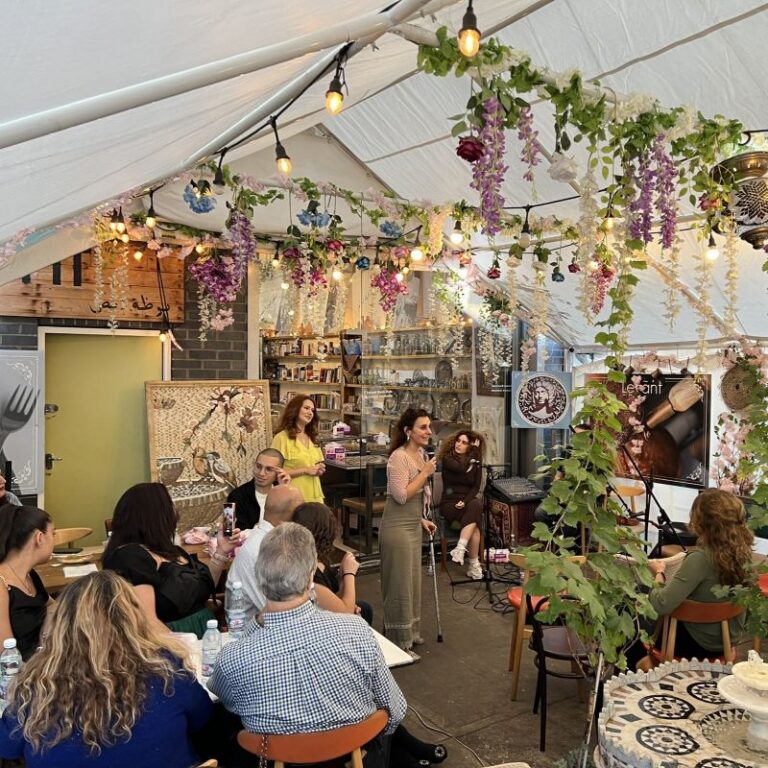
A woman is giving a talk to an audience. They are in a marquee.

Hikayetna

Making it easier for Arabic-speaking people to access mental health support.

The benefits of open conversations around mental health are now widely understood, but language and cultural barriers can make it more difficult for some people to talk about their feelings and to seek help when they need it.

According to the Mental Health Foundation, “Asylum seekers and refugees are more likely to experience poor mental health than the local population, including higher rates of depression, PTSD and other anxiety disorders.” However, people newly arrived in the UK, who may not be fluent in English, often don’t know what mental health support is available or how to access it.

Bringing people together through storytelling

Hikayetna is a not-for-profit organisation that brings people together through storytelling and creativity. As Project Manager Sulaiman Othman shares, “Our main purpose is to bring the community together. We’re open to everyone – migrants and the local community. Our activities are around storytelling – how to tell your story through music, photos, film, poetry or writing.”

Projects include a print newspaper, Grapho, which, as Sulaiman explains, “gives refugee and migrant young people a voice and the encouragement to write. It gives them skills and a sense that they’re part of the community, a part of society.”

Sulaiman recognised that many of the people Hikayetna works with find it difficult to talk or write about mental health. He shares, “There’s a need to reduce the stigma around mental health, particularly within the Arabic-speaking community, because we don’t usually talk about these issues. We keep our feelings, our problems inside.”

He approached Hammersmith United Charities about a grant to help raise awareness of mental health support amongst West London’s Arabic community. Hikayetna used the funding to create three short videos and a leaflet. The videos are in Arabic, with English subtitles, and aim to bridge cultural and linguistic barriers. They cover what mental health challenges can look like, why it’s important to get support and how to access that support. Two feature Arabic-speaking mental health specialists working in the NHS. The third is an animation based on one refugee’s experiences of mental ill health.

Please feel free to share the films with anyone you feel may benefit.

[Content warning: The following video follows the journey of someone who considered ending their life.]

The videos will be screened at a Hammersmith United Charities event later this month, alongside other films showcasing the work of our grant holders.

Support Hikayetna

Hikayetna is always keen to hear from people who want to volunteer to help with workshops, outreach events and other activities. It’s also seeking additional funding to run more storytelling projects for the West London community.

Read More ...
Graphic saying Supporting International Women's Day

International Women’s Day

While there is still much work to do, there is also much to celebrate.

March 8th marks the 115th anniversary of International Women’s Day. In many countries across the globe, from Afghanistan to the US, women’s rights are under attack. Even here in the UK, women remain at a significant disadvantage compared to their male peers. While the gender pay gap is narrowing, it is far from closed; London has the second largest pay gap in the country, 10.7%, considerably worse than the UK average of 6.9%.

Gender-based violence also continues to affect millions of women and girls across the UK. One in four women will experience domestic abuse in their lifetime; women are twice as likely to be harassed than men, and a woman is killed by an abusive partner or ex every five days in England and Wales. 907 sexual offences were reported across Transport for London (TfL) services between January and June 2025 alone.

Organisations supporting women in Hammersmith

Although the fight for gender equity is far from over, there is still much to celebrate on International Women’s Day, including the charities, CICs and community groups who make a considerable difference to the lives of women and girls across Hammersmith. Many of these organisations are current or previous Hammersmith United Charities grant holders.

This year’s theme for International Women’s Day is Give to Gain. The global movement is encouraging people to donate to a women-focused charity, such as those listed below, as a way of taking action on women’s rights.


FORWARD

Image shows a placard with a graphic of a hand. The hand is made up of words, including 'stop'.


FORWARD is a London-based charity working to tackle multiple forms of violence directed against women and girls in Africa and the UK. Its focus is on faith-based and ritual abuse. The Executive Director of FORWARD, Naana Otoo-Oyortey MBE, explains, “We’re looking at women who are affected by female genital mutilation, by child marriage and by domestic abuse. Some of the women have been trafficked; some are refugees or asylum seekers.”

As well as supporting survivors, FORWARD is helping women to break the cycle of faith-based abuse.

Read our case study on FORWARD.

Woman’s Trust

Woman’s Trust provides free mental health care to women who have experienced domestic abuse. One of the charity’s clients wrote, “My experience getting help and support from Woman’s Trust was invaluable. I was not in a good place and didn’t know that I was in an abusive relationship for all those years and what was abusive about it. When it’s psychological abuse, it’s very difficult to decipher. WT helped me to see things and to understand what was happening to me, which made me understand why I have been feeling so depressed for so many years.”

Read our case study on Woman’s Trust

The RENA Initiative

Image shows 20 colourful painted self-portraits

The RENA Initiative brings women together to enjoy creative activities, make friends, experience new activities and reduce stress and isolation. Attendees are mainly older women from marginalised communities. As one participant shares, “The project has done excellent work to educate me, improve my self-esteem, expose my hidden talent, keep me in touch with the community, gain new friendships and have a better quality of life.”

Read our case study on The RENA Initiative

Women Aid and Empowerment

Women Aid and Empowerment offers free Zumba, chair-based yoga and chair-based exercise classes in Hammersmith. Co-founder Hanna Teffera shares, “I have a lot of retired and widowed people attending. Many used to be active but had become ill or disabled. Some had become isolated in their home. Since coming to the class, their health has improved and so has their loneliness, as they feel that they have somewhere to go. They talk after class, meet up with each other and feel more connected with their community.”

Read our case study on Women Aid and Empowerment

The WILDE Foundation

The WILDE Foundation empowers women to write about traumatic experiences such as abuse, and to share their stories in a safe, supportive environment. By doing so, the women can be helped to process and heal from their trauma, improve their mental health and regain a sense of control over their lives.

Read our case study on The WILDE Foundation


Find out more

Learn about the history behind International Women’s Day and this year’s Give to Gain theme at www.internationalwomensday.com

Read More ...
View More