Petit Miracles
“Every single beneficiary is essential to our business.”
 The job market is extremely challenging at the moment. For people with a disability, it can feel almost impossible to find work. Only 6% of people with a learning disability are in paid employment. As Elisicia Moore, founder of Petit Miracles, shares, “Young people with disabilities continue to face disproportionately high levels of isolation, unemployment and learning opportunities. Through regular conversations with referring organisations and young people, we know that motivation is not the barrier – opportunity is.”
Petit Miracles offers that opportunity. The social enterprise trains disadvantaged people, many of whom have a disability or are homeless, how to restore and upcycle furniture that may otherwise go to landfill. Items are then sold in Petit Miracles’ shop at West12 Shopping Centre.
Petit Miracles also offers work experience opportunities, where people can gain experience in different areas of the charity. As Elisicia says, “The people who come through our work experience programmes help to manufacture the furniture, so every single beneficiary is essential to our business.”
Most of Petit Miracles’ staff members have been through the work experience programme themselves and four of the seven employees have a disability or are neurodivergent.
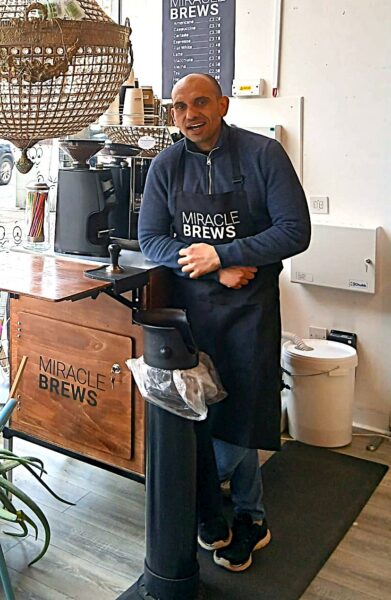
Kabir, for instance, started on the training programme and is now a member of the workshop team. Programme Director Kate Moore says, “After volunteering with us for nearly a year, we were thrilled to offer Kabir a staff role. Now, he’s a key part of our workshop team – always friendly, always positive, and always ready to lend a hand or a listening ear.”
Kabir was drawn to the work because of his interest in sustainability, and he encourages anyone looking for a rewarding career to consider signing up, “Listen lads, don’t stay home! Come and do some work with us! Come and socialise, work as a team! Teamwork makes the dream work.”
The idea for Petit Miracles came to Elisicia almost 20 years ago. She says, “I was working in a homeless organisation, and saw that women weren’t engaging with services as much as men. My background was interior design, so I offered to run some interior design taster days. Women showed up in their droves!”
Today, the furniture restoration programme isn’t Petit Miracles’ only initiative. It also offers a business-incubation project for disadvantaged local people who want to make and sell products. The charity teaches people vital business skills, offers them one-to-one coaching, and gives them free space in the shop to promote and sell their creations.
As one of the project’s graduates, Saba, shares, “When I started my jewellery business, PM provided me a platform to showcase my products … and allowed me to learn and hone my retail skills. They provided me the right tools and skills to move forward. The charity’s ethos and the staff’s passion set them apart. So much so, I became a trustee.”
 Miracle Brews
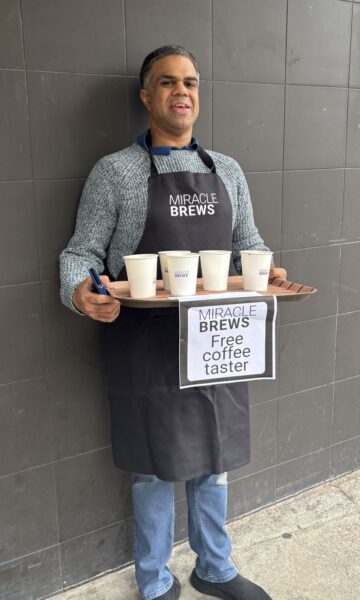
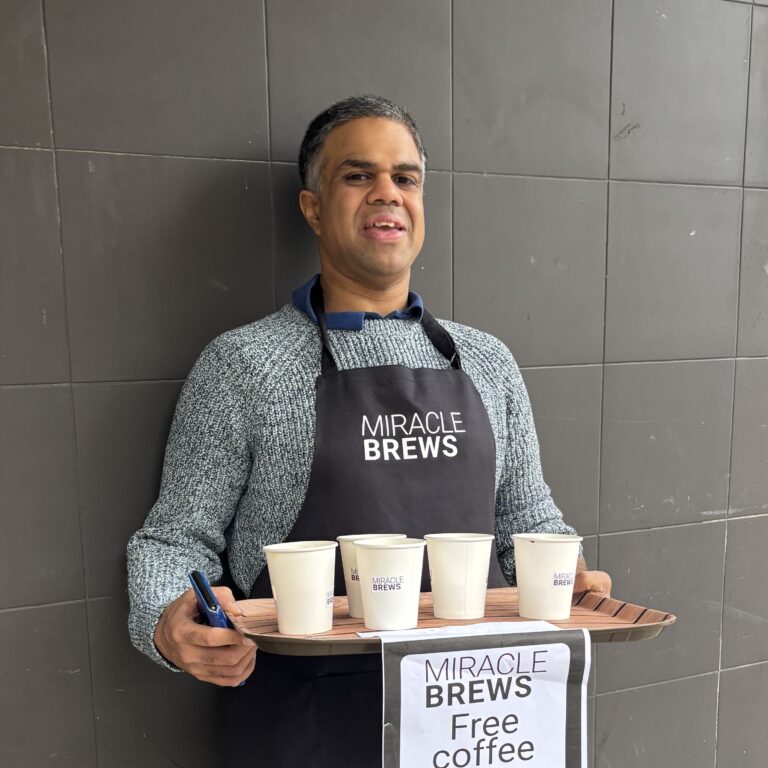
The charity’s newest initiative is Miracle Brews, a mobile cart where people can buy coffee (which is roasted in Shepherd’s Bush), tea, hot chocolate and pastries. As well as generating income to help meet rising costs, Miracle Brews will provide work experience and employment opportunities for people who have a disability. Kate explains, “We’ve got a connection with Fair Shot Café, who train young people with disabilities to become baristas. Our long-term plan is to hire two people who have graduated from the programme so that they can continue their career with us.”
Elisicia adds, “Beyond jobs, it will normalise disability in the workplace.”
At present, the coffee cart is kept inside the shop, but the charity is planning to move it to Shepherd’s Bush Green. However, it’s attached to a bike, so once council approvals are in place, Miracle Brews will be able to serve people across Shepherd’s Bush.
Hammersmith United Charities’ grant
Hammersmith United Charities gave Petit Miracles its first ever grant. That was over 10 years ago, and as Elisicia says, “At the time, we didn’t have any paid staff and our turnover was less than £1,000 a month. The grant was £3,000, which felt like a huge amount of money.
“Since then, HUC have funded us a number of times and we’ve worked together in multiple ways. They’ve been stalwart in their support.”
We recently agreed to grant Petit Miracles £45,000, split over three years, through our Flexible 3 Year Grant scheme. The money is helping to fund Miracle Brews.
Elisicia says, “Knowing that we have funding for a certain amount of time enables us to make solid plans and live up to our full potential. We always punch above our weight, and this funding helps us do that.”
Support Petit Miracles
As well as offering fully funded training for people who have a disability or who are otherwise disadvantaged, Petit Miracles runs furniture restoration workshops for other members of the public. You could learn how to upholster a chair, upcycle a side table, or restore your own furniture. The fee you pay will help to support Petit Miracles’ charitable programmes.
There are also many other ways you can support the social enterprise, including hiring the coffee cart for events.
Elisicia shares, “We’re always looking for reliable volunteers – people who want to give back to the community, learn something new, and open up their horizons. You can also just pop into the shop; you might not need a dining table at this moment, but you can still support the charity in other ways, and now you can have delicious coffee while you’re doing it!”


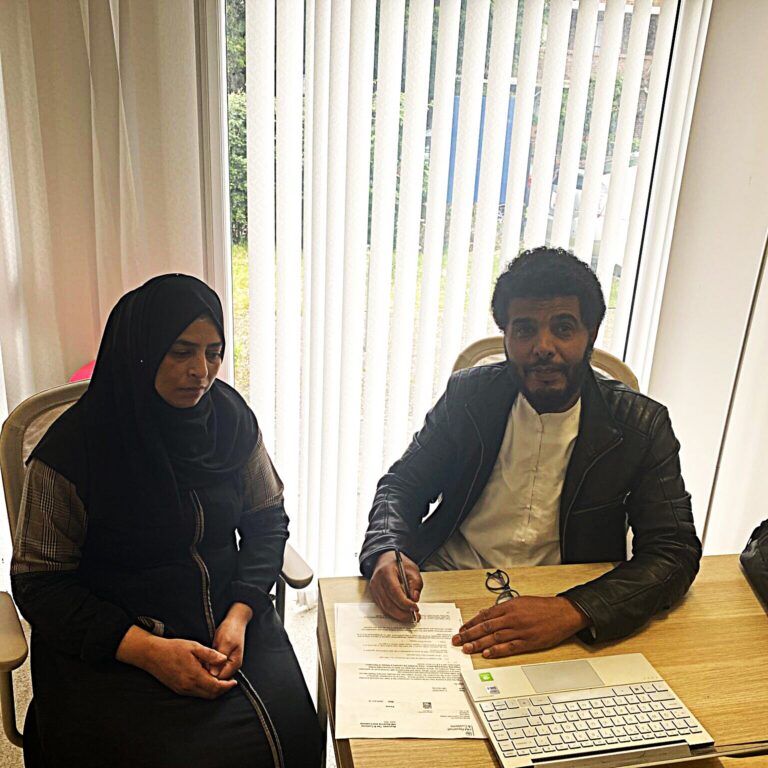
 Recognising the difficulties that families face, Jamal came together with other Hammersmith parents to launch Somali Parents. Meeting demand is an ever-increasing challenge for the charity. Jamal is the only paid staff member, and he only works for the charity part-time. Nevertheless, assisted by a team of volunteers, the organisation offers support to families across the borough.
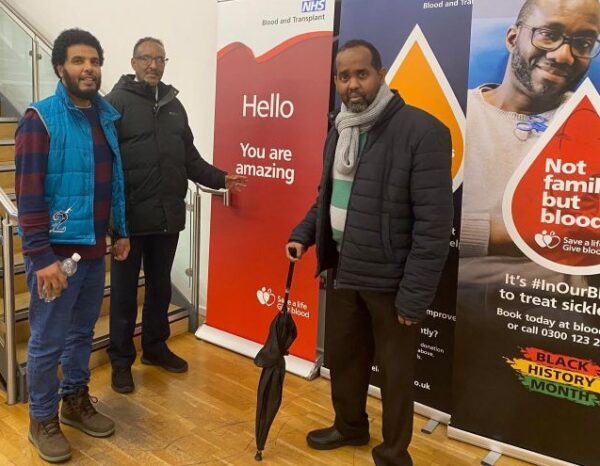 Somali Parents runs healthcare workshops about cancer symptoms and support available, as well as drop-in sessions to help ease concerns amongst the community and give people a better understanding of how to access NHS services and what to expect from an appointment. Recognising that women often feel more comfortable discussing health issues with another woman, the charity will sometimes bring in a Somali-speaking female GP to answer questions from the audience and talk to people in private if they need more advice.
 “The relationship is the intervention.”