BlindAid
Reducing isolation for people who have lost their sight
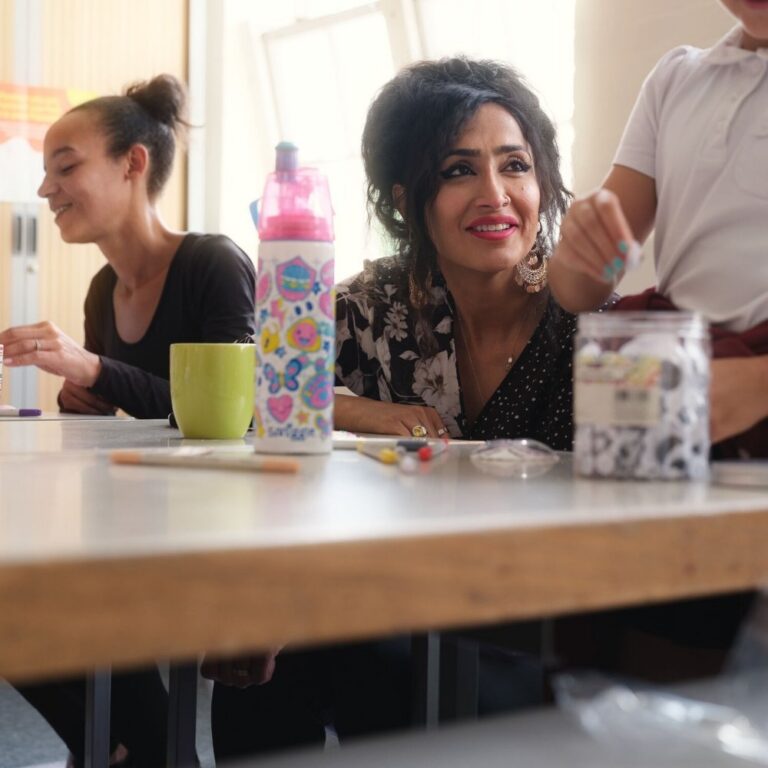
Founded in 1834, BlindAid supports 1,200 blind and partially sighted people every year, around 100 of whom live in Hammersmith. The charity offers a range of services, including small grants, home visits, phone calls, and free cookery, art and yoga classes.
Richie Walden is BlindAid’s Operations Director. He says, “Many blind and partially sighted people don’t need support because they’re independent, employed, and have a wide social group. However, the people our service is aimed at tend to live very isolated lives. They’re usually older and may also have mobility or health issues.”
Reducing social isolation
Losing your eyesight can be incredibly scary and it’s a difficult change to adapt to. Richie says, “People’s worlds can shrink quite rapidly. More than half of our service users don’t leave their homes unless they have support. I once visited a lady who spoke so rarely that it took her 20 minutes to be able to speak properly to us because her vocal cords weren’t working.
“Where people have no friends, no family, no one coming in to see them, we will always prioritise them for home visits. People who do have some support, we’ll prioritise for phone calls and the occasional visit.”
BlindAid’s Sight Support Worker in Hammersmith, John, has been in post for 18 years. Richie says, “That continuity is vital to how we deliver our services, because it can take time to develop relationships and build up trust. It also means that if, for example, some free tickets come up for an accessible theatre production, we’ll know exactly who might be interested.”
As one service user shares, “BlindAid helped me re-connect, to socialise and feel normal again.”
Practical support
As well as helping to reduce loneliness and social isolation, BlindAid supports people with more practical needs. Richie explains, “We give people time; they choose how they spend it. For some people, their isolation is their overriding need, and they just want to talk. Others might want us to help them fill in forms, install an app on their phone or set up a direct debit.”
While assistive technology can be transformative, it can also be expensive. What’s more, some services still send out physical letters or forms. Richie shares, “People often get sent a letter with the date of a hospital appointment. Because they can’t read the letter, they miss the appointment, come off the list and have to go through the whole process again. As well as reading letters aloud, we’ll often call people the day before a hospital appointment to remind them about it. We can also book them Dial-a-Ride or hospital transport.”
One key role of Sight Support Workers is referring people to other relevant services. That might mean arranging for an occupational therapist to visit, for example, or connecting people to community organisations. Richie adds, “We set people up with things like Sainsbury’s telephone shopping service, so they can order over the phone rather than online.”
Volunteer support
BlindAid relies on a team of 120+ volunteers to offer extra support. In many cases, the only time a service user will leave their home is when they’re accompanied by a volunteer. They might go for a walk to the local park together or visit the shops or a café. Richie says, “We try to match people with similar interests. So, for example, we’ve got people who go to the cinema together, people who go to the theatre together, or concerts together.”
Hammersmith United Charities’ grant
We recently provided BlindAid with a £5,000 grant to help support 100 people in Hammersmith. Richie shares, “We can’t run our services without external funding. We had to close services in a couple of boroughs last year, because we just couldn’t get funding for them.
“It’s hard to access grants for blind and partially sighted people because they don’t have a strong collective voice, so organisations aren’t really aware of what they’re experiencing. The fact that Hammersmith United Charities funds us is absolutely fantastic. It results in real, tangible support for people who are living in extremely isolated circumstances.”
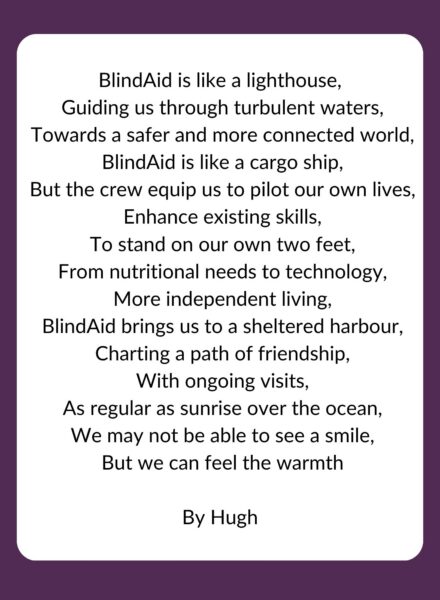
Find out more
- You can refer yourself or someone you know to BlindAid through the charity’s website or by calling 0207 403 6184.
- If you have time to spare and are interested in volunteering, BlindAid can provide full training and support.


 The Tree of Life project is building on an existing W12Together service – its annual Christmas dinner for care leavers. Jenny shares, “The White City dinner launched two years ago through Gold from the Stone – a charity set up by the poet Lemn Sissay to make sure that care leavers have a space to go on Christmas Day, where they can have dinner and feel part of the community. If you live in W12 and you are a care-experienced young person, there will always be a place at our table.”
 i-MATTER: Health & Wellbeing & Tackling Inequalities