Facebook Twitter Instagram

A home to be proud of

One of our Sycamore House residents, Kitty, reflects on what truly makes a home, and how she’s finding her way through lockdown.
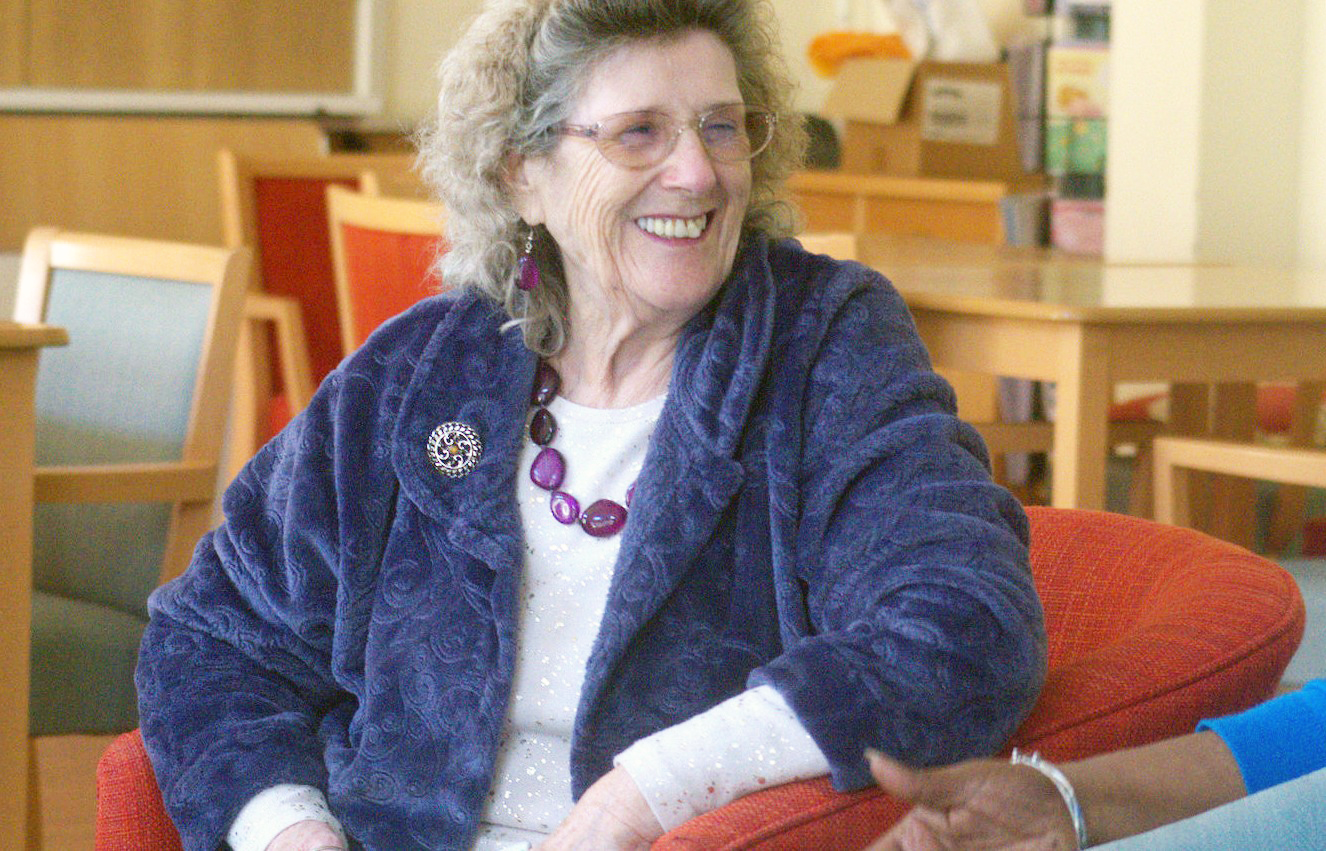
“I was born in Limerick, Ireland, but my husband and I came to London in the 1950s to try and get a start in this country.

We didn’t have a great way about things to begin with – we lived in a few different places, but it was hard to save for somewhere decent. We started off the two of us in a little bedsit in Chiswick; when we had two children, one of our first family homes was the matter of one bedroom and a kitchen in a shared house. Another place had a bath in the kitchen, which doubled as something to sit on at meals. They were tough times, but you have to make the best of everything, don’t you?

I often think back to 1972, when we were offered a council property: a flat in Trellick Tower on Golborne Road. It was brand new – with 14 cupboards in the kitchen! But it was the height that got me. We were on the 21st floor. People told me that there was a picture postcard view out of the windows, but I just could not look down. I should have gone with my instinct. We were four years in that flat, and I hated every minute. It became known as the ‘Tower of Terror’. A lot of bad things happened there. I just kept my head down with children, but we felt really cooped up.

One winter someone flooded the lifts with thousands of gallons of water from the fire hydrant. We were all without power, heat or electricity between Christmas and new year. Everyone was going up and down stairs in the dark, falling, getting ill. And the postman couldn’t come up to deliver.

Once there was a fire on the 15th floor, right below us. We were told to stay in our flats, but of course there was no ladder that would have reached us in the top levels. My husband was working that evening, and I had the four children by then, with my son a couple of months old. We were just watching the blaze. I went to the neighbour so we could be together; I was so frightened. No one died in the end, but the 15th floor was completely gutted.

After that I went to social services to see if we could move somewhere safer. We got offered a beautiful house on St Elmo Road. There was a big garden, a double garage – and four bedrooms! I couldn’t believe it.  It was the happiest time of my life; it was a lucky house.

37 years, I lived there. But my husband died in 2010, and my children were making their own way in life. I stayed two more years in the house, but I didn’t feel safe rattling around on my own. It broke my heart to leave it – I had put everything into my home. But I knew that people with a young family would benefit from it. I think they’ve kept some of it the same – my little lamp is still outside the front door.

Moving to Sycamore House

At that time I was thinking along the lines of sheltered housing as I was coming to that age where I knew I’d benefit from a little care. I looked around such a lot of places, but nothing would do. I was giving up so much, so I had to feel really sure.

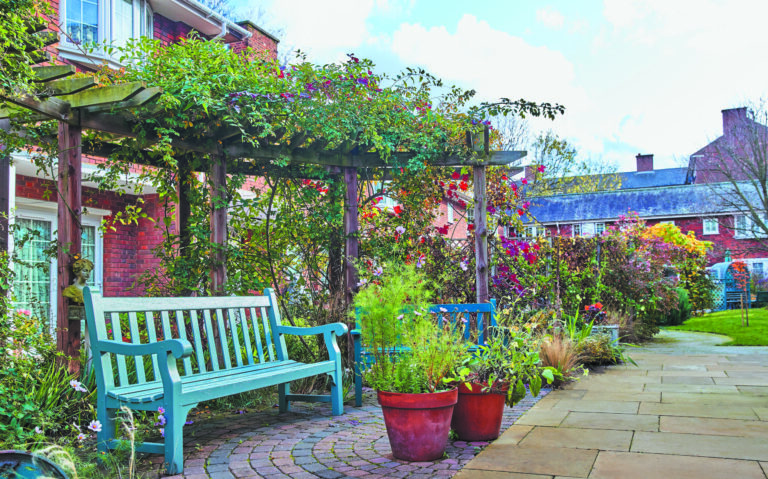
In 2012 I came here to Sycamore House. That feeling when you come in – you felt it was going to be a place you could feel proud to live in. I liked the care that came along with your flat, that someone came to check on you in the morning, and a cleaner tended to the place. Everyone was very kindly and the gardens were lovely. My daughter described the communal lounge as something you’d see on a cruise ship!

I do like the social side of things you get here, in normal times – the trips out together. We used to have live music and celebrate birthdays. It can be overwhelming to begin with when you move into sheltered housing, with so many people to get to know. I try and have nice conversations and learn what makes people tick – eventually I find my way.

Life in the pandemic

Lockdown in the summer wasn’t too bad – at least we could go into the garden and see people when the weather was fine. Bless them, they even purchased an outdoor heater for us. It was a walk in the park compared to the lockdown this winter. But staff have done well by us – they are doing their very best. The scheme managers are always there, and always have a happy word to say to us.

It has been a trial, not seeing family. The only time was when I had my 80th birthday and my daughter had her 60th. They came with some balloons and sandwiches and we celebrated on the pavement.

There has been hardship for everybody. A down-side of living so closely with other people is that you have to get your head around losing them when they pass on. I lost the man who lived next door to me, and I lost another friend very recently. We would ring each other, and we were there for each other. It put me down a bit. I really take it to heart when a person goes, I’m afraid. I can’t see how I will get used to it.

But I go downstairs, look around me, and it does me good. Prayer does help me immensely. If you have a religion, it doesn’t matter which, it’s something to turn to. I try to be there for people, and stop and listen – that’s the important thing, listening.

What I’m looking forward to most of all is meeting one or two friends for a pub lunch. I’ve been on my own cooking, cooking, cooking – all the time. What I wouldn’t give to have a meal and then just push the plate away. And go to the shop, go to Marks, have a look around.

But I’ve had both of my vaccinations now, so things are starting to change. I think spring is bringing a new hope for us.” 

Find out more

Want to find out more about living in an almshouse?

If you think you might be eligible, we'd be happy to give you a tour of our almshouses and share what it's like to live here.

Read More ...

Vacancy for Assistant Community Gardener

Join our team in Hammersmith.

Assistant Community Gardener

Salary:  £28K (pro rata) depending on experience and generous benefits package

Appointment Type: Permanent

Hours: 4 days per week/ 30 hrs per week

Location: Hammersmith


About us

Hammersmith United Charities was founded in 1618 and makes grants to community organisations helping local people address complex social issues such as poverty, inequality or mental ill health. We also have two almshouses in Hammersmith, for older members of our community. Over the years our gardens have been developed to ensure they are not only beautiful, but creative spaces where our residents can get involved if they choose or simply relax and enjoy. The gardens are based on organic principles.  They include plants that attract butterflies, bees and birds, and plants that are stimulating in colour, aroma and texture.  Residents can tend to their own hanging baskets, pots and allotments and get involved in various gardening projects and workshops that are run to help and support residents in engaging with the gardens.  Our gardens have won many awards at the London Garden Society competition, which are judged according to Royal Horticultural Society guidelines.


About you  

This is an exciting opportunity for a hardworking, professional gardener to continue the fantastic achievements of previous gardeners working with our Community Gardener. We are looking for someone who has demonstratable knowledge and experience, with the relevant horticultural qualifications/experience to support this. Knowledge and experience in a range of gardening disciplines/techniques is essential as well as an open mind to continuous development and learning new skills.

The successful applicant must be self-motivated with the ability to perform their tasks to achieve the highest standards. We are looking for someone with imagination and flair, an understanding of community organisations who has good communication skills, a caring disposition who is empathetic, with an unrelenting capacity to encourage and support our residents.

Experience in a similar role or position is desirable and a relevant horticultural qualification along with an eye for detail, the ability to take responsibility, act decisively and the ability to turn your hand to most tasks, is essential.

This is a physically demanding role, working outside all year round, in all weathers. The role involves carrying out tasks requiring high levels of manual dexterity, as well as physically demanding tasks, such as trimming hedges, shovelling, digging, mulching, lifting and carrying.

The successful applicant will be required to undertake an enhanced DBS Check.

We value and respect all the differences that make us who we are, including: age, cultural background, disability and mental health, ethnicity and race, gender, gender identity and expression, sexual orientation, and social background.


How to Apply

If you have any questions or are unsure about whether this is for you, please feel free to contact Victoria Cripps on 07909 203 924 for an informal chat.

Please complete the Application Form and send to lisa.dasilva@hamunitedcharities.com along with your CV by midday on 9th January 2026.

Read More ...
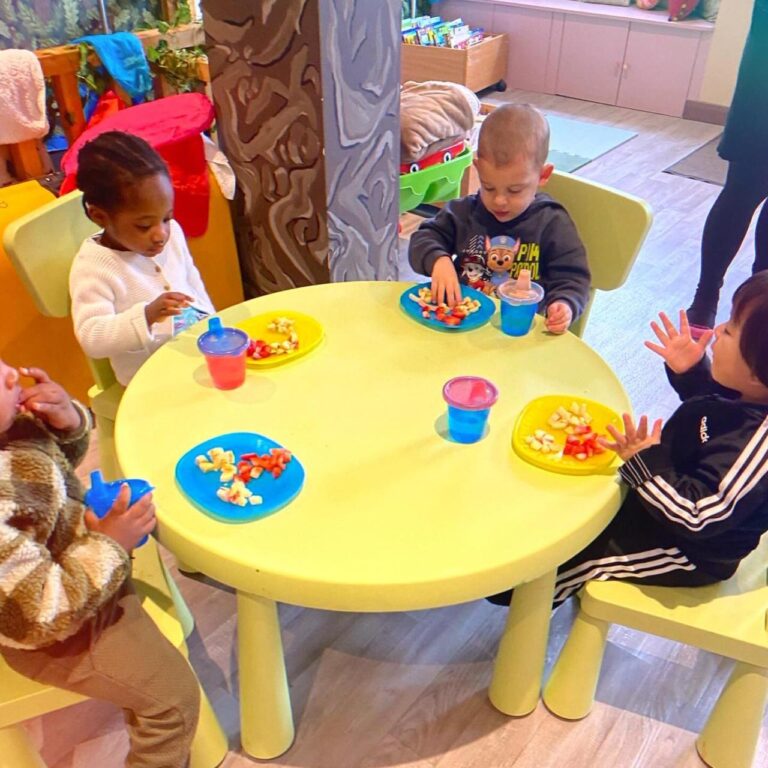
A group of young children (aged under 5) sitting around a table and playing.

Solidarity Sports

Helping traumatised children to have a better childhood

Solidarity Sports works with more than 100 children in West London, most of whom have been referred by children’s services. Jasmine, Fundraising Coordinator at Solidarity Sports, explains, “These are children who have often been stripped of their childhood. They’ve gone through unimaginable things. We’ve had children who have experienced neglect and sexual abuse, who have fled war-torn countries, who have parents who are in prison, or who were born into homelessness.

“They’ve sometimes grown up in an environment where they’ve been completely ignored. They’ve not been taught about love or given any praise or encouragement, so they then develop this belief that they’re not really worthy of love, or that they’re not good enough, they’re not smart enough, they’re not bright enough. As a result, these children are very insecure and have very low self-worth and low self-esteem.”

Giving children a childhood

The majority of Solidarity Sports’ work is during the school holidays, when children are most at risk of neglect or abuse. The charity runs four activities a day, such as basketball, drama, art and gardening. It also organises trips to places that the children would otherwise be financially excluded from.

Jasmine says, “We give them a space where they can just simply be kids again. They can discover the joy of throwing a ball or painting a picture – the simple things that most people don’t think twice about. It’s about giving them a space to heal, to grow, to discover their passions and to not worry for a while about whether there’s food at home or where they’re going to live in six months’ time.”

Many of the children are on the verge of being taken into care or have already entered the care system. Solidarity Sports’ staff are all trauma-informed and aim to build long-term, positive relationships with the children – offering them a sense of stability. One-to-one mentoring is available throughout the year for those children who are most at risk. The charity also runs after-school programmes and works with grandparent carers and parents of younger children, to offer support and early intervention when needed.

Impact

While Solidarity Sports can’t fix all the difficulties that the children are dealing with, it can still make a significant impact on their lives. Many of the children attend for several years, during which time they are often able to rebuild their confidence and self-esteem, and to develop aspirations for their future. As one child, aged 12, says, “Solidarity Sports has changed my life. You have helped me so much and my mum likes you too. When I have a problem in my life, you guys are the first people I think of. You make my little sister happy too.”

Jasmine shares the story of one of Solidarity Sports’ former service users: “She’s grown up in a two-bedroom flat, heavily infested with mould, with five younger brothers, so she never had privacy. On top of that, her mum has very severe mental health issues, and her father is really ill with cancer.

“I take 30 children on a residential trip every year and she never wanted to do the zip line or rock climbing or participate in anything. She wanted to sit by the beach, read in peace and have a moment to just breathe.”

The girl attended Solidarity Sports programmes for several years, where she was encouraged to study, aim high and aspire to a better life. She set her sights on a career in law after speaking to one of Solidarity Sports’ employees. After working incredibly hard at school, she achieved two A*s and an A in her A Levels and is now studying law at university. Without Solidarity Sports’ intervention, encouragement and belief, it’s unlikely that she would have found the strength to achieve all that she has.

The teenager above is far from the only child who has been encouraged to aim high by Solidarity Sports. The charity supports children to improve their grades and stay in school. It also arranges scholarships to private schools and boarding schools for some of the most talented children.

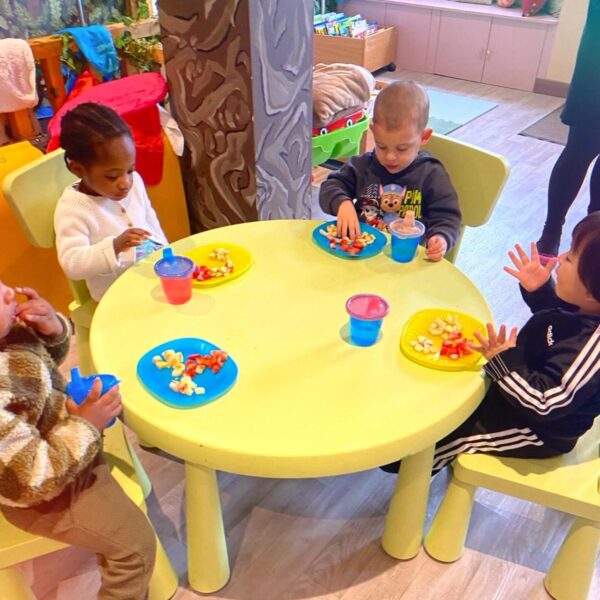
A group of young children (aged under 5) sitting around a table and playing.Under-fives

Solidarity Sports has a programme for under-fives, most of whom are witnessing domestic abuse at home or who are refugees or asylum seekers living in overcrowded accommodation with no recourse to public funds. The children attend the centre with their parents. Jasmine says, “If a woman has gone through years of abuse, she will often become very isolated and lonely. Some of the women have endured such trauma that they can’t create a bond with their child; they’re very disconnected. We provide an environment where parents and children have the opportunity to bond.”
Earlier this year, we provided Solidarity Sports with a £5,000 grant to cover the cost of new specialist toys and equipment for the under-fives programme and to help cover some of the charity’s expenses. Jasmine shares, “The children’s development is often severely delayed. We use specialist toys to help with their fine motor skills and other needs.”

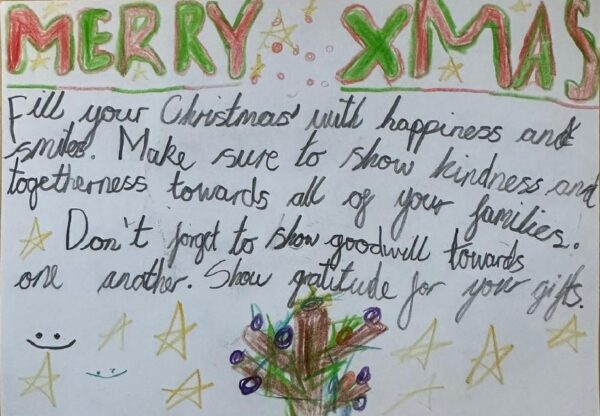
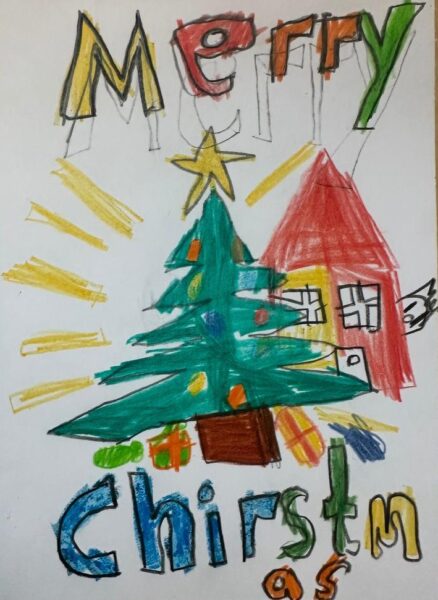
Our Christmas card

Every year, HUC commissions a local person or group to design our Christmas card. This year, children from Solidarity Sports took on the challenge, with wonderful designs created by all age groups.

Jasmine shares, “We told the children, ‘This is a competition. One child will design a Christmas card that’s going to go out across London.’ The children really enjoyed it and got very competitive! There’s a feeling we’re constantly trying to create for the children, the feeling of being valued and cared for and listened to.”

We received some fantastic artwork from the children, so it was very difficult to narrow it down to one design. In the end, we chose the below pictures. One of the artists, who is just eight years old, said, “Find joy in the little things – they make life beautiful.”

Colourful children's picture with the words: Merry Xmas. Fill your Christmas with happiness and smiles. Make sure to show kindness and togetherness towards all your families. Don't forget to show goodwill towards one another. Show gratitude for your gifts.Colourful children's drawing of a Christmas tree with the words Merry Chirstmas (mis-spelled)

We’d like to thank all the children who took part for their creativity and for bringing so much warmth and joy to this year’s card. And we would like to thank the Solidarity Sports team for helping make the project such a success.


Get involved

Donate

Solidarity Sports is taking part in the Big Give campaign. If you make a donation here by Tuesday 9th December, it will be match funded. So if you give £5, the charity will receive £20. Solidarity Sports is aiming to raise £100,000 to support more than two hundred families this winter.

Volunteer
Solidarity Sports relies on a large team of volunteers to support the children on trips and help with activities. One volunteer, Emily, shared, “I’m constantly inspired by the children and the amazing people I’ve met through this journey.”

If you want to join the team, call or message Joanna on 07455 906418 to find out more.

Corporate partnerships
Solidarity Sports can offer team-building volunteering days and is also keen to hear from businesses that are looking for a new Charity of the Year to support.


Read More ...
Women's hands facing inwards to create a circle of solidarity. The hands are a range of colours and have beautiful henna patterns on.

FORWARD

Tackling faith-based abuse in the UK and Africa

[Trigger warning: This article includes references to violence against women, including FGM.]


More than 230 million women and girls have experienced female genital mutilation (FGM). As well as causing severe pain, FGM can result in long-term complications, including urinary problems and difficulties during childbirth. In many cases, FGM can make sex painful and significantly limit sexual pleasure.

FGM and child marriage often go hand-in-hand, and girls who are married before the age of 15 are almost 50% more likely to experience domestic abuse. Worldwide, one in five girls are married before they reach the age of 18.

While FGM and child marriage are illegal in the UK, hundreds of girls are still forced into marriage every year and the NHS has seen more than 37,600 women and girls who have experienced FGM in the past 10 years.

FORWARD


Placard showing a hand and the words Together w can end Female Genital Mutilation.

FORWARD (the Foundation for Women’s Health Research and Development) is a UK-based charity working to end violence against African women and girls. Executive Director Naana Otoo-Oyortey MBE explains, “We tackle multiple forms of violence against women and girls, particularly faith-based and ritual abuse. We’re looking at women who are affected by female genital mutilation, by child marriage and by domestic abuse. Some of the women have been trafficked; some are refugees or asylum seekers.”

The charity both supports survivors and works to prevent more women and girls from experiencing violence. Much of its work is in the community – engaging people about the dangers of FGM, educating professionals and ensuring that survivors are supported.

Naana says, “We want to ensure that women don’t perpetuate the abuse. With FGM in particular, women take a proactive role, with the false belief that they are protecting their children, so we want to make sure they don’t put their own daughters through it.”

Women who have undergone FGM are much more likely to experience problems during childbirth, but they often struggle to access expert healthcare in the UK.  Naana shares, “It’s important to ensure that women’s needs are identified early, pre-birth, especially as not all hospitals understand the needs of women who have gone through FGM. We support professionals to be able to respond culturally appropriately in ways that will meet women where they are.”

Hammersmith United Charities’ grant

Women's hands facing inwards to create a circle of solidarity. The hands are a range of colours and have beautiful henna patterns on.

Earlier this year, we provided FORWARD with a grant of £9,985 towards the training and supervision of Maternity Champions and Community Champions in Hammersmith.

Earlier this year, we provided FORWARD with a grant of £9,985 towards the training and supervision of Maternity Champions and Community Champions in Hammersmith. These Champions raise awareness in their community, signpost people to services, offer one-to-one support, deliver talks and coffee mornings, advocate for women with professionals, and help to identify women and girls at risk of violence.

Naana explains, “Community Champions are critical in building bridges between statutory professionals and communities. They provide much-needed peer-to-peer support on the ground. Because of their language skills, they are able to bond better with women and help them to access services.”

The Champions have lived experience and can engage with people in a way that outsiders cannot. As one Champion said, “You have to be very clever [as a Champion] with how to approach community members, how to convince them, how to change or replace the bad ideas or bad habits or cultures in their head; to replace it with the new one and how to convince them that this is the right one.”

The Champions themselves also benefit, as they gain skills and experience that can help them to find paid employment.

Watch this video to find out more about Champions:

Get involved

Read More ...
A Black man and three black teenage boys on stage. In the background is a screen saying Inspiration Still Works.

1000 Black Boys

“The final straw came when my 11-year-old nephew was threatened while he was at school.”

Black boys and young men are far more likely to be murdered in London than their counterparts. In 2022, 71% of the teenagers murdered in London were Black boys. Black men also face systemic barriers to achieving top jobs. According to the Black Talent Charter, “Verbal skills and poor commercial judgement were cited as reasons black candidates dropped out of interview processes, with companies describing a lack of ‘polish’ that allows candidates to operate within professional corporate social codes. In turn, this view may favour specific accents, mannerisms and conversational skills.”

Due to his own experiences, Ademola Adeyeba had long recognised the challenges faced by Black boys and young men. Bullied throughout school due to his African accent and name, Ademola attempted suicide twice; by his late teens, he had a dim outlook on life, was struggling and making poor choices, which nearly led to him being stabbed.

Thankfully, Ademola was able to turn his life around, build a successful career in sales and business, and become one of the top trainers in an international business. As he explains, “I discovered this whole new world where you can be successful based on how you communicate, deal with rejection and deal with setbacks. It dawned on me that nobody ever told me any of this when I was growing up. I wasn’t taught this at school or in life, but I was able to learn it in the business space.

“I saw the 2011 Tottenham riots first hand. I saw lots of really angry young people who were just totally fed up, and I saw that lots of them had great potential. I thought, ‘What if this young person got the kind of opportunity that I had? What if we could give some of the training I’ve had to Black boys and young Black men?’

“I was also sick and tired of seeing in newspapers the faces of young Black boys whose lives had been taken. The final straw came in 2018, when my 11-year-old nephew was threatened by a 12-year-old while he was at school.”

1000 Black Boys

Ademola used his experiences to create 1000 Black Boys – a social enterprise committed to inspiring Black boys and young Black men to unleash their potential and to live a life of purpose. The CIC does this in several interconnected ways:

  • Events
  • Mentorship
  • Family therapy
  • A YouTube channel

A digital platform is also planned, in order to support parents and guardians to access local services.

A Black man and three black teenage boys on stage. In the background is a screen saying Inspiration Still Works.Tackling negative perceptions

A key part of 1000 Black Boys’ mission is to counter the negative stereotypes that Black people face from the media, school and life in general.

Ademola says, “In the first session of our mentorship programme, we ask them about the perception that some people have of Black boys and young Black men. They come out with ‘I’m a rude boy, I’m a gangster. I’m a criminal. I don’t like maths, I hate school. I’m never going to amount to anything.’

“The media plays a massive role in that perception, but they’ve also been told the same in other environments. Many have been told by their teachers that they’re stupid and won’t amount to anything.

“So, we explore the fact that people who look like them are running businesses and contributing in phenomenal ways to the world. We start to break down the stereotypes and show these men and boys that they can choose to do incredible things.”

As one participant, Samuel, said, “It was really eye-opening. The information that Ade taught me personally and the other Black boys that were in the sessions was very empowering – something that you don’t really get at school … this organisation is really one of a kind, inspirational.”

1000 Black Boys regularly runs events focused on inspiration and empowerment. Ademola explains, “We bring in people who are doing brilliant things and have them share their story and their journey. These events are incredibly powerful and you can see them flick a switch in the young people. It gives them role models – proof that they can do great things.”

The CIC also holds events for parents who have lost a child to youth violence. Ademola says, “They’re dealing with the loss of a child, and they’re hearing things in the media that are not true, and they’re not able to say, ‘Hey, that’s not the case. This is what happened.’ So, we give them a platform to be heard and, where we can, we pay them as speakers.”

Hammersmith United Charities’ grant

We’re supported 1000 Black Boys with several grants; the latest is funding three of the Inspiration and Empowerment events at White City.

Ademola says, “It’s great to have a funder that really gets our mission and understands what we’re doing. Because of our name and what we do, some organisations don’t want to fund us, but HUC have been a great partner. In early 2024, they gave us the biggest grant that we’d ever had at the time. They’ve also helped us to meet other organisations within the local area.”

1000 Black Boys’ impact

The feedback from participants and parents has been overwhelmingly positive. As one boy who has been through the programme, Levi, says, “1000 Black Boys has really helped me to see the world in a different way … focus on the things that I want to achieve in life and how I can be successful and help other young Black boys who are trying to accomplish their goals.”

The CIC’s work also has an impact on the wider community. Ademola explains, “If we lose this young person, we all lose, but if this young person wins, we all win. Maybe the young person becomes the next tech billionaire, or an incredible chef or politician or business leader. When they get to realise their potential, they could employ thousands of people of different backgrounds and different races; that young person’s potential benefits everyone.”


Find out more

1000 Black Boys has various Mentorship Programmes and events planned; the best way to keep informed is by subscribing to its newsletter. You can also email hello@1000blackboys.com for more details.

Everyone is welcome to attend the events.

Support 1000 Black Boys

  • Could your organisation benefit from diversity training or mentors and speakers who can inspire the next generation of Black leaders? Email hello@1000blackboys.com.
  • The CIC is looking for a base or meeting space in Hammersmith, so if you know of anywhere up for rent that might be suitable, please contact Ademola.
  • If you share the CIC’s vision, you can make a donation towards its fundraising campaign.
  • If you would like to donate to or fund 1000 Black Boys in other ways, or if you know of other opportunities to collaborate or support the charity, please email hello@1000blackboys.com or visit 1000blackboys.com.

Read More ...
View More