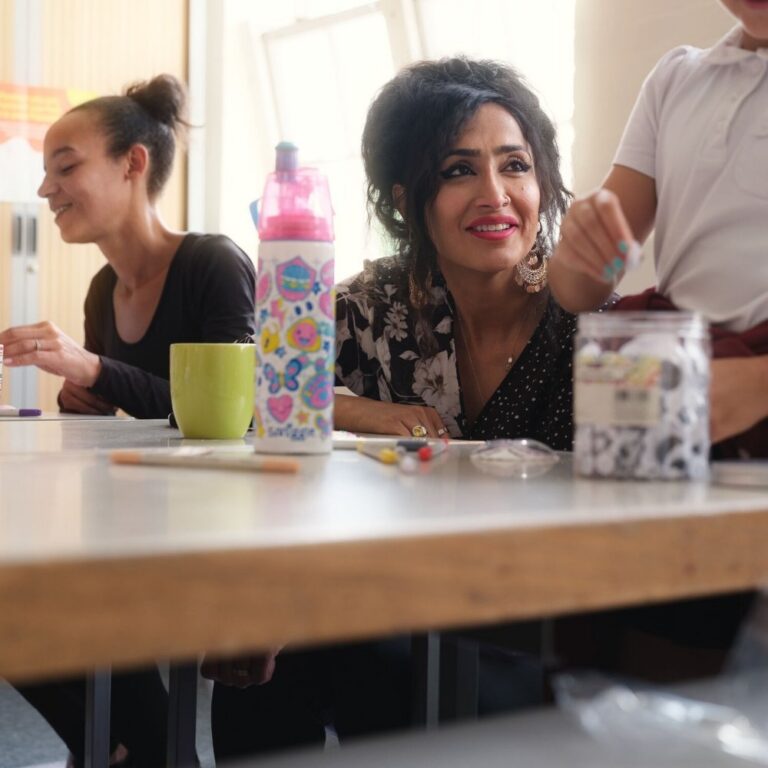
Making the arts accessible
Turtle Key Arts is knocking down barriers to enable more people to take part in theatre, drama, music and other arts projects.
Turtle Key Arts was founded in 1989 as an accessible arts space. Producer Niamh Hanns explains, “The idea was to create an accessible arts venue where people could see performances from a range of artists. While we no longer have that venue, accessibility is still at the heart of everything that we do.”
The charity is now a performance arts company working with a portfolio of dance, circus and theatre companies. Many of the freelance artists it works with have a disability or face other barriers to participating in the arts. Amici Dance Theatre Company, for instance, is a unique inclusive dance theatre company for disabled and non-disabled performers. Amici’s shows challenge conventional attitudes about disability.
Every production includes outreach events, and Turtle Key Arts also runs regular education and participation projects, with a focus on including people who are often excluded from the arts, such as those who are neurodiverse or have a disability. Key Club, for example, is a monthly arts and social club for 18–30-year-olds on the autism spectrum, while Turtle Song is a singing and songwriting project for people living with dementia and their companions and carers.
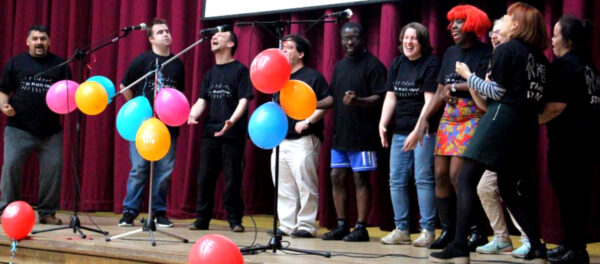
Unlocking creative potential
Niamh says, “The UK is still in a period of austerity where the arts aren’t prioritised and where there are so many barriers to accessing the arts. That has an impact on people’s wellbeing and ability to grow in confidence and to be themselves.
“At Turtle Key Arts, our tagline is ‘Unlocking creative potential’. Everyone has something valuable to bring to the world artistically. Sometimes you need support in doing that, which is why organisations like ours are so important.”
Removing barriers to the arts
To Turtle Key Arts, ‘accessibility’ isn’t just about removing physical barriers. As Ellie Park, a producer at Turtle Key Arts, shares, “We want to remove as many barriers as possible. All our outreach projects are free to participants, as price is often a barrier, especially for younger people. With our dementia project, if transport is a barrier to people participating, then we’ll provide that.”
One barrier that the charity aims to tackle is lack of confidence, particularly for people who are disabled, disadvantaged or socially excluded. Niamh says, “The arts are often seen as something that only certain groups can take part in, so people sometimes think, ‘It’s not for me; that’s not something I can do.’ We make sure that our projects are as inclusive as possible by putting things in place so that people can have that creative output.”
As an example, one of the charity’s projects is Key Words, which supports dyslexic young people to write a play. Participants dictate the lines and actions to scribes, so if they lack confidence in writing things down, that doesn’t become a barrier to being creative.
The impact of Turtle Key Arts’ work cannot be overemphasised. Being able to participate in the arts can improve mental wellbeing, reduce isolation and increase confidence. As the daughter of a Turtle Song participant shared, “I cried silent tears of sorrow, of pride, of happiness, of loss, of admiration, of gratitude and more. Thank you for bringing joy to my mum, for accepting her just as she is and for making her truly happy. I have not seen her smile like that for a long time, today she was my beautiful, intelligent, kind & caring, fun loving mum again.”
The JOY festival
One of the highlights in Turtle Key Arts’ calendar is JOY – a disability arts festival for people in West London, which it runs in partnership with Hammersmith and Fulham Arts Festival and the Lyric theatre. JOY is led by a steering group of disabled artists and practitioners. The festival was relaunched this year, and Turtle Key Arts commissioned a music piece by and for disabled artists. Niamh explains, “A group of disabled people who are musicians or who have an interest in music are working with a professional composer, director and musician to create a new song cycle on the theme of joy. It will then be performed at the Lyric.” Ellie adds, “The participants are aged 18 to 70. It’s good to have something inclusive for all adults, as a lot of opportunities cut off at 25.”
The commission was funded with a grant from Hammersmith United Charities, and the piece was performed at the festival on 3rd July. Niamh says, “Hammersmith United Charities have been really supportive of us and our work on the festival over the years. It’s great to have a really engaged local funder.”
Find out more
If you’d like to take part in a Turtle Key Arts project, please visit the charity’s website: www.turtlekeyarts.org.uk


 The Tree of Life project is building on an existing W12Together service – its annual Christmas dinner for care leavers. Jenny shares, “The White City dinner launched two years ago through Gold from the Stone – a charity set up by the poet Lemn Sissay to make sure that care leavers have a space to go on Christmas Day, where they can have dinner and feel part of the community. If you live in W12 and you are a care-experienced young person, there will always be a place at our table.”
 i-MATTER: Health & Wellbeing & Tackling Inequalities