Happy National Gardening Week!
Why our communal gardens are integral to almshouse life
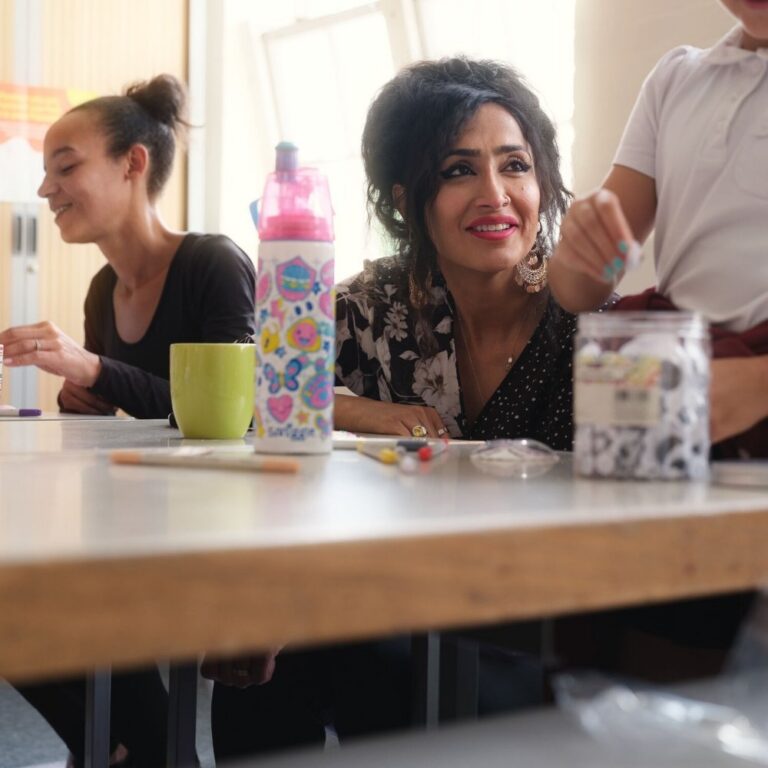
The theme for this year’s National Gardening Week is ‘Share your passion for plants’. Whether you’re an avid gardener or just enjoy relaxing on a bench surrounded by colour and birdsong, most people enjoy being outside in spring. As our Community Gardener, Victoria Cripps (known as V), says, “As a Community Gardener, it is very important to me to advocate for gardening as a means of supporting wellbeing. I know, through my own daily experience, that being in nature and caring for plants and wildlife has a positive effect on my mental and physical health. Gardening is both physical exercise and a mindful, focused, creative activity.
“The residents here comment daily on the effect the garden has on their wellbeing – from particular plants evoking positive memories, to hearing birdsong and feeling joy, seeing colour and feeling uplifted, and experiencing the pride of new seedlings emerging! Those who actively garden also comment on how it supports them to stay active, as well as the enjoyment of focusing on a project and the sense of achievement in seeing a patch flourish.”
Indeed, many of our residents enjoy gardening. Some are life-long gardeners, while others have discovered their passion later in life.
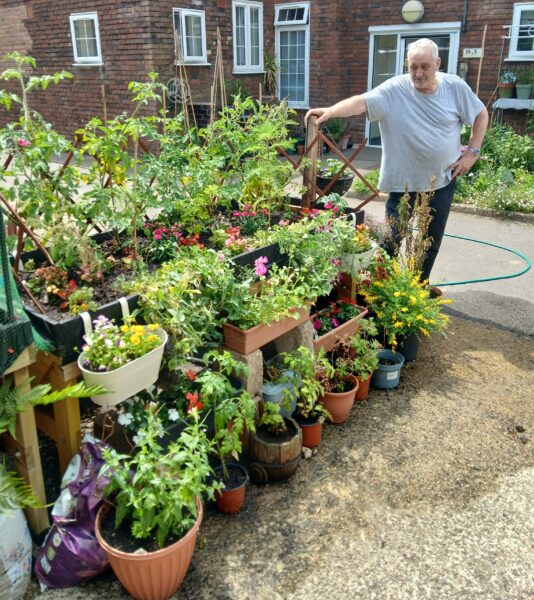
One of our residents, Ken, says, “I had what you’d call a concrete garden before. I’d never done gardening in my life, apart from tomatoes and a bit of veg. I’d never grown flowers until I came to Sycamore.”
Ken moved here back in 2023 and soon started helping with the communal garden. Before long, he had his own trug outside the greenhouse and then took on one of the almshouse’s small plots of land. Along with bedding plants, Ken is now growing fruit and vegetables, including tomatoes, radishes, spring onions and rhubarb.
Rather than learning from books, Ken has learnt as he’s gone along: “The gardeners have been advising me on what to do and showing me little bits and pieces – when to put the seeds in and so on. I’ve been picking things up that way. One or two of the other residents have been helping me too.”
While his own plot keeps Ken pretty busy, he still enjoys helping with what he terms “the donkey work” in the communal garden, including painting and repairing our garden benches. He’s now in the process of making his own bench out of old car tires and pallet wood. Next on his list is repurposing more discarded tires into a decorative planter in the shape of a garden well.
His advice to anyone thinking of trying gardening is, “Just get on and do it!”
Gardening in later life
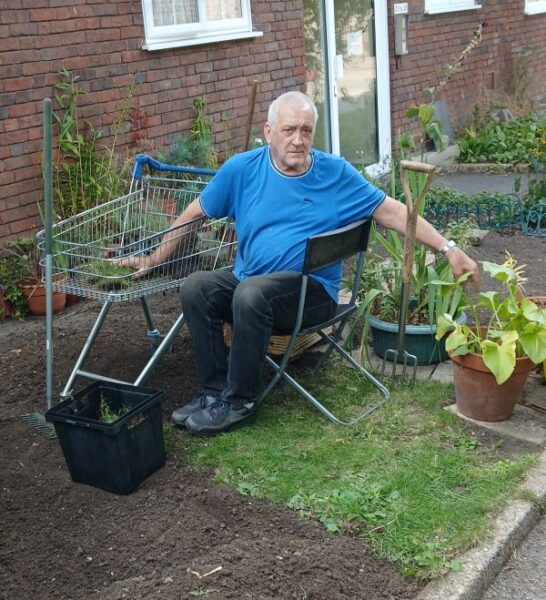
Ken has difficulties with his knees so has bought himself a low fold-up chair to use when he can’t kneel.
V has a few other tips for gardening in your 70, 80s and beyond…
- If you have mobility issues, the right tools can make gardening a lot easier. Look for lightweight ones that can be used standing up or from a chair, such as long-handled weed pullers. You can also buy easy grip handles, which attach to your existing tools and are really useful if you have painful or weak wrists.
- If you find it difficult to kneel or crouch, you might want to consider having some raised beds built or investing in a large trug or some pots. They’re much easier to maintain, as you can tend to them while standing or sitting in a chair. Do bear in mind that they’ll need watering more often though.
- Choose low-maintenance plants, such as shrubs that don’t need tying in or deadheading. Plant perennials and bulbs rather than annuals to make your life simpler next spring. Wallflowers, sedums and begonias are all great choices.
- You’ll enjoy your garden more if you feel safe in it. Make sure that paths are wide and even, with no raised slabs that might trip you up. Mobility aids, such as grab rails, can also help you to access your garden, especially if it’s on a different level to your home.
- Full watering cans are very heavy and hosepipes can be challenging to pull around. As our climate changes, we can expect more dry, hot spells throughout summer, so you may want to opt for drought-tolerant plants like lavenders, salvias and verbenas.
- If you love gardening but can’t manage a garden on your own, then volunteering on a shared plot might be the answer. Many of our almshouse residents enjoy working in our communal gardens. If you’re not a resident, you could volunteer with Hammersmith Community Gardens Association, which manages several gardens across the borough. You don’t need any gardening experience to volunteer as you’ll be supported by other volunteers and staff members.
- Having benches and seating in your garden means you can take regular breaks. Gardening, at any time of life, is about pacing. It’s much better to spend as long as you can comfortably on an achievable task, then refresh with a cup of tea before moving on, than trying to do it all at once!
- For times when it’s really difficult to get outdoors, due to challenging weather or mobility needs, looking after houseplants or arranging cut flowers means you can connect with nature indoors. There are houseplants for all ranges of ability, so you can start with something easy and move on to more challenging plants as you grow in confidence.


 The Tree of Life project is building on an existing W12Together service – its annual Christmas dinner for care leavers. Jenny shares, “The White City dinner launched two years ago through Gold from the Stone – a charity set up by the poet Lemn Sissay to make sure that care leavers have a space to go on Christmas Day, where they can have dinner and feel part of the community. If you live in W12 and you are a care-experienced young person, there will always be a place at our table.”
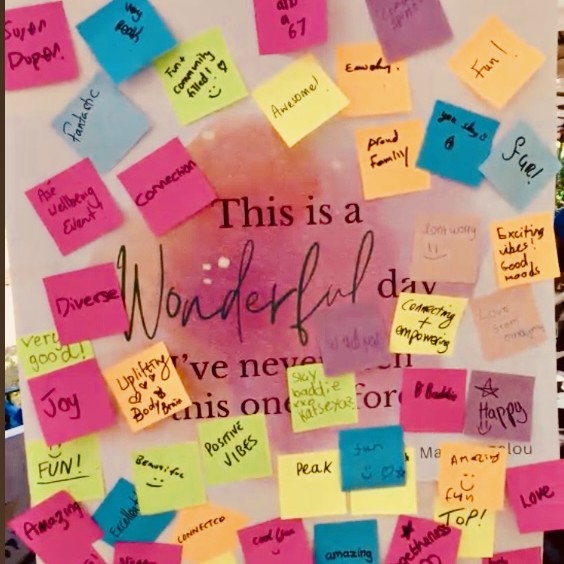
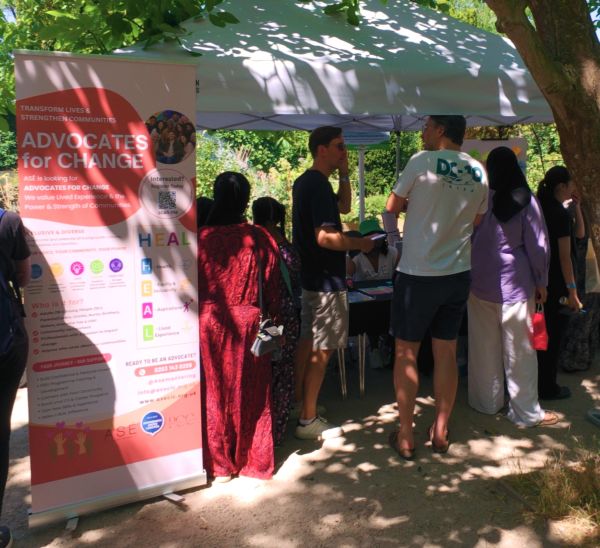 i-MATTER: Health & Wellbeing & Tackling Inequalities