John Betts Primary School
Supporting vulnerable children through play therapy.
There are a number of life experiences that can have a significant impact on a child’s mental health, from parental separation to bereavement. This can lead to the child withdrawing from friends, struggling to manage their emotions, and finding it difficult to engage with school.
While adults in a similar situation often benefit from counselling, children can lack the communication and reasoning skills to explain or even understand how they are feeling and what they need.
Play therapy
A play therapist is able to support children to work through some of their challenges in a safe environment and to express feelings that they may not want or be able to talk about. The British Association of Play Therapists explains, “Play therapy helps children understand muddled feelings and upsetting events that they haven’t had the chance to sort out properly. Rather than having to explain what is troubling them, as adult therapy usually expects, children use play to communicate at their own level and at their own pace, without feeling interrogated or threatened.”
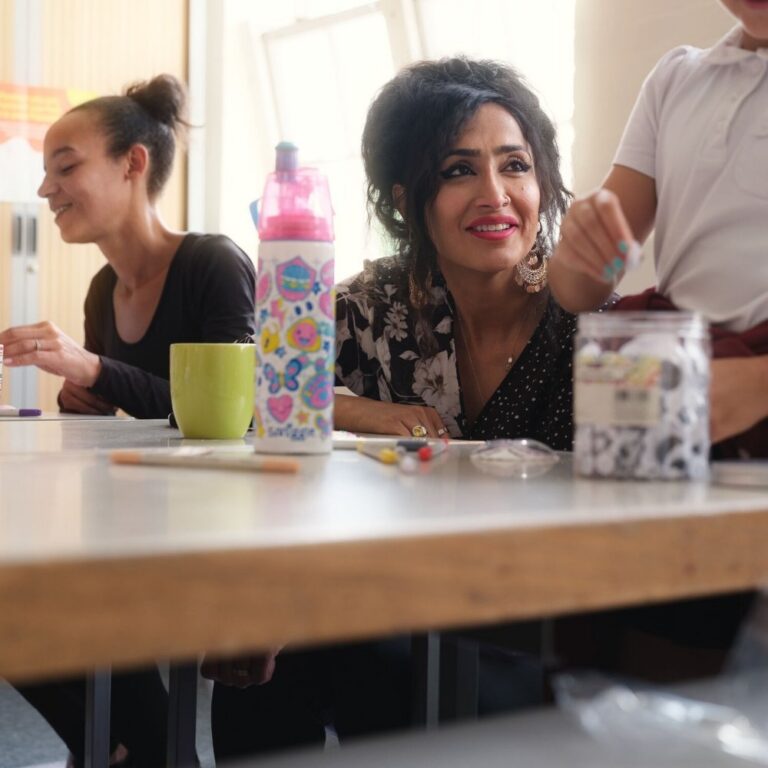
 Sarah Foster is a certified play & creative arts therapist who works in several schools across Hammersmith & Fulham, including John Betts. She says, “The children who are referred to me are usually struggling socially, emotionally or behaviourally. For example, they might be struggling with anxiety, low self-esteem, anger management or separation anxiety. Toys become their language, their words. Through that, you can gain an insight into what’s troubling them and help them to unpack that, process events and better understand their feelings.”
Sarah has a range of toys and art materials for the children to choose from, such as playdoh, figurines, sand trays and musical instruments. Most of the children have 12 play therapy sessions, but some will see her throughout the whole academic year.
Sarah takes a non-directive, child-centred approach. She explains, “The children take the lead. One of the central tenets is unconditional positive regard, where you’re completely accepting of the child as they are. There’s no concept of ‘good’ behaviour and ‘bad’ behaviour. They bring what they bring to a session, including, usually, the issues that school or parents have concerns about.”
As the focus is on play, children are able to relax and enjoy their time with Sarah. One parent fed back, “Thank you so much for all your help and wisdom with X, we know how much he has loved his time with you.”
Benefits of play therapy
Children benefit from play therapy in a number of ways. As one parent shared, “I feel that the therapy has really helped him. And X has recognised that in himself too. We have definitely noticed positive changes. Thank you!”
Benefits can include:
- Increased confidence and self-esteem
- Finding it easier to express thoughts and feelings
- Improvements in behaviour and concentration
- Better sleep
Sarah says, “There’s a really high impact rate for play therapy. You see a positive difference in over 80% of cases. It’s deeply rewarding work.”
Apply for a Community Grant
Some of John Betts’ play therapy sessions are funded by a Hammersmith United Charities Community Grant. If you’d like to apply for a grant to support your community initiative, you can find out more here.


 The Tree of Life project is building on an existing W12Together service – its annual Christmas dinner for care leavers. Jenny shares, “The White City dinner launched two years ago through Gold from the Stone – a charity set up by the poet Lemn Sissay to make sure that care leavers have a space to go on Christmas Day, where they can have dinner and feel part of the community. If you live in W12 and you are a care-experienced young person, there will always be a place at our table.”
 i-MATTER: Health & Wellbeing & Tackling Inequalities