Facebook Twitter Instagram

Parentsactive

Supporting parent-carers across Hammersmith

“How’s your child doing? Are they getting on well at school? Do they have many friends?” Parents often bond over shared experiences, whether it’s first steps or GCSE results. However, as Nandini Ganesh shares, “As a parent of a special needs child, you can’t really relate to other parent-carers in a normal way. You have your own specific challenges, which only another parent of a special needs child will understand. It can be very isolating.”

Nandini is the CEO of Parentsactive, a CIC supporting the families of children and young people with special educational needs and disabilities (SEND). The CIC was founded in 2001 by a group of parents and now runs a range of services across Hammersmith & Fulham. It’s led by people with lived experiences, with the majority of the members of the Board of Directors being parent-carers of children or adults with autism or learning disabilities.

A group of women in front of Big Ben. They are holding signs saying: Support don't cut; Inclusion not exclusion; Invest in children, invest in tomorrow; and End the SEND crisis.Parent-Carer Forum

Parentsactive’s forum provides a crucial lifeline to parent-carers, enabling them to meet other families who understand the challenges that they face. Along with weekly parent meetings in community centres or online, the CIC hosts WhatsApp support groups focusing on different age groups and needs.

One parent-carer shares, “Parentsactive’s tireless work has helped so many families like mine, with an autistic child who has struggled with life. Simple help like weekly sessions to provide a friendly ear, lived experience and the chance to talk to actual grown ups for the morning have saved my sanity. Right through to suggesting and helping us attain a great future pathway for my son, who now feels like his life is worth living.”

The forum is parent led. It’s guided by the Parentsactive co-ordinator and steered by the members of the steering committee, who are also parent-carers. As well as sharing lived experiences with each other, the forum is consulted by H&F Council, enabling families to have a direct influence on the services that impact their lives.

Parent-Carer Advocacy

Advocacy is a key part of Parentsactive’s work. For example, the CIC can support parent-carers in meetings with the child’s school or help them to get housing adaptations or respite care. As Nandini explains, “It can be a battle for parents to get the provision they want for their child. The world of disability is very difficult to navigate, which is hard for parents, especially those who have a lot of other responsibilities. They might have other children, poverty challenges or come from a very vulnerable background. English may not be their main language. They may be neurodivergent themselves. There are also always changes or reforms going on with special educational needs, which are very difficult for parents to keep up with.

Post 19 Co-Production Project

The transition from childhood to adulthood can be a tricky time for anyone, but it can be particularly difficult for people with SEND.

Nandini says, “When you leave school systems and move onto further and higher education or directly into adult social care, you face a whole load of new challenges. The Post 19 Co-Production Project helps families to navigate adult services and to co-produce services. Families and professionals come together to design services that truly work for young people.”

The project helps to ensure that services work with families, not just for them, and that parent-carers can be the voice of young people who may not be able to fully articulate their needs.

Parent-carer wellbeing

Parents of disabled children are significantly more likely than other parents to experience stress, depression and other mental health difficulties. Parentsactive offers one-to-one counselling and other wellbeing initiatives, including fortnightly walk-and-talk sessions. Families meet fortnightly, at 9.30am on a Monday in either Ravenscourt Park or Riverside Studios for a walk, coffee and chat. It’s very informal and there’s no pressure on people to discuss any particular topics.

Impact

It’s difficult to quantify Parentsactive’s impact, but it’s fair to say that the CIC helps to reduce isolation, build support networks and connect families to local services, and it does this for hundreds of people every year. As one parent-carer shares, “I went to a Parentsactive meeting nearly 15 years ago because someone suggested they might be able to help me with finding an appropriate school for my autistic son. I’ve never left and now against the odds he has a full-time job. I firmly believe that this has only been achieved because I was empowered by Parentsactive to make good decisions for my son and have been able to offer him opportunities we would have otherwise been unaware of.”

Hammersmith United Charities’ grant

Earlier this year, we provided Parentsactive with a £5,000 grant towards the cost of employing their Administration, Outreach and Communications Officer – Zara Sharif. Zara will help the CIC to engage with more families in the borough, particularly those who may struggle to travel to the venues Parentsactive currently operate out of.

Nandini says, “By working with schools, community groups and local networks, the officer will help families access our offer and wider community support. We aim to reach 20-30 additional families from vulnerable communities within the next year. This will reduce isolation and help families, particularly those in areas of deprivation.”

Zara, adds, “I recently started the outreach aspect of my role, and have really enjoyed being more hands on with my role, going into local community spaces, talking to parents and letting families know what support is available.”

Get involved

If you’re a parent-carer in Hammersmith & Fulham and would like to join Parentsactive, please visit www.parentsactive.org.uk to find out more. All services are free, including the coffee mornings, fortnightly walks and advocacy support.

Facebook Twitter Instagram

Flats are now available in our almshouses

If you think you might be eligible, we'd be happy to give you a tour of our almshouses and share what it's like to live here.

Read More ...
A group of women in front of Big Ben. They are holding signs saying: Support don't cut; Inclusion not exclusion; Invest in children, invest in tomorrow; and End the SEND crisis.

Parentsactive

Supporting parent-carers across Hammersmith

“How’s your child doing? Are they getting on well at school? Do they have many friends?” Parents often bond over shared experiences, whether it’s first steps or GCSE results. However, as Nandini Ganesh shares, “As a parent of a special needs child, you can’t really relate to other parent-carers in a normal way. You have your own specific challenges, which only another parent of a special needs child will understand. It can be very isolating.”

Nandini is the CEO of Parentsactive, a CIC supporting the families of children and young people with special educational needs and disabilities (SEND). The CIC was founded in 2001 by a group of parents and now runs a range of services across Hammersmith & Fulham. It’s led by people with lived experiences, with the majority of the members of the Board of Directors being parent-carers of children or adults with autism or learning disabilities.

A group of women in front of Big Ben. They are holding signs saying: Support don't cut; Inclusion not exclusion; Invest in children, invest in tomorrow; and End the SEND crisis.Parent-Carer Forum

Parentsactive’s forum provides a crucial lifeline to parent-carers, enabling them to meet other families who understand the challenges that they face. Along with weekly parent meetings in community centres or online, the CIC hosts WhatsApp support groups focusing on different age groups and needs.

One parent-carer shares, “Parentsactive’s tireless work has helped so many families like mine, with an autistic child who has struggled with life. Simple help like weekly sessions to provide a friendly ear, lived experience and the chance to talk to actual grown ups for the morning have saved my sanity. Right through to suggesting and helping us attain a great future pathway for my son, who now feels like his life is worth living.”

The forum is parent led. It’s guided by the Parentsactive co-ordinator and steered by the members of the steering committee, who are also parent-carers. As well as sharing lived experiences with each other, the forum is consulted by H&F Council, enabling families to have a direct influence on the services that impact their lives.

Parent-Carer Advocacy

Advocacy is a key part of Parentsactive’s work. For example, the CIC can support parent-carers in meetings with the child’s school or help them to get housing adaptations or respite care. As Nandini explains, “It can be a battle for parents to get the provision they want for their child. The world of disability is very difficult to navigate, which is hard for parents, especially those who have a lot of other responsibilities. They might have other children, poverty challenges or come from a very vulnerable background. English may not be their main language. They may be neurodivergent themselves. There are also always changes or reforms going on with special educational needs, which are very difficult for parents to keep up with.

Post 19 Co-Production Project

The transition from childhood to adulthood can be a tricky time for anyone, but it can be particularly difficult for people with SEND.

Nandini says, “When you leave school systems and move onto further and higher education or directly into adult social care, you face a whole load of new challenges. The Post 19 Co-Production Project helps families to navigate adult services and to co-produce services. Families and professionals come together to design services that truly work for young people.”

The project helps to ensure that services work with families, not just for them, and that parent-carers can be the voice of young people who may not be able to fully articulate their needs.

Parent-carer wellbeing

Parents of disabled children are significantly more likely than other parents to experience stress, depression and other mental health difficulties. Parentsactive offers one-to-one counselling and other wellbeing initiatives, including fortnightly walk-and-talk sessions. Families meet fortnightly, at 9.30am on a Monday in either Ravenscourt Park or Riverside Studios for a walk, coffee and chat. It’s very informal and there’s no pressure on people to discuss any particular topics.

Impact

It’s difficult to quantify Parentsactive’s impact, but it’s fair to say that the CIC helps to reduce isolation, build support networks and connect families to local services, and it does this for hundreds of people every year. As one parent-carer shares, “I went to a Parentsactive meeting nearly 15 years ago because someone suggested they might be able to help me with finding an appropriate school for my autistic son. I’ve never left and now against the odds he has a full-time job. I firmly believe that this has only been achieved because I was empowered by Parentsactive to make good decisions for my son and have been able to offer him opportunities we would have otherwise been unaware of.”

Hammersmith United Charities’ grant

Earlier this year, we provided Parentsactive with a £5,000 grant towards the cost of employing their Administration, Outreach and Communications Officer – Zara Sharif. Zara will help the CIC to engage with more families in the borough, particularly those who may struggle to travel to the venues Parentsactive currently operate out of.

Nandini says, “By working with schools, community groups and local networks, the officer will help families access our offer and wider community support. We aim to reach 20-30 additional families from vulnerable communities within the next year. This will reduce isolation and help families, particularly those in areas of deprivation.”

Zara, adds, “I recently started the outreach aspect of my role, and have really enjoyed being more hands on with my role, going into local community spaces, talking to parents and letting families know what support is available.”

Get involved

If you’re a parent-carer in Hammersmith & Fulham and would like to join Parentsactive, please visit www.parentsactive.org.uk to find out more. All services are free, including the coffee mornings, fortnightly walks and advocacy support.

Read More ...
Photo shows Simi Ryatt

Welcoming our new trustee, Simi Ryatt

Simi has 30+ years’ experience in the charity sector and sits on our Grants Committee.

We’re delighted to say that Simi Ryatt has joined our board of trustees. Many of our readers will know Simi due to her role as Chief Executive of Hammersmith & Fulham Citizens Advice. She brings with her unique insights of the issues facing our local communities in H&F.


Can you tell us a bit more about your background?

I have worked in the voluntary sector for over 30 years, with many of those spent within the Citizens Advice network. Having studied law, I am very driven by social justice and have a strong desire to make a positive difference in society. My key skills have been in change management and leadership development, believing that change is driven by leading from the front. Currently I work at Citizens Advice Hammersmith & Fulham as CEO, which provides me with a strong platform to engage with commissioners, politicians, policy makers, service users and peers to drive change that will make a meaningful difference to people’s lives. It also enables me to become involved in roles such as this one. I have been a trustee of many other charitable organisations, such as the Money and Mental Health Policy Institute, Relate and the Young Hammersmith and Fulham Foundation. I have also recently become a School Governor of a competitive grammar school where I live.

What made you apply to become a trustee with Hammersmith United Charities?

Having worked in the borough for nearly 15 years, I knew I could bring a really deep knowledge and understanding of the issues facing local people and organisations supporting those people. These insights are rooted in real evidence, which in turn help to influence commissioning priorities with funders, ensuring effective allocation and use of scarce resources.

For me, it’s about, “What are the issues facing people? Where is the help most needed? How can Hammersmith United Charities support that?” Also, having been a recipient of its grants in the past, I appreciate how much the support it offers is valued and needed.

It is also fascinating to have the opportunity to work with an organisation that has existed and evolved over 400 years, overcoming countless challenges, to continue helping those most in need. There is so much I can learn from that!

What do you do in your time off?

I don’t really have a lot of spare time between all the different roles that I’m involved in.  My husband and I have four kids and elderly parents whom we take care of and which also takes up a lot of time.  Beyond that, I play tennis and go to pilates. I really enjoy baking and cooking and am in the process of writing a cookbook.


You can read more about Simi in our interview with her for International Women’s Day.

Read More ...
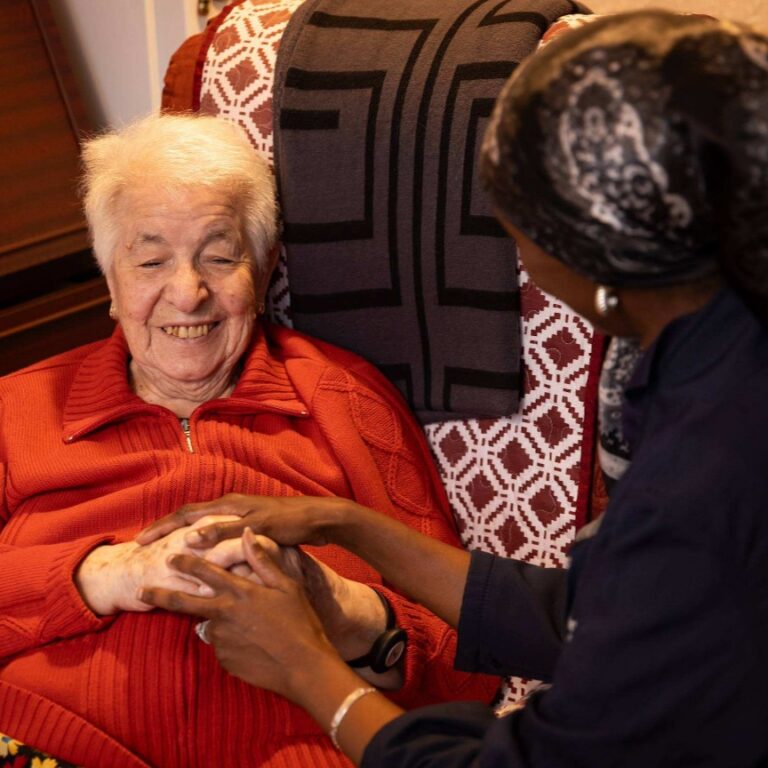
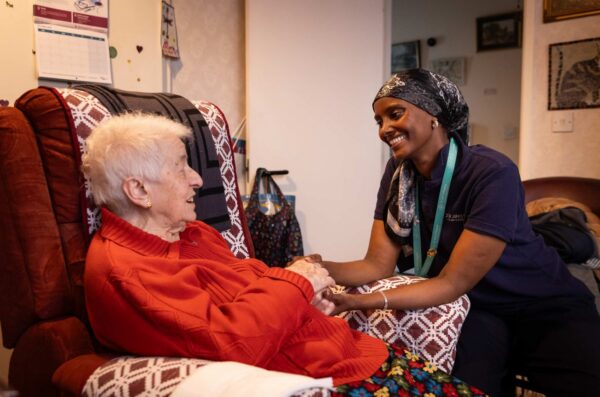
An older woman, smiling, being tended to by a younger woman

St John’s Hospice

Helping people to make the most of every day

Most people are aware that hospices provide expert end-of-life care. However, people don’t always realise that hospice care can start months or even years before the patient’s death. St John’s Hospice offers everything from specialist nursing care to physiotherapy, respite care, complementary therapies and bereavement counselling.

While St John’s does have an inpatient unit, much of the charity’s work is carried out in the patient’s own home or at its wellbeing centre.

Cristina Monk is the Senior Philanthropy and Major Gifts Executive at St John’s. She says, “We want our patients to have as much choice as possible about how their care is provided to them. As they near the end of their lives, some people want to be an inpatient at the hospice, but a lot of people want to stay where they feel the most comfortable, with their family close by.”

Hospice@Home

An older woman sat in a chair, being tended to by a younger womanSt John’s can support people at home in the final days of their life. While they can’t provide pain relief, healthcare assistants can monitor devices that do, such as syringe drivers, and help patients to take their medication on time. They can also take care of washing and other personal needs, and perform other tasks to ensure that the person is as comfortable as possible.

As the brother of one patient shares, “From the moment our healthcare assistant, Hamid, arrived, to the moment he left, he was 100% present and concerned about my brother’s comfort. In addition to caring for my brother, Hamid concerned himself with caring for me and for my sister, reassuring and comforting us. There was one particular day when I was feeling very alone, exhausted and anxious after a sleepless night. I saw Hamid approaching at 8am, and I felt the burden slip off my shoulders.”

There’s also an added benefit to the service. Cristina explains, “We can provide 24-hour care to all our inpatients, but we only have 17 beds here. Being able to expand into the community means we can reach a lot more people a lot more quickly, especially when they need care the most. We don’t have to wait for a bed to open up.”

While the Hospice@Home service isn’t available everywhere in London, St John’s has extended it into Hammersmith & Fulham this year, with the help of funding from the NHS and local grants, including £4,000 from Hammersmith United Charities. Cristina says, “We’ve been very lucky to have a lot of support coming in from Hammersmith & Fulham, and a big part of that is due to HUC and DEBK and other smaller trusts in the area. There’s a strong network of community organisations here.”

Fundraising for St John’s Hospice

As hospices provide such a vital service, many people assume that they’re funded through the government. In actual fact, the vast majority of their income comes from donations and grants. Costs have risen significantly in recent years and many hospices are now struggling. In England alone, hospices ended the last financial year with a deficit of more than £70 million and 33 hospices were forced to make significant cuts to their services.

As Claire Lubbock, Senior Fundraising Manager at St John’s, says, “One in three people in the UK who have a life-limiting condition don’t receive the level of palliative care that they should. Unfortunately, without hospices, people end up passing away in hospital or a care home.”

There are many ways that you can support St John’s Hospice, from payroll giving to leaving a gift in your will or taking part in one of the charity’s many fundraising appeals.

Christmas fundraising

Donating to St John’s Hospice

Christmas is traditionally a time for recognising and celebrating those we love, whether they’re still with us or have passed away.

In the first week of December, all donations made to St John’s Hospice will be match-funded, meaning that every £10 you donate will be worth £20 to the charity.

A group of women dressed up as Father ChristmasSanta in the City

On 10th December, hundreds of people dressed as Father Christmas will run or walk through the heart of London to raise money for charity. As Claire says, “It’s a really fun, welcoming 5k walk that starts at St Paul’s and it helps us to raise vital funds, which make a real difference at a special time of year.”

Registering costs £20 and you’ll receive:

  • A free five-piece Santa suit to wear on the day
  • A Santa in the City medal
  • Support with your fundraising and training.

Find out more at www.stjohnshospice.org.uk/events/santa-in-the-city

Light Up a Life

A chance to come together, remember and reflect, Light Up a Life is a multi-faith service at St John’s Wood Church. This year, it’s being held on Tuesday 8th December from 6pm and will include live music, poetry and readings. After the service, you can head to Lord’s Cricket Ground for drinks and canapés.

It costs just £12 to register for Light Up a Life.

A star hanging on a tree. The star says Dad, love you out of sightIn Loving Memory Garden

From 30th November to 6th December, St John’s gardens will be lit by hundreds of star decorations. For £25, you can dedicate a star in memory of a loved one and write a message on your dedication plaque. In January, you’re welcome to collect your star and take it home as a keepsake.  Claire says, “People are welcome to walk through the garden for a moment of remembrance to start the festive season.”

‍Dedicate a star here.

Volunteer

St John’s is looking for volunteers to support with Light Up a Life and the In Loving Memory Garden. If you can help, please email volunteers@hje.org.uk

Get support

If you or a loved one has a life-limiting illness and lives in North, West or Central London, St John’s may be able to offer support. A GP, hospital doctor, nurse specialist, community nurse or other health & social care professional can make the referral. Find out more at www.stjohnshospice.org.uk/referrals

Read More ...
A group of young people

The Lyric Theatre

“For many people, it will be the very first time they’ve been to the theatre.”

Watching a play can transport you to a different time and place. For a few hours, you can immerse yourself fully in a creative experience, free from distractions and day-to-day concerns. What’s more, as Zosha Nash says, “It’s not only about activating people’s imagination and experiencing the magic of creativity; it’s also about shared experience, which is becoming more and more rare in the 21st century.

“It’s about seeing stories from other people, other cultures that you may not ordinarily encounter, and sitting with people from all different walks of life to have that unique experience for one night only.”

Zosha is Director of Development at the Lyric Hammersmith Theatre, which has played a crucial role in West London for more than 130 years. The Lyric aims to be a platform for diverse talent. Zosha explains, “The stories on our stage reflect the community that we sit at the heart of. It’s really important that people can recognise themselves on the stage and recognise their stories.”

Making arts & culture affordableTwo actors facing each other

While 73% of Londoners would like to go to the theatre, many simply cannot afford to. This is hardly surprising given that a single theatre ticket can cost over £100 at many London venues.

The Lyric takes a different approach. Its shows often receive critical acclaim, but tickets start at just £10. What’s more, the theatre offers free tickets to community groups through its Community Ticket Bank, which is part-funded by Hammersmith United Charities.

Zosha explains, “We want the theatre to be accessible to everyone, particularly those in our local community. For many people, it will be the very first time they’ve been to the theatre.

“The money from Hammersmith United Charities has gone towards funding free tickets for our recent show, Fences, and for our annual pantomime, which is brilliant for groups that serve young people or families. It’s also paid for theatre tickets for START and SPRINGBOARD participants [see below].”

Young Lyric

The Lyric offers free and low-cost theatre classes for young people, and also has three flagship inclusion schemes – START, SPRINGBOARD and REWIND.

Zosha says, “REWIND is for secondary school-age children who are at risk of leaving education. We work with these young people on being able to express themselves, tell their stories and re-engage with the educational environment. There are proven benefits to getting involved with arts & culture from a young age. Being confident and able to speak in public, for example, are soft skills that can have a knock-on effect in all different areas of your life, including employability and social mobility.”

START also aims to help young people develop soft skills that will benefit them throughout life. The six-week programme is for young people aged 16 to 25 who are currently not in education, employment or training. Zosha says, “We use theatre skills to improve confidence and enable the young person to look an interviewer in the eye, give a clear response and so on. It’s also about opening the door to the creative industries. If someone has never been into a theatre before, they usually wouldn’t have considered all the jobs that go on behind the scenes.”

Young people, smiling
SPRINGBOARD participants

The Lyric’s talent development programme, SPRINGBOARD, is helping to make theatre more accessible for young people from under-represented backgrounds. Unlike drama school, it’s free to attend and participants receive a bursary to help with living costs. Zosha says, “They have in-depth actor training, including sessions with every single one of our main stage directors. They learn all of the skills that you need to be a successful performer, such as vocal technique. They’re also coached in the practicalities of working as a self-employed actor.  Alumni have been on the West End stage, in TV commercials, in Netflix series and so on.”

Alongside its flagship programmes, The Lyric runs many other activities aimed at young people. A free Young Lyric membership, for example, offers £5 theatre tickets, member-only events and other benefits for young people up to the age of 25 who live in West London.

For the last two years, The Lyric has toured a play called Cross the Line, in partnership with H&F Council’s Gangs, Violence and Exploitation Unit, which tells the story of a 12-year-old boy who’s pulled into drug running. The show helps children to recognise the signs of grooming and County Lines exploitation before they’re most at risk. It’s been performed in every primary school in Hammersmith & Fulham and was awarded an Excellence in Arts Education award at the UK Theatre Awards.

Whether they’re enjoying a show, learning new skills or discovering a new career path, thousands of people across Hammersmith benefit from the Lyric every year. Who knows how far the experience could take them?


Get involved

If you’re interested in taking part in Young Lyric, you can find out more on the theatre’s website.

The Community Ticket Bank opens a few times each year. Keep an eye on the theatre’s Instagram page and the Ticket Bank webpage for more details.


Read More ...
View More