Facebook Twitter Instagram

The almshouse movement: As vital as it’s ever been

With the average house price in Hammersmith at more than 25 times a nurse's salary, almshouses like ours are as vital now as when the movement began hundreds of years ago.

With the average house price in Hammersmith at more than 25 times the salary of a nurse, it is no surprise that many workers are reaching retirement without the safety net of their own property. That’s why almshouses like ours, providing older people an affordable home in the community where they belong, are as vital now as when the movement began hundreds of years ago. 

By Victoria Hill, Chief Executive – Hammersmith United Charities

The coronavirus has seen an outpouring of appreciation for key workers who leave the safety of their home to work keeping their community safe, fed and well. In the frightening early days of the first lockdown, we stood in the street and clapped for healthcare workers, carers, shop assistants, cleaners and more – all the people who put themselves at risk for the sake of others.

The contribution of key workers is rarely highly valued in monetary terms and these are often the very people who struggle to find an affordable home near their families and vital services as they grow older and become more in need of care themselves.

The average house price in Hammersmith is more than 25 times the salary of a nurse, and so it is no surprise that increasing numbers of workers are reaching retirement without their own property to fall back on. And with the average rental cost of a one-bedroom flat at two and a half times the state pension, it is easy to see how so many older people are also priced out of the private rental market.

With one in four older people in our area now living in poverty, the mission of almshouses like ours is as relevant as it was 400 years ago when Hammersmith United Charities was founded.

The almshouse movement has been around for hundreds of years but the Almshouse Association and the Charity Commission have only recently created a formal definition of what it means to be an almshouse. It describes exactly what we do here at Hammersmith United Charities.

Our charity was founded in 1618 with a gift of £100 to provide housing for the relief of the ‘elderly poor’ of Hammersmith. This gift has been added to and grown by generations of trustees and we now have an endowment and 92 flats on two sites just off the Goldhawk Road. These properties are highly protected and cannot be sold or used for any other purpose. Our residents must be over 60, have lived in Hammersmith for at least five years, be of limited means and in need of sheltered accommodation.

In human terms, our status as an almshouse means that the Charity can provide housing to the people who have often contributed most to our community but feel valued least. We believe that no one should be denied the opportunity to live in a decent home simply because they were never given the opportunity to climb the property ladder. The cost of our flats is regulated by statute to ensure that anyone can live here without causing hardship.

For us, almshouse living is about much more than just affordable housing. We know from research by the What Works Centre for Wellbeing that where we live and our relationships also have a significant impact on our wellbeing. For Hammersmith United Charities, what defines us is our ability to provide a home where people feel safe, in the place where they belong, surrounded by a community who values them for life, not just for lockdown.

***

More information:

Over 60 and looking for a new home in Hammersmith? We provide beautiful, welcoming sheltered housing with award-winning communal gardens. Flats available now from £870 per month.

Flats are now available in our almshouses

If you think you might be eligible, we'd be happy to give you a tour of our almshouses and share what it's like to live here.

Read More ...
Trustee vacancy

Could you be our new Trustee?

Make a meaningful difference to the people of Hammersmith.

We’re appointing a new Trustee, who will also join our Grants and Community Committee. This is a unique opportunity to join an established charity that combines housing, grant-making and community leadership.

We’re particularly keen to hear from people with a strong connection to Hammersmith or lived experience of the challenges faced by our community. You do not need to have been a Trustee before as we’ll provide full training and support.

You’ll attend eight meetings a year, (typically 90 minutes each, starting at 5.30pm) and be welcomed at other events. While it’s a voluntary role, we will reimburse reasonable travel expenses.

Please download the Candidate Information Pack for full details. The closing date is 17 June 2026. If you’re unsure whether this role is right for you, we’re happy to have an informal discussion before you apply.

We believe in a Hammersmith where everyone feels valued, supported, and empowered – a community where everyone has the opportunity to thrive.

Will you join us in making our vision a reality?

Read More ...
A group of smiling children at the Sulgrave club

Celebrating Hammersmith’s communities through film

We commissioned Media Trust and Constellation Films to create short videos highlighting the work of four of our grant holders.

Life is difficult for many people in Hammersmith right now. It’s a challenge to afford the bare essentials. ‘Nice-to-haves’ are out of reach, even when they could make life easier in the long run. Charities are facing a similar issue. When core costs are high and teams are stretched, there’s little to no money available for marketing or communications.

At Hammersmith United Charities, we aim to do more than fund good work – we champion community organisations and raise awareness of the issues they’re tackling. With this in mind, we commissioned Media Trust and Constellation Films to create short videos highlighting the work of four of our grant holders: Sulgrave Youth Club, This New Ground, Barons Court Project and Nourish Hub.

You can watch the videos below.

We also funded Hikayetna to produce Arabic-language mental health videos, responding directly to local insight about the barriers faced by our Arabic-speaking communities when it comes to seeking mental health support.

The five organisations each came with their own priorities – reaching new beneficiaries, raising funds, attracting volunteers, changing attitudes – but collectively, these films go even further. They help to build a richer, more visible picture of the strength and diversity of Hammersmith. It’s a community we can, and should, be proud of, and one that deserves our support.

You can watch Hikayetna’s films here.

Film screening

On 17 March 2026, we gathered at Riverside Studios for a community screening to showcase the films, celebrate the work of the filmmakers, and bring local people together to spark new connections and open the door to future collaboration across Hammersmith.


People gathering around the food table at the film screening

One of the films being shown in the cinema

Hetty and Paige checking names against the register

If you would like to stay up to date with future events, please scroll to the bottom of the page to sign up to our newsletter.

Read More ...
Ken, a man in his 60s, standing by a trug full of plants and surrounded by pots of plants

Happy National Gardening Week!

Why our communal gardens are integral to almshouse life

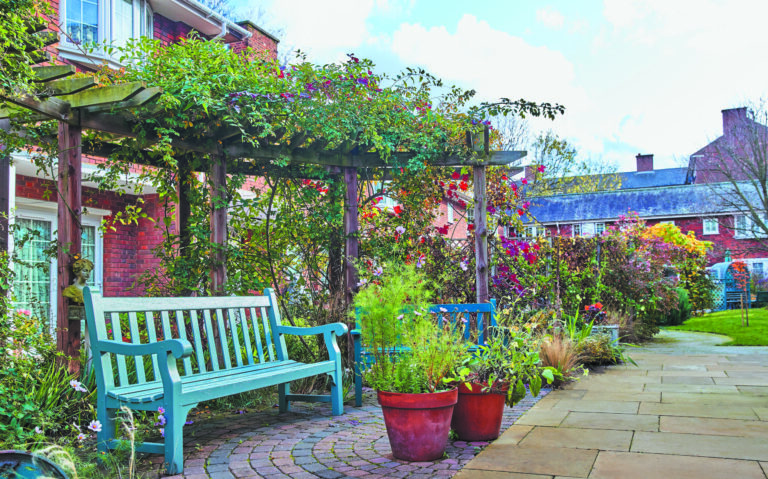
The theme for this year’s National Gardening Week is ‘Share your passion for plants’. Whether you’re an avid gardener or just enjoy relaxing on a bench surrounded by colour and birdsong, most people enjoy being outside in spring. As our Community Gardener, Victoria Cripps (known as V), says, “As a Community Gardener, it is very important to me to advocate for gardening as a means of supporting wellbeing. I know, through my own daily experience, that being in nature and caring for plants and wildlife has a positive effect on my mental and physical health. Gardening is both physical exercise and a mindful, focused, creative activity.

“The residents here comment daily on the effect the garden has on their wellbeing – from particular plants evoking positive memories, to hearing birdsong and feeling joy, seeing colour and feeling uplifted, and experiencing the pride of new seedlings emerging! Those who actively garden also comment on how it supports them to stay active, as well as the enjoyment of focusing on a project and the sense of achievement in seeing a patch flourish.”

Indeed, many of our residents enjoy gardening. Some are life-long gardeners, while others have discovered their passion later in life.

Ken, a man in his 60s, standing by a trug full of plants and surrounded by pots of plants
Ken with his trug garden

One of our residents, Ken, says, “I had what you’d call a concrete garden before. I’d never done gardening in my life, apart from tomatoes and a bit of veg. I’d never grown flowers until I came to Sycamore.”

Ken moved here back in 2023 and soon started helping with the communal garden. Before long, he had his own trug outside the greenhouse and then took on one of the almshouse’s small plots of land. Along with bedding plants, Ken is now growing fruit and vegetables, including tomatoes, radishes, spring onions and rhubarb.

Rather than learning from books, Ken has learnt as he’s gone along: “The gardeners have been advising me on what to do and showing me little bits and pieces – when to put the seeds in and so on. I’ve been picking things up that way. One or two of the other residents have been helping me too.”

While his own plot keeps Ken pretty busy, he still enjoys helping with what he terms “the donkey work” in the communal garden, including painting and repairing our garden benches. He’s now in the process of making his own bench out of old car tires and pallet wood. Next on his list is repurposing more discarded tires into a decorative planter in the shape of a garden well.

His advice to anyone thinking of trying gardening is, “Just get on and do it!”

Gardening in later life

Ken, a man in his 60s, gardening from a chair.

Ken has difficulties with his knees so has bought himself a low fold-up chair to use when he can’t kneel.

V has a few other tips for gardening in your 70, 80s and beyond…

  • If you have mobility issues, the right tools can make gardening a lot easier. Look for lightweight ones that can be used standing up or from a chair, such as long-handled weed pullers. You can also buy easy grip handles, which attach to your existing tools and are really useful if you have painful or weak wrists.
  • If you find it difficult to kneel or crouch, you might want to consider having some raised beds built or investing in a large trug or some pots. They’re much easier to maintain, as you can tend to them while standing or sitting in a chair. Do bear in mind that they’ll need watering more often though.
  • Choose low-maintenance plants, such as shrubs that don’t need tying in or deadheading. Plant perennials and bulbs rather than annuals to make your life simpler next spring. Wallflowers, sedums and begonias are all great choices.
  • You’ll enjoy your garden more if you feel safe in it. Make sure that paths are wide and even, with no raised slabs that might trip you up. Mobility aids, such as grab rails, can also help you to access your garden, especially if it’s on a different level to your home.
  • Full watering cans are very heavy and hosepipes can be challenging to pull around. As our climate changes, we can expect more dry, hot spells throughout summer, so you may want to opt for drought-tolerant plants like lavenders, salvias and verbenas.
  • If you love gardening but can’t manage a garden on your own, then volunteering on a shared plot might be the answer. Many of our almshouse residents enjoy working in our communal gardens. If you’re not a resident, you could volunteer with Hammersmith Community Gardens Association, which manages several gardens across the borough. You don’t need any gardening experience to volunteer as you’ll be supported by other volunteers and staff members.
  • Having benches and seating in your garden means you can take regular breaks. Gardening, at any time of life, is about pacing. It’s much better to spend as long as you can comfortably on an achievable task, then refresh with a cup of tea before moving on, than trying to do it all at once!
  • For times when it’s really difficult to get outdoors, due to challenging weather or mobility needs, looking after houseplants or arranging cut flowers means you can connect with nature indoors. There are houseplants for all ranges of ability, so you can start with something easy and move on to more challenging plants as you grow in confidence.
Read More ...
Bubble & Squeak's brightly coloured logo, painted by the children

Bubble & Squeak

How a project started by school kids now feeds hundreds of people in Hammersmith.

April 22nd is Earth Day. When we think of climate change, we tend to blame petrol cars or factories churning out cheap clothes, but almost a third of greenhouse gas emissions are due to  food production. Agriculture is also responsible for around 70% of water use, not to mention leading to deforestation, biodiversity loss and pollution.

Reducing food waste, then, could play a crucial role in tackling climate change and many other environmental issues.

Almost 2 million tonnes of food is currently wasted in London each year. At the same time, more than 10% of Londoners are experiencing food insecurity, with tens of thousands relying on food banks to feed themselves and their families.

Back in 2017, a group of children at Old Oak Primary School decided to take a stand.

Bubble & Squeak's brightly coloured logo, painted by the childrenLydia Gandaa, Director of Bubble & Squeak, explains, “The children were shocked to find out how much food was being wasted. They asked Waitrose and Marks and Spencer’s if they could collect any food that would otherwise have been thrown away. They also pitched what is now the Mayor’s Fund for London and won £1,500, which they used to set up a weekly food stall in the school playground. East Acton/Old Oak is a highly deprived area, so it was about supporting the families that live locally to access healthy, quality food that would have otherwise gone to waste.”

Almost 10 years later, that project, Bubble & Squeak, is now a community interest company (CIC), feeding hundreds of people every week. Most of the food is provided by City Harvest and The Felix Project, who collect it from supermarkets across London.

Bubble & Squeak’s food stall is open three days a week. It’s still in the playground but in a separate space with its own gate, so that members of the community can also access it. The stall is mainly staffed by volunteers, with the help of older pupils after school.

Lydia says, “We have a wide range of individuals coming for food, including older residents, families and people who live by themselves. Each session is attended by around 60 to 70 people, and they’re often using the food to feed several people in a household.”

The food is given out for free, but if people are able to make a donation, then the money is given to the school to spend on toys and equipment.

As well as distributing food that would otherwise be wasted, Bubble & Squeak runs an after-school cookery club, showing children how to make healthy meals and minimise waste. The CIC also organises community meals and holiday activities.

Hammersmith United Charities’ grant

Many of East Acton and Old Oak’s residents work full-time but in low-paid jobs. Lydia says, “They work during the day so can’t get to our morning or afternoon sessions, but they’re struggling to make ends meet and need support. It isn’t fair.”

Hammersmith United Charities agreed to provide Bubble & Squeak with a grant of £15,000, which it’s using to run evening sessions twice a week for the rest of the year.


Support Bubble & Squeak

Do you have a few hours spare each week to give out food or run cookery sessions? Please email Lydia at bubblesqueakeat@gmail.com


Read More ...
View More