Facebook Twitter Instagram

Inspiring women: Dr. Christina Konadu

“Women are powerful. When women come together, we can achieve so much.”

In honour of International Women’s Day, we’ve been talking to some of the inspiring women who are making a difference in Hammersmith. Dr. Christina Konadu is Founder and CEO of the Bassuah Legacy Foundation, a charity working to support single parents and their families in London and Ghana.

 

Photo of Dr. Christina KonduWhat comes to mind when you think of International Women’s Day?

When I hear ‘International Women’s Day’, I think of resilience, empowerment and progress. It is a day to honour the contributions of women in every sphere, whether in leadership, community work, education or the home. It reminds us that while we celebrate how far we’ve come, there is still work to do in ensuring equal opportunities for all. As a woman leading a charity, I see first hand the strength of women coming together to support, uplift and create lasting change.

Why did you start the Bassuah Legacy Foundation?

I lost my husband at an early age, which meant I had to raise my children alone. Being a single parent for over 30 years was incredibly tough. In 2015, I had an accident and then needed a major operation in 2016, and then I lost my son soon after the operation.

Life became even more challenging. The pain never goes away; it is something I carry with me every day. But I try to heal myself by supporting others, working hard and turning my pain into purpose.

Through the Bassuah Legacy Foundation, we have made a difference to hundreds of single-parent families, giving them hope, a safe space and meaningful support. Our programmes focus on reducing isolation, empowering women and young people, and helping people re-enter the workforce.

Do you think there are still barriers to gender equality?

Absolutely. While progress has been made, gender inequality is still deeply rooted in many aspects of society. Women continue to face barriers in leadership, the workplace and even in their personal lives. These barriers are often subtle, such as stereotypes, unequal opportunities or the expectation that women should balance it all without proper support.

In the UK, women remain underrepresented in top corporate roles, the gender pay gap persists, and women often face barriers in industries like finance, tech and politics. I am from Ghana, which has also made progress in women’s representation but still has a long way to go. While it is significant that the current vice president is a woman, true gender equality goes beyond a single leadership position. The fact that the Ghanaian cabinet has only two women highlights the ongoing gap in political representation and decision-making power. Equality means equal participation at all levels, not just symbolic representation.

For single mothers world-wide, the challenges can be even greater. They are often stigmatised, judged, underestimated or left out of opportunities simply because they are raising children alone. This is why organisations like the Bassuah Legacy Foundation are committed to breaking down stereotypes and creating a fairer society where every woman is valued for her contributions regardless of her circumstances.

True gender equality will only be achieved when women and men have the same opportunities, the same respect, the same pay, and the same freedom to make choices without bias or limitation. Until then, we must keep raising our voices, supporting one another and challenging the barriers that still exist.

Which women leaders inspire you?

Many women leaders inspire me, each in different ways. Michelle Obama stands out for her grace, intelligence and dedication to education and women’s empowerment. She has used her platform to advocate for girls’ education, health and leadership, showing that true power comes from lifting others up.

I am also inspired by Ngozi Okonjo-Iweala, the Director-General of the World Trade Organization. She is a strong, trailblazing African woman who has broken barriers in global finance and trade, proving that women belong at the highest decision-making tables.

Another remarkable leader is Jacinda Ardern. Her compassionate leadership has set an example of what modern leadership should look like.

On a more personal level, I draw inspiration from everyday women who fight against the odds, such as single mothers, community leaders and grassroots activists. Their resilience, strength and ability to turn pain into purpose remind me of why I do the work I do. These community leaders include Farial Missi at Imperial College, who leads the Agents of Change Women’s Community Leadership Programme, and Sue Spiller at Sobus.

Women leaders inspire me in many ways and their stories remind me that no barrier is too high to overcome.


The Bassuah Legacy Foundation offers a range of support for single-parent families in London and Ghana, including:

  • Workforce preparation, such as help with writing CVs and practising for interviews.
  • The essential shopping programme and charity shop (90 Goldhawk Road, Shepherds Bush, W12 8HD), which gives families access to vouchers, welcome packs and loyalty cards.
  • Financial and life skills, including a money management programme and healthy eating workshops.
  • Community and wellbeing activities, such as social gatherings and trips.

The Bassuah Legacy Foundation is always keen to hear from single-parent families who want to be part of the charity, along with other individuals who are interested in volunteering opportunities or who want to support the charity’s work.

Find out more at: www.bassuahlegacy.org or by contacting Christina on WhatsApp on +44 7544 757987.


Flats are now available in our almshouses

If you think you might be eligible, we'd be happy to give you a tour of our almshouses and share what it's like to live here.

Read More ...
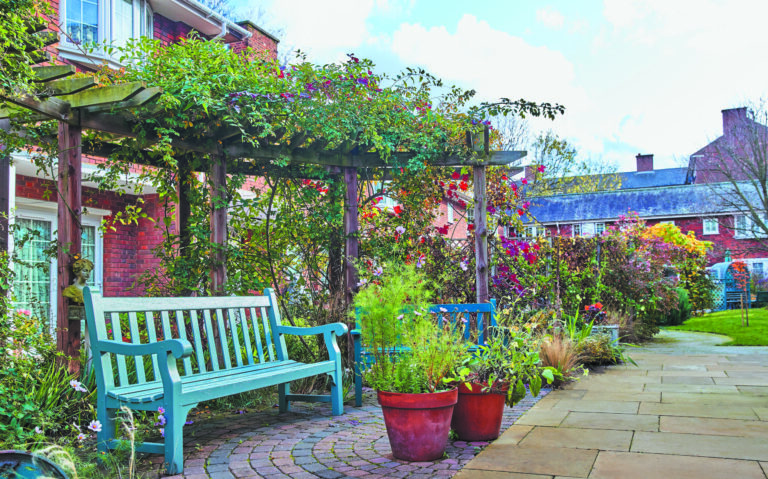
Image of garden with blue bench in the foreground

Join Our Team as a Community Gardener

Come and join our friendly, hard-working team!

Job Description

Job Title:                            Assistant Community Gardener

Accountable to:                Head of Housing & Property

Direct reports:                  Community Gardner

Liaison with:                     Residents, contractors, volunteers, staff, and visitors

Salary:                                £28,000 PA (pro rata)

Location:                            The postholder will work across the Charity’s two almshouses, John Betts House and Sycamore House (housing                                                   for older people), both in Hammersmith

Hours of Work:                 4 Days/30 Hours Per Week with occasional out of hours working

Job Purpose

Work jointly with the Community Gardener to ensure the Charity’s award-winning communal gardens are cared for and maintained to the highest standards. Use your skills, knowledge, and experience to ensure the gardens provide a warm and inviting space for residents and visitors throughout the year. Develop opportunities to involve residents in gardening activities to improve their health and wellbeing.

About us

Hammersmith United Charities was founded in 1618 and makes grants to community organisations helping local people address complex social issues such as poverty, inequality or mental ill health. We also have two almshouses in Hammersmith, for older members of our community. Over the years, our gardens have been developed to ensure they are not only beautiful, but creative spaces where our residents can get involved if they choose or simply relax and enjoy. The gardens are based on organic principles.  They include plants that attract butterflies, bees and birds, and plants that are stimulating in colour, aroma and texture.  Residents can tend to their own hanging baskets, pots and allotments and get involved in various gardening projects and workshops that are run to help and support residents in engaging with the gardens.  Our gardens have won many awards at the London Garden Society competition, which are judged according to Royal Horticultural Society guidelines.

About you  

This is an exciting opportunity for a hardworking, professional gardener to continue the fantastic achievements of previous gardeners alongside our Assistant Community Gardener. We are looking for someone who has a wealth of demonstratable knowledge and experience, with the relevant horticultural qualifications to support this. Widespread experience and expertise in a range of gardening disciplines/techniques is essential as well as an open mind to continuous development and learning new skills.

The successful applicant must be self-motivated with the ability to manage and motivate to achieve the highest standards. You will demonstrate a track record of leadership in managing and/or developing similar environments.  We are looking for someone with imagination and flair, an understanding of community organisations who has good communication skills, a caring disposition who is empathetic, with an unrelenting capacity to encourage and support our residents.

5 years + experience in a similar role or position is desirable and a relevant horticultural qualification along with an eye for detail, the ability to take responsibility, act decisively and the ability to turn your hand to most tasks, is essential.

This is a physically demanding role, working outside all year round, in all weathers. The role involves carrying out tasks requiring high levels of manual dexterity, as well as physically demanding tasks, such as trimming hedges, shovelling, digging, mulching, lifting and carrying.

The successful applicant will be required to undertake an enhanced DBS Check.

We value and respect all the differences that make us who we are, including age, cultural background, disability and mental health, ethnicity and race, gender, gender identity and expression, sexual orientation, and social background.

How to Apply

The closing date for all applications is at noon on Friday, 5th June 2026. Applications will not be accepted after this date and time.

Please email the completed application and your CV to lisa.dasilva@hamunitedcharities.com and use the subject line: Assistant Community Gardener.  If you require support with completing this application form, or for an informal chat, please contact Victoria Cripps on 07909 203 924.

Read More ...
Two women: a younger volunteer and the older person she is supporting

The Creighton Centre

Reducing social isolation for people with dementia

An older man and a younger female volunteer. Both are smiling.

Almost 1 million people are living with dementia in the UK and that figure is expected to rise considerably over the next few years. With statutory services stretched to their limit, it often falls on charities to provide support, particularly for those who live alone.

Here in Hammersmith & Fulham, The Creighton Centre offers a lifeline to 350 socially isolated older people, most of whom are on a low income. The average age of participants is 82 and around 40% have dementia. Fundraiser Stephen Womersley shares, “We found that, increasingly, more people were being referred to us with dementia – mild, moderate and severe. We realised that we needed extra resources for them so created a comprehensive programme of support, Circle of Care, which is delivered by volunteers and overseen by a specialist dementia coordinator.”

That programme of support includes:

  • Safe & well checks
  • Home visits for housebound clients
  • Emergency staff intervention
  • Befriending
  • Advocacy work
  • Group activities such as gardening and dancing
  • Events, workshops and advisory sessions
  • Home adaptations
  • GP/NHS liaison


Two women: One is a younger volunteer, the other is the older woman she is supporting

Stephen says, “These are people who often fall through the gaps, so we bring together the various services they need, from an Admiral nurse to council support services, together under the umbrella of the Circle of Care programme. Our volunteers are trained to be able to recognise what services may be missing, what services need to be provided and what level of care that person needs.”

Loneliness and isolation increase the risk of developing dementia. On the other hand, conversations and group activities strengthen neural connections, so regular social interaction can actually slow down the rate that dementia progresses. In other words, when isolated older people are given the chance to regularly interact with others, it can significantly impact their life and help them to live independently for longer.

The Creighton Centre gives older people that chance to socialise, whether that’s during a home visit, a chair-based exercise class, or a stroll with a walking buddy.

Hammersmith United Charities’ grant

We’ve provided the Creighton Centre with a grant of £8,000 to help fund its dementia work. Stephen says, “It’s only because of funders like Hammersmith United Charities that we’re able to do what we do. This year, they’re supporting our older people services in Hammersmith; previously, they supported our learning disability programme, so we’re very grateful.”

Volunteer with the Creighton Centre

Like many charities, The Creighton Centre relies on volunteers to deliver its services. In total, it has around 120 volunteers supporting five different projects, and it’s currently recruiting people to act as specialist dementia and other volunteers.

If you’re interested in volunteering, there are a number of ways you can help, from visiting a housebound person once a week or providing a daily wellness check over the phone, to helping someone who’s recently been discharged from hospital to regain their independence. You’ll receive full training and ongoing support.

Visit https://www.creightoncentre.org/volunteer/ to find out more.

Read More ...
A group of people on or around a shared bicycle

For Brian

“When I get on a bicycle, I leave my dementia monster at home.”

One in three people will develop dementia, and yet it remains a much-misunderstood condition. People don’t like to talk about it, assume it’s something only older people get, and think it will be obvious if you meet someone who’s living with it.

In fact, people often live with relatively mild symptoms for several years. What’s more, 70,800 people in the UK who have dementia developed it before they turned 65.

Clare Morris is the founder of For Brian, a dementia-inclusive CIC. She shares, “People of all ages, all walks of life and all cultural backgrounds can get dementia. I worked for many years with people with rare forms of dementia, some of whom were teenagers. People think dementia is just about memory, but you can also have problems with balance, mobility, communication, and visual and/or auditory perception.

“The thing that lights up the brain the most is social interaction and laughter. At For Brian, we walk, we cycle, we have parties, we have coffee mornings. It’s a space away from worries; there’s no need to divulge a diagnosis or fill in a referral form and we don’t talk about dementia unless they bring it up. As one woman with Alzheimer’s says, ‘It’s nice not to talk about things sometimes, but it’s also nice to know you can if you want to.’”

For Brian’s activities are co-produced with service users, some of whom now take an active role as directors. Clare says, “These are seldom-heard voices. If you take the trouble to meet people where they are, ask what’s important to them and do something about that, it’s therapeutically very powerful. It helps them to feel more in control of something in their life.”

A group of people on or around a shared bicycle

Positive Spin

For Brian’s Positive Spin project brings people together to cycle, walk and socialise. Many of the attendees have dementia or another disability, such as cerebral palsy. People sometimes bring food to share and Clare is planning to organise picnics in the warmer months.

She explains, “We go to Bikeworks’ All Ability Cycling Hub, where there are different kinds of non-standard cycles to try or you can just walk around the park. We fund Cycle Connect, a four-person cycle taxi, to pick people up from their homes if they can’t walk there.

“One man was in a wheelchair and couldn’t stand, but we got him on a recumbent bike and he was cycling around independently. As one of our patrons says, ‘When I get on a bicycle, I leave my dementia monster at home.’

“Lots of people with dementia are very mobile, and they need to move around to help deal with the anxiety they’re feeling. The rest of life seems very strange, but there may be a familiarity about being on a cycle; it’s a procedural memory exercise, which can be a great tool for rehabilitation and wellbeing.

“At the same time, trying something a bit different is good for your brain and good for your body, and unless you keep moving, you stop being able to move.”

Enriching the outdoor space at Rosewood Square

Rosewood Square is a sheltered housing scheme on the border between Old Oak and East Acton. For the last few months, Clare and her team have been working to transform the scheme’s outdoor space. Clare shares, “We’ve been growing wildflowers from seed, we’ve got a little micro pond, and we’ve just got a bird bath.

“The residents are really excited. Several of them have dementia. While they can’t do the heavy work, they’re involved in all of the decisions about what we do.”

For Brian initiated coffee mornings at Rosewood Square, where activities are planned and scheduled, including regular parties with the residents.

Hammersmith United Charities’ grant

We provided For Brian with its first grant and have supported the CIC with more funding over the years, including £15,000 in our July 2025 grants round. Clare has put some of the money towards maintaining the garden at Rosewood Square and running the all-ability cycling group.

Get involved

If you want to take part in Positive Spin or another of For Brian’s dementia-inclusive activities, visit www.forbrian.co, contact the CIC or turn up at Old Oak Family Hub on a Friday morning at 10am and introduce yourself.

Read More ...
Two girls and a boy holding watering cans. They're all smiling and wearing school uniform.

Hammersmith Academy

Raising the next generation of nature lovers

Two girls and a boy holding watering cans. They're all smiling and wearing school uniform.

The mental and physical benefits of being out in nature are well understood, but today’s children and young people spend half the time outdoors than their parents did. Screentime is often blamed, but another key problem is opportunity, particularly in urban areas like Hammersmith. Many homes don’t have a shared or private garden, and school gardens are often little more than uninviting concrete spaces.

When Hammersmith Academy opened in 2011, its outdoor space was almost bare. However, over the years, the school has created a colourful garden with an abundance of flowers, fruit and vegetables.

Gary Kynaston, Headteacher at Hammersmith Academy, explains, “It was very much driven by the students and a teacher called Patrick Kirwan. As the years went on, the garden got bigger. They invested in a greenhouse, raised beds and picnic benches, and brought in chickens.”

In 2017, Hammersmith Academy won the RHS School Gardening Team of the Year award. David Domoney’s Cultivation Street award followed in 2018, and in 2021, Hammersmith Academy was named Sustainable School of the Year in the Sustainable City Awards.

The students have full access to the garden, but it’s become far more than just a space to spend time in. Sue Beenstock from Hammersmith Community Gardens Association (HCGA) works in the garden two days a week. She explains, “The garden is part of the fabric of the school. Every tutor group comes out for a few sessions each year, 30 pupils at a time, to do real, hands-on gardening. I’ve had them planting potatoes, propagating olives, bay and blackcurrants, and doing other work. They also really love looking after the chickens and collecting eggs. It’s practical but fun. They show curiosity and they have a go.”

A gardening club meets after school each week; several community groups use the space when the school is closed; and pupils can also volunteer in the garden to gain their Duke of Edinburgh award.

A smiling girl carrying a tray of plants.Sue says, “I want the students to have a sense of wonder at how incredible nature is when they’re planting and seeing things grow. We’re growing lots of different varieties, including around 15 types of tomatoes. In a supermarket, you have a very limited array, because the produce is grown to last a long time on the shelf. In the garden, we’re growing for colour and variety and taste, which is much more exciting.”

Later in the growing season, the pupils will be able to pick and eat the tomatoes and other fruit. As Sue says, “They’ll have planted it, watched it grow and tasted it.” This year, some of the fruit and veg might need to stay in the ground a bit longer as Sue and the pupils are aiming to grow giant pumpkins, leeks and marrows.

We recently granted the school £5,000 towards maintaining the garden. Hammersmith Academy is planning to use some of the money to create a pond in a new wildlife-friendly area of the garden.

Gary says, “A lot of our students live in homes that don’t have an outdoor space. They can go to the park, but there isn’t a space where they could get gardening experience if they didn’t get it here. They’re gaining useful skills. A couple of students have gone into gardening-related careers as a result of being part of the programme. One is currently working at the Royal Parks.

“Gardening is also a mindful activity, which really adds to the students’ overall wellbeing. A lot of students say to us that they find it very calming. It’s almost therapeutic.”

Read More ...
View More