Facebook Twitter Instagram

The Upper Room: Supporting homeless people in West London

From hot meals and clean clothes, to tailored advice and skills training, The Upper Room gives homeless and vulnerable people their dignity and a path out of poverty.

The Upper Room began as a trestle table of sandwiches outside a church. 34 years later, it offers a suite of services for socially disadvantaged people. The charity also hosts other local organisations, such as Glass Door and Citizens’ Advice, to ensure people can access the information they need to move forward.

One of The Upper Room’s key aims is to support people on their journey towards gaining a secure job. In many cases, the charity’s clients face multiple barriers to employment, from not being able to speak English, to a lack of digital skills, UK-recognised qualifications and work experience. Those with a criminal history often face additional barriers, so as part of its package of support, The Upper Room enables ex-offenders to get their driving licence and gain work experience through volunteering.
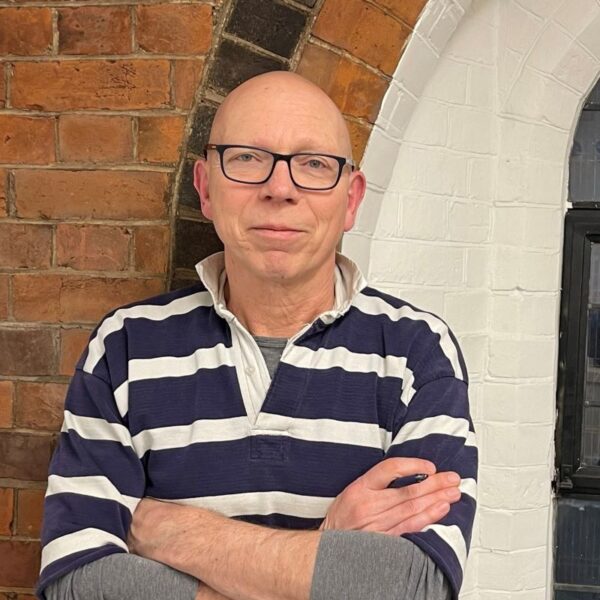
The Upper Room’s CEO, Iain Cooper

CEO Iain Cooper shares, “This year, 44 ex-offenders have gained their licence through us. Doing so significantly improves their employment chances, which helps them to stay away from crime.”

Suicide prevention

One of The Upper Room’s newest programmes aims to reduce the risk of suicide for Polish men aged 40 to 60. Iain explains, “As a group, these men are particularly vulnerable to suicide, partly because of a macho culture where men don’t discuss their feelings.”

The Upper Room has partnered with mental health charity Rethink to offer counsellor-led safe spaces when men can share their experiences. Most of the men who take part are homeless and many struggle with alcohol mis-use. Iain says, “We’ve seen a tangible difference in the men; the mood has started to lift. One of the men is a rough sleeper who’s been a regular at The Upper Room for a long time. He was starting to have severe mental health issues. He came to the group but didn’t say anything for three or four weeks. One day, we sang Polish folk songs together. Someone was taking photographs and in one of the photos this man is smiling. Nobody here had ever seen him smile before, and he couldn’t remember the last time that he’d done it.”

Funding

The Upper Room receives no government funding and has seen a significant increase in need over the last few years. The number of people sleeping rough in London has more than tripled since 2008/9. In Hammersmith & Fulham alone, 462 people were found to be sleeping rough in 2023/24.

Iain shares, “In 2022, we served around 20,000 hot meals to people who were homeless or experiencing food poverty. In 2023, that increased to just shy of 33,000. We’re expecting to serve closer to 40,000 meals this year.”

HUC launched the Flexible 3 Year Grants (F3YG) programme to make it easier for charities to cope with the increase in demand, and to plan ahead. We recognise that many charities are struggling with expenses such as wages, rent and utility bills, so F3YG grants can be spent on core costs.

The Upper Room is one of our newest F3YG holders and will be awarded £15,000 a year for three years. Iain says, “Without the back office to support the front office, the front office would fall over completely. You need systems, processes, hardware and so on. Our team are exposed to really traumatic stories on a regular basis, so they need access to proper mental health support. Funding for those kinds of core costs is hard to come by, so knowing that we have that money in the pipeline is game changing.”

Corporate partnerships

The Upper Room is keen to hear from businesses looking for a charity partner or volunteering opportunity. Iain says, “We can offer really positive away days for staff. Employees truly enjoy getting the chance to give something back to their community, and the business can get some great shots for their social media channels.”

If you’d like to find out more about The Upper Room’s corporate packages, please email uradmin@theupperroom.org.uk or call 020 8740 5688.

Flats are now available in our almshouses

If you think you might be eligible, we'd be happy to give you a tour of our almshouses and share what it's like to live here.

Read More ...
The backs of three girls. They are jumping in the air outside the Bush Theatre. Their hoodies say White City Theatre Project

White City Theatre Project

Building confidence, creativity and a sense of belonging

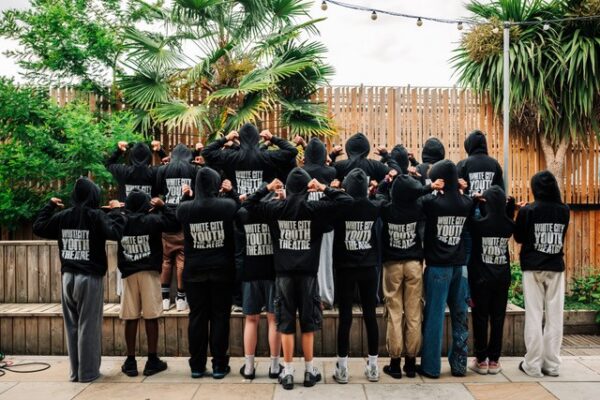
Lots of young people with their backs to the camera. Their hoodies say White City Theatre Project

Drama is more than a creative outlet. It’s a chance to show your personality, build your confidence, try things that might be outside your comfort zone, and explore a different side of yourself. However, tight budgets and a focus on core subjects have seen many schools significantly reduce arts subjects, including drama.

Lucy Foxell, Chief Executive & Founder of White City Theatre Project (WCTP), shares, “Young people aren’t getting the chance to take part in creative arts. Drama departments have folded. Phoenix Academy, for example, had a great drama department but now it’s gone and the students have nothing.”

While some families can pay for their children to attend drama clubs outside of school, others cannot. What’s more, it’s not just drama workshops that these children miss out on. Young people in the borough often struggle to find spaces to socialise and have fun for free, in an environment where they feel safe and protected.

The White City Theatre Project offers that safe, supportive space. At its youth theatre, children and young people can explore their love of drama, make friends and be themselves. And it doesn’t cost them a thing.

As one participant says, “Everyone takes you in, no matter who you are or what the circumstances. It is an escape from boring reality and into the world of imagination and creativity. There’s always someone to speak to and ways to have fun.”

The backs of three girls. They are jumping in the air outside the Bush Theatre. Their hoodies say White City Theatre ProjectYouth theatre workshops are held at the Bush Theatre each week, split into junior and senior sessions. While these sometimes include scripted performances, mostly the focus is on the young people’s own creativity. Lucy says, “It’s about them finding their voice through the power of theatre. They’re coming up with the ideas. They can say what they want and people can hear them.”

The national school curriculum emphasises progression and exam results, which can be demoralising for pupils who don’t achieve high marks and commendations. One of the beautiful things about drama is that it gives children and teenagers who may not excel in other areas the opportunity to show what they can do. Lucy says, “We’re trying to give these young people a chance. They’re often those who fall under the radar, who might not get on academically, who might not be sporty, who might struggle making friends. They don’t fit into many boxes, but actually, drama really works for them.

“What’s incredible about theatre is that it brings people together. It’s a very unifying way of working. We have quite a wide age span in our groups, and the older ones support the younger ones. They have to learn to work as an ensemble. They have to commit, learn their lines, turn up, and support each other.”

WCYT members are able to see the power of theatre firsthand, as they often receive free or heavily subsidised tickets for professional plays. They also take part in Connections – a nationwide project by the National Theatre – and other performances.

While WCTP doesn’t have an adult theatre group, the young people do often return as volunteers or even gain paid work supporting WCTP’s schools programme – ReAct.

ReAct

More than 800 Year 8 pupils take part in ReAct workshops each year, across several different secondary schools. Ten students from each school are then invited to take part in a longer series of workshops with professional theatre makers.

Working with their practitioner teams, the young people devise, develop and rehearse short plays around a theme over 10 weeks during the summer term. The programme culminates in the ReAct Festival, where they perform at the Lyric Theatre to an audience of family, friends and community members.

The WCTP team often see significant changes in the pupils over the course of the 10-week programme. One recent participant shares, “I could barely make eye contact because I was so shy, but now I’ve gotten better at talking to people.”

Emma Gerrard, Dramatherapist, adds, “Being vulnerable, being ready to take risks, to open up, maybe show parts of yourself that don’t always feel comfortable, to rely on each other – these are major life skills.”

Hammersmith United Charities’ funding

We’ve supported WCTP several times over the years, including with £15,000 in our July 2025 grants round. Lucy says, “HUC are part of this community. They were the first charity that funded us. A lot of the big funders want a project with a beginning and an end date. Our focus is on long-term support, so it’s great to have a funder that understands what we’re doing, the transformational effect it has on young people, and why it’s so important that we keep going.”

Changing lives

WCTP’s primary goal isn’t to develop the next generation of actors. As Lucy says, “We’re trying to build confidence, build life skills and communication skills, and open their eyes to the arts. Theatre opens doors and broadens their horizons. They gain a sense of belonging.”

Some youth club members do, however, go onto drama school or to jobs within the arts sector. Lucy shares, “One girl who’s just gone off to drama school has been with us since she was nine. She went through a very difficult time in her teens and the group became a sort of a home, a family, a place of support. She said it changed her life.”


Find out more

If you know someone who’s interested in joining WCTP’s youth theatre, please direct them to the charity’s website to find out more.

Read More ...
Children in a classroom. They appear to be interested in what the adults are saying. One girl has her hand raised.

Lawyers4Learners

Helping children become more confident at speaking up

Children in a classroom. They appear to be interested in what the adults are saying. One girl has her hand raised.Communication is a crucial life skill. Being able to calmly and confidently get your point across is vital throughout life – in school, workplaces and with friends and family members. What’s more, as Louise Jones, Director of Lawyers4Learners, says, “Children who can articulate their feelings are better equipped to stand up for themselves.”

Lawyers4Learners runs workshops with Year 6 children across Hammersmith. Over four sessions, children take part in mock trials designed and led by volunteer lawyers. As well as becoming more confident at speaking in front of people, the children learn critical thinking, debating and negotiation skills. One child said of the programme, “At the beginning, I probably needed a bit of persuading to get up there, but now I wouldn’t give it a second guess if someone asked me. I would just go up there and I’d start speaking.”

Louise launched the charity with barrister Caley Wright. The pair saw the gap between what was being offered in state schools compared to private schools. Louise adds, “There can also be a big gap between state schools in different areas. The schools we go to are usually under resourced. For lots of the children, English isn’t their first language and there aren’t many opportunities for them to practise any kind of formal speaking. The teachers are doing a brilliant job at doing the things that have to be done, but there isn’t much time for extras like public speaking.”

Louise and Caley realised that lawyers, who are skilled in oracy, argument and persuasion, could help to close the gap. They trialled Lawyers4Learners in five schools. Two years later, the charity is already working with 24 schools. It’s aiming to reach 45 by the end of this academic year, benefitting 2,000 children, including 330 in Hammersmith.

To realise its ambition, the charity has accepted a £5,000 grant from Hammersmith United Charities. Louise says, “We rely heavy on grants. Without the HUC grant, we couldn’t afford to extend our work to Kenmount Primary School and St John XXIII.”

Lawyers4Learners’ sessions are designed to be fun and interactive. Louise says, “It’s not just about standing up and doing a speech. It’s about speaking in a group, coming up with your argument, listening to other people’s points and maybe changing your mind. In a normal classroom situation, the teacher is speaking 85% of the time, and the children just 15% of the time. Our sessions are definitely the other way around! There are opportunities to debate and negotiate. Children who are able to look at both sides of an argument are more likely to grow into young adults who are fair and empathetic.”

78% of the children who take part say they feel more confident speaking publicly after the workshops. Louise shares, “We see children who are too frightened to speak in the first session, but by the end of session four, they’re standing up straight, taking a deep breath, and speaking. ‘B’ stood out for her quietness. English wasn’t her first language, so she avoided speaking in front of others. She avoided eye contact and deferred to more confident peers. In the workshops, she was encouraged to take small, achievable steps forward each week.

“By the fourth session, B’s transformation was striking. She stood tall in front of her classmates and presented her points. Her new confidence impacted across her wider school life. Teachers noticed she was reading aloud more willingly and contributing confidently to group discussions.”

Volunteer with Lawyers4Learners

Lawyers4Learners relies on volunteers to deliver the sessions. Louise shares, “These people are amazing. The children get so much out of it and it brings something different to the classroom. It does a lot for the children’s confidence to stand up, say their points, and then get praised by a professional lawyer. It’s really good for their self-esteem.”

As well as lawyers, Louise would love to hear from people who could volunteer to help with PR to raise the charity’s profile and reach more people.

If you want to get involved, please contact Lawyers4Learners through their website.

“It was amazing! I loved having the opportunity to act as the prosecution and the jury. The scenarios were realistic and there was no obvious decision, which made it more exciting. I now feel more confident speaking in front of my classmates and teachers.”

Read More ...
Akiko

“We are getting older, yes, but we still need our independence”

We spoke to Akiko, one of our residents, about why she loves living here.

Akiko moved to Hammersmith from Norfolk, where she’d lived in a caravan for more than 10 years as part of an intentional community (similar to a commune). She’s now been living at Sycamore House for almost a year.


AkikoWhy did you decide to move to Sycamore House?

I was living in an intentional community in a very rural area in North Norfolk. That ended and I felt like coming back to this area. I’d lived in London for 30 years and I missed the city and the diversity.

The weird thing is, around 25 years ago, I used to visit Sycamore House to offer reflexology and just chat to people. I’m sure that’s not a coincidence.

I want to be connected to other people, living together. We share resources, communicate and support each other. That is so important to me.

Are you happy at Sycamore House?

Yes. I really value everybody here, including the staff and the gardeners and the cleaning people and the carers. Everybody respects our latent individuality and really honours that. We are getting older, yes, but we still need our independence.

There are community activities; it’s up to the resident if they want to join in. I know some older people like bingo… I don’t like bingo, but I love to bring joy through things like disco. So, we’ve put afternoon discos on a couple of times, including an LGBTQ+ party. There was no alcohol, no drugs, it was just about coming in and enjoying music and dance. I’m planning another one for autumn, once it’s cooled down a bit.

I’m also quite busy going out to do other community things outside of Sycamore House.

What do you think of your flat?

It’s amazing! When I lived in the intentional community, I lived in a caravan for over 10 years. So, when Chris [our scheme manager] said, “Here’s your flat,” I couldn’t believe it. It has such spaciousness for a one-bedroom flat. It has a large kitchen. There was already a refrigerator and washing machine, so I didn’t have to buy anything.

It’s ground floor and my bedroom is cool, so I can sleep at night in this heat. The maintenance is great and we are looked after.

Do you ever go back to Norfolk to visit friends?

Yes, once a month I will go to see them. I need that aspect of nature and being in nature, but I also need the stimulation of what happens in a city.

You mentioned that you’re involved in the community. Can you tell us more about that?

I have been involved in community activities for all of my life. I run a CIC [a community interest company] called Freedom is Moving. We offer workshops in art, music and dance on the beach in Norfolk or in the forest.

I also volunteer at the Nourish Hub, which is anti-food waste. It’s a stunning place and I am so happy to contribute myself. I’ve started assisting a children’s vegetarian cookery course there. They offer it in August for all these kids – 10 years old to 18 years old. Hoorah!

It sounds like you keep yourself pretty busy?

Yes, but I’ve decided that I do what brings me joy. I don’t think, “I must do this, I must do that.” I chucked all of that out. It doesn’t serve me anymore.  If I don’t feel joyful, how can I offer that to the world? So, I make sure that I have joy in serving myself first, then I can spread this to other people.

Read More ...
Vacancy: Head of Grants and Community

Vacancy: Head of Grants and Community

Help to shape the future of Hammersmith United Charities

We award around £380,000 to local community organisations every year, supporting thousands of people who are facing disadvantage across our area of benefit.

As Head of Grants and Community, you’ll help to ensure that we respond effectively to changing community needs. This is a varied, outward-facing and highly collaborative role, combining strategic leadership with operational delivery. It offers the autonomy to take ideas from concept to delivery. Working directly with the Chief Executive and Trustees, you’ll have significant influence over the Charity’s strategic direction, grant making, partnerships, communications and wider community work.

Please download the job application pack for more details about the role, Hammersmith United Charities and our application process.

The closing date for applications is 12 noon, Monday 21 September 2026. 

Read More ...
View More