Facebook Twitter Instagram

Welcoming our newest Flexible 3 Year Grant holders

They've each been awarded £45,000, split over three years.

2025 was a tough year for many people. Local charities have risen to the challenge, providing basic essentials, advice and other vital support. Our Flexible 3 Year Grants are designed to offer local organisations a bit more stability so they can plan for their future and, if necessary, adapt to shifts in demand.

. Our newest grant holders are:

  • Petit Miracles
  • Shepherds Bush Families Project & Children’s Centre (SBFP&CC)
  • Active Successful Engagement (ASÉ) CIC

They’ve each been awarded £45,000, which will be split over three years.

Petit Miracles

Petit Miracles helps people to lift themselves out of poverty, by giving them the skills and confidence they need to find work or succeed as an entrepreneur. The social enterprise offers furniture restoration workshops to people who have a disability or who are otherwise disadvantaged, giving them the chance to build a new career.

It also runs a business incubator programme where people can learn business skills, network and share ideas. Members are then able to sell their products in Petit Miracles’ shop in West 12 Shopping Centre.

Founder and CEO Elisicia Moore says, “All of the circa 150 people per year who benefit from our programmes experience unemployment and social exclusion and face barriers such as disability, homelessness, mental ill-health or isolation. Our programmes have been co-designed to build the skills, experience, confidence and social integration they need to gain meaningful volunteering, further training and/or paid work.”

Petit Miracles is using its grant to help launch a new coffee bike programme, Miracle Brews, which will provide training and employment for young disabled adults.

Shepherds Bush Families Project & Children’s Centre (SBFP&CC)

SBFP&CC works with families who are experiencing significant housing difficulties. Some are homeless or at risk of homelessness. Others are living in unsuitable accommodation or struggling due to low wages. CEO Tina Mayers shares, Parents living in these situations often suffer depression and anxiety and feel guilty that they are unable to meet the needs of their children. Children and young people often miss out on the givens of normal family life. We aim to relieve the distress caused to these families and reduce the isolation and poverty most experience.”

SBFP&CC is putting its grant towards ongoing expenses and is planning to consult with parents and young people about developing new services.

You can read more about the charity in our case study.

Active Successful Engagement (ASÉ) CIC

ASÉ supports disadvantaged children and teenagers aged nine to 18, along with young adults who have SEND. Service users are experiencing a range of challenges, such as being:

  • Traumatised from past events
  • In care
  • A young carer for a family member
  • Affected by domestic abuse or gender-based violence
  • Digitally excluded
  • On a very low income

ASÉ’s work includes supporting children, young people and adults via mentoring, peer support and skills-building, tackling inequality and fostering long-term wellbeing. As Director Pauline Zepherin explains, “We empower communities, amplify under-represented voices and drive systemic change. Working with families, local authorities, schools and the NHS, we deliver culturally responsive community-led solutions that build resilience and long-term impact.”

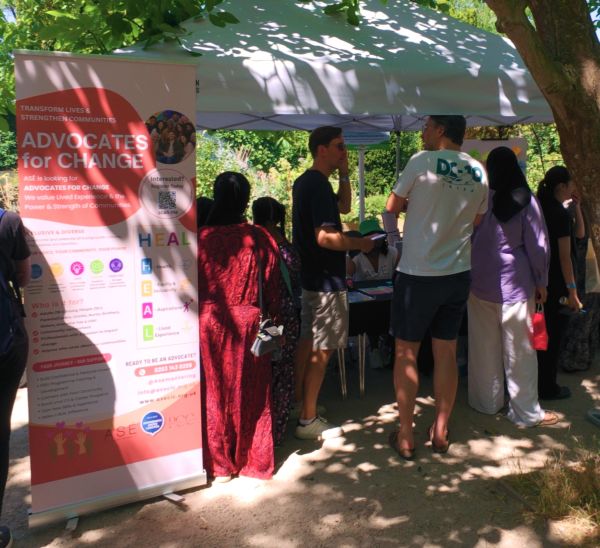
ASÉ CIC is using its Flexible 3 Year Grant to deliver i-MATTER: Advocates for Change. 36 adult Advocates for Change Champions with lived experience of disadvantage will be trained to deliver trauma-informed mentoring, advocacy work and group support to young people and families.

Find out more about applying for a grant from Hammersmith United Charities

While our Flexible 3 Year Grants focus on organisations that we already work with, we also offer Community Grants, which are open to other charities working in Hammersmith.


Flats are now available in our almshouses

If you think you might be eligible, we'd be happy to give you a tour of our almshouses and share what it's like to live here.

Read More ...
One of our residents, Stuart, wearing a floral shirt and a pink cap embellished with the word Love.

Celebrating Disability Pride Month

Our resident Stuart may have multiple health challenges to deal with, but that doesn’t stop him enjoying a good party…

One of our residents, Stuart, wearing a floral shirt and a pink cap embellished with the word Love.Stuart’s life changed significantly when he suffered a stroke in 2020, aged just 56. He explains, “I woke up one morning and phoned the doctors to say something was wrong. They told me that I’d better get to the hospital, as they thought I’d had a stroke. When I got there, the doctor said, ‘You’ve got nerve damage,’ and sent me home. I got a call from the stroke unit the next day. They said, “You need to come in now because they shouldn’t have discharged you.” So, it was a stroke, but I also have nerve damage.

“After a while using a manual wheelchair, I developed carpal tunnel syndrome, so I now use an electric wheelchair. I can only stand for a minute as I have a compression fracture of the spine. I get pain on a daily basis. You don’t get used to it, but you cope with it.”

Stuart was in between jobs when he had his stroke. Unable to continue his career in childcare, Stuart moved into temporary accommodation but was evicted and housed in a hotel for several months. Luckily, we were able to offer Stuart a place at John Betts House. Three years later, needing a larger flat to make it easier to manoeuvre his wheelchair around, Stuart transferred to Sycamore House.

He told us, “My new flat is really nice. It’s a lot more spacious. All the doors are bigger and it’s more free flowing, so I don’t have to twist and turn. Someone came to check the water the other day and said, ‘Oh, your flat is amazing.’ I’ve been creative with the décor and have some unusual houseplants, which are thriving.

“The garden is a nice quiet space. It’s lovely to sit out in. I can’t do much gardening, but I can offer advice!”

A carer comes to support Stuart every day, but he likes the security of having staff onsite at Sycamore House. “We also have Careline here, so if I do have a fall or if I need an ambulance, I can just pull the cord and they’ll deal with it. I’m not alone.

“It’s a lovely little community at Sycamore. We do a lot of socialising. There are events going on that you can get involved with and people know your name. We’ve got an LGBTQ+ party coming up, which is open to everyone. I’m doing the music for it.”

Stuart also appreciates the location of Sycamore House, as he’s able to reach the shops and cafés using his mobility scooter.

While Stuart grew up in South Africa, he’s lived in Hammersmith for almost 30 years now and is very settled at Sycamore House. “I can’t see myself moving again. This is home.”

Read More ...
A woman wearing a tabard is bending down and talking to an older woman. Both have big smiles and look to be having fun.

BlindAid

Reducing isolation for people who have lost their sight

Founded in 1834, BlindAid supports 1,200 blind and partially sighted people every year, around 100 of whom live in Hammersmith. The charity offers a range of services, including small grants, home visits, phone calls, and free cookery, art and yoga classes.

Richie Walden is BlindAid’s Operations Director. He says, “Many blind and partially sighted people don’t need support because they’re independent, employed, and have a wide social group. However, the people our service is aimed at tend to live very isolated lives. They’re usually older and may also have mobility or health issues.”

Reducing social isolation

Losing your eyesight can be incredibly scary and it’s a difficult change to adapt to. Richie says, “People’s worlds can shrink quite rapidly. More than half of our service users don’t leave their homes unless they have support. I once visited a lady who spoke so rarely that it took her 20 minutes to be able to speak properly to us because her vocal cords weren’t working.

“Where people have no friends, no family, no one coming in to see them, we will always prioritise them for home visits. People who do have some support, we’ll prioritise for phone calls and the occasional visit.”

BlindAid’s Sight Support Worker in Hammersmith, John, has been in post for 18 years. Richie says, “That continuity is vital to how we deliver our services, because it can take time to develop relationships and build up trust. It also means that if, for example, some free tickets come up for an accessible theatre production, we’ll know exactly who might be interested.”

As one service user shares, “BlindAid helped me re-connect, to socialise and feel normal again.”

Practical support

As well as helping to reduce loneliness and social isolation, BlindAid supports people with more practical needs. Richie explains, “We give people time; they choose how they spend it. For some people, their isolation is their overriding need, and they just want to talk. Others might want us to help them fill in forms, install an app on their phone or set up a direct debit.”

While assistive technology can be transformative, it can also be expensive. What’s more, some services still send out physical letters or forms. Richie shares, “People often get sent a letter with the date of a hospital appointment. Because they can’t read the letter, they miss the appointment, come off the list and have to go through the whole process again. As well as reading letters aloud, we’ll often call people the day before a hospital appointment to remind them about it. We can also book them Dial-a-Ride or hospital transport.”

One key role of Sight Support Workers is referring people to other relevant services. That might mean arranging for an occupational therapist to visit, for example, or connecting people to community organisations. Richie adds, “We set people up with things like Sainsbury’s telephone shopping service, so they can order over the phone rather than online.”

Volunteer support

BlindAid relies on a team of 120+ volunteers to offer extra support. In many cases, the only time a service user will leave their home is when they’re accompanied by a volunteer. They might go for a walk to the local park together or visit the shops or a café. Richie says, “We try to match people with similar interests. So, for example, we’ve got people who go to the cinema together, people who go to the theatre together, or concerts together.”

Hammersmith United Charities’ grant

We recently provided BlindAid with a £5,000 grant to help support 100 people in Hammersmith. Richie shares, “We can’t run our services without external funding. We had to close services in a couple of boroughs last year, because we just couldn’t get funding for them.

“It’s hard to access grants for blind and partially sighted people because they don’t have a strong collective voice, so organisations aren’t really aware of what they’re experiencing. The fact that Hammersmith United Charities funds us is absolutely fantastic. It results in real, tangible support for people who are living in extremely isolated circumstances.”

BlindAid is like a lighthouse,
Guiding us through turbulent waters,
Towards a safer and more connected world,
BlindAid is like a cargo ship,
But the crew equip us to pilot our own lives,
Enhance existing skills,
To stand on our own two feet,
From nutritional needs to technology,
More independent living,
BlindAid brings us to a sheltered harbour,
Charting a path of friendship,
With ongoing visits,
As regular as sunrise over the ocean,
We may not be able to see a smile,
But we can feel the warmth
By Hugh

Find out more

  • You can refer yourself or someone you know to BlindAid through the charity’s website or by calling 0207 403 6184.
  • If you have time to spare and are interested in volunteering, BlindAid can provide full training and support.
Read More ...
Graphic saying #LonelinessAwarenessWeek

More than a home

How almshouses help to tackle loneliness

As anyone who has experienced loneliness knows, it can feel all-consuming. Not having someone to talk to, to share life’s highs and lows with, or to rely on for comfort and support can be a heavy burden to bear.

Most of us feel lonely from time to time, but some people are at greater risk of experiencing long-term loneliness, including those on low incomes, people who live alone and those with health conditions or mobility issues that make it harder to get out and about.

Loneliness in later life

Half a million older people do not see or speak to another person for five or more days a week.

Modern life often takes us away from the communities where we grew up. Families become more dispersed and friendships can be harder to maintain. By the time people reach later life, they may find that family members and close friends live far away. At the same time, retirement, bereavement or declining mobility can reduce opportunities for everyday contact and companionship.

Building communities through almshouses

For more than 1,000 years, almshouses have provided homes and support for people experiencing hardship. Today, there are more than 1,600 almshouse charities across the UK, providing homes for over 36,000 people.

As charities, almshouses support people who may have limited housing choices because of financial circumstances, ill health, disability or other challenges. But they offer much more than affordable housing.

Community is a central part of almshouse life. Homes are often arranged around shared courtyards and gardens, with communal spaces designed to encourage neighbourly support and interaction. Many almshouses are located at the heart of the wider community, helping residents stay connected to familiar services, activities and opportunities. Staff are often on hand to provide practical support and facilitate activities that help residents build friendships and maintain meaningful social connections.

This sense of community is particularly important at a time when loneliness and social isolation are increasingly recognised as major challenges for older people. By creating environments where people can get to know their neighbours, participate in activities and feel part of something larger than themselves, almshouses help foster belonging and connection.

Many almshouse charities also contribute to the wider community. Hammersmith United Charities, for example, provides funding to local organisations that help strengthen community ties, reduce isolation and improve wellbeing across Hammersmith.

In short, almshouses do more than provide affordable housing. They help create communities where people feel connected, supported and valued, making an important contribution to tackling loneliness and building stronger neighbourhoods.

Apply for a home

We currently have flats available at both of our almshouses – John Betts House and Sycamore House. We’re always happy to show prospective residents around. Find out if living here could be right for you.


Support if you’re feeling lonely

Help is available if you’re struggling with loneliness or isolation. For example, befriending services can be a great way to meet new people and feel more connected. H&F council has provided a list of local befriending services here. You might also find this list of national organisations useful.

Read More ...
A man and a woman smiling at the camera. She is wearing a Nourish Hub T-shirt so is likely a volunteer

Nourish Hub

Reducing food waste while bringing people together

Coming together to ‘break bread’ and share a meal is an important part of many cultures. However, when friends and family live far away, communal meals can feel like a distant memory, especially when money is tight.

Nourish Hub is helping to change that, and reducing food waste in the process. Its community lunch runs five days a week. People are invited to sit down together and enjoy a freshly cooked, nutritious three-course lunch for a suggested donation of just £3 per person. In the last financial year, the charity served 33,921 meals, with the help of around 200 volunteers. Every lunch is made from ingredients that would otherwise be wasted, from wonky carrots to surplus bread.

Hub Manager Andreea Rizea says, “It’s not just about food, it’s about community building. This is a safe, inclusive and welcoming space, where people can make connections with other members of the community. There are good vibes, good people and a spirit of togetherness.”

Some of the people who come to the community lunch are otherwise quite isolated. One regular attendee shares, “Nourish Hub gets me up and gets me out of the flat. I’m able to socialise with a lot of people.”

A group of Nourish Hub volunteers and staff members in the kitchen

Tackling waste

Nourish Hub’s parent charity, UKHarvest, collects surplus food from distributors, farmers, supermarkets and hotels. The community hub also receives food from other partners, such as City Harvest and Chiswick House & Gardens, and it grows leafy greens and herbs in its own indoor growing towers.

When you consider that almost a third of greenhouse gas emissions are linked to food production and that almost 2 million tonnes of food is wasted in London every year, it’s clear that charities like Nourish Hub benefit the environment as well as people.

The Hub often receives lots of one particular type of food, whether that’s butternut squash or cabbage, so the team needs to come up with creative ways of using it. Andreea says, “Every morning is like Ready, Steady, Cook in our kitchen! There’s a lot of creativity and we’ve got a very diverse team of volunteers who all share their own recipes, so our menu changes daily.”

A man and a woman smiling at the camera. She is wearing a Nourish Hub T-shirt so is likely a volunteer

The average home wastes around £470 of food every year. There are many reasons for this, including confusion around food labels and a lack of meal planning. Andreea says, “This is an issue that we take very strongly, so alongside our community lunch, we have a very comprehensive education programme – NOURISHed. It’s delivered by our in-house nutritionist Helen and our education & events chef Tom. We teach everything from simple cutting skills to more complex recipes, and alongside that, we teach people about nutrition, budgeting and how to reduce food waste, for instance by freezing bread and milk if they’ve bought too much and making stock with vegetable peel. Last year, we delivered 265 education sessions and events through NOURISHed”

Clothing waste is another major environmental issue, so Nourish Hub has partnered with Regarm – a community clothing initiative – to redistribute pre-loved clothing for free. Each week, people can choose items of clothing that have been collected from Notting Hill Market and other areas.

The charity also runs clubs and workshops to bring people together and reduce waste. These include a sewing and clothes repair course run by La Modista, and a shared reading group.

Community pantry

This year, Nourish Hub has launched a new service – a community pantry where people make a £5 donation to fill a bag with surplus produce of their choice. Andreea says, “As well as addressing food insecurity, it’s about long-term wellbeing and dignity. There’s no eligibility criteria and we try to offer wraparound support through organisations like Citizens Advice, Shelter and Turning Point.”

Volunteer

Nourish Hub relies on a large team of volunteers, many of whom have received support from the charity themselves. Some are there to share their skills, others to gain new skills and work experience. All want to share their love of good food and give something back to their community. As one volunteer, Niall, says, “Before I came here, I was struggling with mental health problems and unemployment. This seemed like a safe environment for me to develop social skills and do what I love doing, which is cooking.”

Join in

Nourish Hub is open to everyone, whether you want to attend a free cookery class, join a book club, or take part in a community lunch. The charity is also keen to hear from people who are interested in volunteering to cook or serve meals. Find out more at www.nourishhub.org.uk or watch the video below:


Read More ...
View More