Facebook Twitter Instagram

Flexible 3 Year Grants

This grant programme started in 2023 and is a response to the conversations we’ve had with people in our community about local priorities and challenges. Through this unrestricted funding over three years, we hope to help organisations to plan for the longer-term while being flexible in response to local needs.

We want to invest in organisations and people who are actively engaging within their communities and working collaboratively with other organisations. We also want to support organisations that actively tackle inequalities and disadvantages through their work.

The first round of this programme concluded in early December 2023 with three organisations being successful. Click on this link to find out more.

The second round concluded in September 2024 with three more organisations being successful. Click on this link to find out more.

The third round concluded in December 2025 with three more organisations being successful. Click on this link to find out more.

How to apply in 2026

This programme will reopen in Summer 2026.

If you want to plan ahead, you can use this link to our Flexible 3 Year Grant eligibility quiz.

Only organisations who have been funded by Hammersmith United Charities in the past are eligible for this grant. The quiz will take you through all the criteria. Also, have a look at our factsheet for a bit more detail on what we are looking for.

If you have any questions or would like to talk about this programme, contact Paul and Paige at grants@hamunitedcharities.com.

Applications process
  • Step 1 Eligibility – Check that your organisation is eligible by taking the quiz.
  • Step 2 Application – If you are eligible, complete the online application form.
  • Step 3 Assessment and clarification – We will use your form to shortlist eligible organisations and do due diligence checks. We may contact you by email or arrange a call if we need any clarification or further information.
  • Step 4 Decision – The trustees will review applications and may decide to meet some organisations before making a final decision.
More information

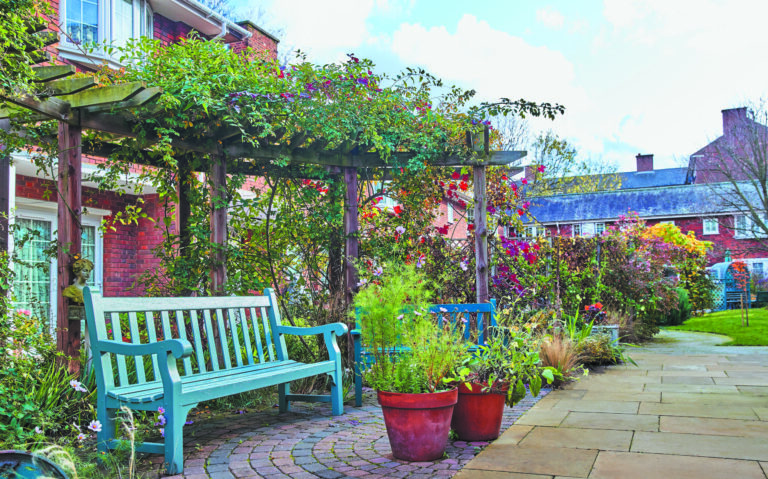
Flats are now available in our almshouses

If you think you might be eligible, we'd be happy to give you a tour of our almshouses and share what it's like to live here.

Read More ...
A man wearing a a Petit Miracles apron, serving coffee

Petit Miracles

“Every single beneficiary is essential to our business.”

Gancho, a barista, standing in Petit Miracles shopThe job market is extremely challenging at the moment. For people with a disability, it can feel almost impossible to find work. Only 6% of people with a learning disability are in paid employment. As Elisicia Moore, founder of Petit Miracles, shares, “Young people with disabilities continue to face disproportionately high levels of isolation, unemployment and learning opportunities. Through regular conversations with referring organisations and young people, we know that motivation is not the barrier – opportunity is.”

Petit Miracles offers that opportunity. The social enterprise trains disadvantaged people, many of whom have a disability or are homeless, how to restore and upcycle furniture that may otherwise go to landfill. Items are then sold in Petit Miracles’ shop at West12 Shopping Centre.

Petit Miracles also offers work experience opportunities, where people can gain experience in different areas of the charity. As Elisicia says, “The people who come through our work experience programmes help to manufacture the furniture, so every single beneficiary is essential to our business.”

Most of Petit Miracles’ staff members have been through the work experience programme themselves and four of the seven employees have a disability or are neurodivergent.

Kabir, for instance, started on the training programme and is now a member of the workshop team. Programme Director Kate Moore says, “After volunteering with us for nearly a year, we were thrilled to offer Kabir a staff role. Now, he’s a key part of our workshop team – always friendly, always positive, and always ready to lend a hand or a listening ear.”

Kabir was drawn to the work because of his interest in sustainability, and he encourages anyone looking for a rewarding career to consider signing up, “Listen lads, don’t stay home! Come and do some work with us! Come and socialise, work as a team! Teamwork makes the dream work.”

The idea for Petit Miracles came to Elisicia almost 20 years ago. She says, “I was working in a homeless organisation, and saw that women weren’t engaging with services as much as men. My background was interior design, so I offered to run some interior design taster days. Women showed up in their droves!”

Today, the furniture restoration programme isn’t Petit Miracles’ only initiative. It also offers a business-incubation project for disadvantaged local people who want to make and sell products. The charity teaches people vital business skills, offers them one-to-one coaching, and gives them free space in the shop to promote and sell their creations.

As one of the project’s graduates, Saba, shares, “When I started my jewellery business, PM provided me a platform to showcase my products … and allowed me to learn and hone my retail skills. They provided me the right tools and skills to move forward. The charity’s ethos and the staff’s passion set them apart. So much so, I became a trustee.”

Miracle Brews

The charity’s newest initiative is Miracle Brews, a mobile cart where people can buy coffee (which is roasted in Shepherd’s Bush), tea, hot chocolate and pastries. As well as generating income to help meet rising costs, Miracle Brews will provide work experience and employment opportunities for people who have a disability. Kate explains, “We’ve got a connection with Fair Shot Café, who train young people with disabilities to become baristas. Our long-term plan is to hire two people who have graduated from the programme so that they can continue their career with us.”

Elisicia adds, “Beyond jobs, it will normalise disability in the workplace.”

At present, the coffee cart is kept inside the shop, but the charity is planning to move it to Shepherd’s Bush Green. However, it’s attached to a bike, so once council approvals are in place, Miracle Brews will be able to serve people across Shepherd’s Bush.

Hammersmith United Charities’ grant

Hammersmith United Charities gave Petit Miracles its first ever grant. That was over 10 years ago, and as Elisicia says, “At the time, we didn’t have any paid staff and our turnover was less than £1,000 a month. The grant was £3,000, which felt like a huge amount of money.

“Since then, HUC have funded us a number of times and we’ve worked together in multiple ways. They’ve been stalwart in their support.”

We recently agreed to grant Petit Miracles £45,000, split over three years, through our Flexible 3 Year Grant scheme. The money is helping to fund Miracle Brews.

Elisicia says, “Knowing that we have funding for a certain amount of time enables us to make solid plans and live up to our full potential. We always punch above our weight, and this funding helps us do that.”

Support Petit Miracles

As well as offering fully funded training for people who have a disability or who are otherwise disadvantaged, Petit Miracles runs furniture restoration workshops for other members of the public. You could learn how to upholster a chair, upcycle a side table, or restore your own furniture. The fee you pay will help to support Petit Miracles’ charitable programmes.

There are also many other ways you can support the social enterprise, including hiring the coffee cart for events.

Elisicia shares, “We’re always looking for reliable volunteers – people who want to give back to the community, learn something new, and open up their horizons. You can also just pop into the shop; you might not need a dining table at this moment, but you can still support the charity in other ways, and now you can have delicious coffee while you’re doing it!”

Read More ...
Jamal from Somali Parents sits at a table with a woman, who is wearing a headscarf.

Somali Parents

Supporting Somali people and other marginalised communities in Hammersmith.

As most parents will know, navigating the complexities of school life can be a challenge. Knowing who to talk to when your child is struggling, and how to ensure that your concerns are acted on, isn’t always easy. For those experiencing language or cultural barriers, the situation is far more complex. Parents often have little choice but to rely on their child to translate letters from school and act as an interpreter in meetings between parents and teachers, a far from ideal situation, especially when the child’s behaviour or educational difficulties need to be discussed.

Jamal Ismail is the Director of Somali Parents. He shares, “Children may not give you the true picture of what’s happening, so parents need to be able to speak with the teachers directly, but if you don’t speak the language, you can’t express yourself properly. How do you fill in forms and answer correspondence if you don’t have someone who is willing to help? If the parent doesn’t receive that support, then the implications will be felt by the child.”

A group of  teenage students at a tableRecognising the difficulties that families face, Jamal came together with other Hammersmith parents to launch Somali Parents. Meeting demand is an ever-increasing challenge for the charity. Jamal is the only paid staff member, and he only works for the charity part-time. Nevertheless, assisted by a team of volunteers, the organisation offers support to families across the borough.

Somali Parents’ main focus is on education and helping to improve children’s prospects. Jamal or a volunteer can attend meetings at school to act as a translator and as an advocate, and will support parents to get Education, Health and Care Plans (EHCPs) in place where necessary.

As one parent, Um Abdullah, shares, “Somali Parents helped my son to get higher grades in their GCSE exams … helping my son and other pupils with the provision of additional  lessons.”

Somali Parents also runs workshops to help parents understand the differences in regulations and expectations around parenting in the UK compared to their country of origin.

Healthcare

Many people new to the UK don’t fully understand the healthcare system or who to turn to for advice. They may not be able to read healthcare communications or easily access information online, and they may have a limited understanding of which situations warrant a visit to the GP.

Jamal recounts the story of a young Somali woman who had cancer but thought her unexpected bleeding was due to haemorrhoids and was too embarrassed to visit a doctor. By the time she did seek help, it was too late, and she sadly died just months later.

Three men standing in front of a blood donation awareness signSomali Parents runs healthcare workshops about cancer symptoms and support available, as well as drop-in sessions to help ease concerns amongst the community and give people a better understanding of how to access NHS services and what to expect from an appointment. Recognising that women often feel more comfortable discussing health issues with another woman, the charity will sometimes bring in a Somali-speaking female GP to answer questions from the audience and talk to people in private if they need more advice.

Somali Parents also runs blood donation awareness sessions, as the NHS urgently needs more donors from global majority backgrounds to help treat conditions like sickle cell disease.

Additional support

Jamal and the team often find themselves assisting parents in many other ways, particularly when it comes to how to navigate support services. He shares, “People make enquiries on a daily basis – ‘We have housing issues; we have payments in arrears; we need support.’ Asylum-seeking people come to us for information on how to get a lawyer to help with their asylum application. Or they may want to study English, or they need some food from the food bank. Somali Parents also help clients with information about benefits. As a voluntary organisation, we try to help as much as we can, according to our capacity.”

One such service user, Shehnaz, says, “Somali Parents help me to get a solicitor to assist with my asylum claim, and communicated with different agencies to get the support I need.”

To enable people to better navigate these systems themselves, the charity runs free digital education sessions, where participants can get help setting up the NHS app, creating a Universal Credit account, accessing school apps, and so on.

Hammersmith United Charities’ funding

We provided a grant of £5,400 to Somali Parents to help with running costs. Jamal says, “Hammersmith United Charities are a very good organisation in terms of supporting the local community. When you have an idea, you can talk to them. They also try to promote our work and do more to support us. They’re a good partner you can rely on.”


Find out more

Somali Parents is based at 202 Uxbridge Road, Shepherds Bush, W12 7JP. If you speak Somali and need help communicating with your child’s school, please call 0207 1013426 or email somaliparents@outlook.com

Jamal is also keen to hear from Somali or Arabic speakers who are interested in volunteering to support their community in Hammersmith.

Read More ...
A teenager with his back to the camera, looking out over the Thames at the city lights

The Violence Intervention Project

“The way they want to be seen is driven by the need to protect themselves, to keep themselves safe.”

The Violence Intervention Project (the V.I.P) works with children and young people, aged 12 to 26, who have entered the youth criminal justice system because of their violent behaviour.

Most of the charity’s clients are boys and young men who have experienced adverse childhood experiences. Head of Therapeutic Operations, Ashley McMahon, shares, “These are vulnerable young people, but no one thinks they’re vulnerable; most people think they’re monsters. No one thinks about the abuse, the trauma, the vulnerability.

“These young people have usually experienced violence within the home setting, generally perpetrated against their mothers and themselves by males. There’s a prevalence of mental health issues within the families and often undiagnosed neurodevelopmental issues. There’s also poverty; one boy we saw recently hadn’t eaten for three days.

“They’re stepping out with all these vulnerabilities, and no idea of what safety looks like. When your home environment is really unsafe, violence becomes normalised and everybody is a threat. If you don’t believe that someone will come and help you in a dangerous situation, then picking up a knife or a gun to keep yourself safe seems a logical response. One boy told me that the reason he’s so violent is because he wants to protect his friends the way he wishes he’d been protected. Some of the men he’s attacked are three times his size.”

A man and teenage boy talking in the street. The boy has his hood us and back to the camera. “The relationship is the intervention.”

As Ashley says, “How do you become a man when the only men in your life have been monstrous and dangerous?

“Our intervention, which we call urban therapy, is around therapeutically trained practitioners building relationships with young people, to offer them a relational experience of somebody who is attentive, predictable, consistent and caring. The relationship is the intervention.

“We meet the young people out in the community, in spaces where they feel comfortable, rather than expecting them to come to a traditional clinic setting. The aim is to build long-term relationships so that we can support these vulnerable adolescents through the process of growth and development into adulthood. It’s a privilege to be invited into their lives, because they do everything they can to keep people away.”

The V.I.P also works with the people who have a direct impact on these young people’s lives, such as teachers and families. Supporting mothers is often a crucial part of the process, as they’ve often experienced domestic abuse and may be struggling with substance abuse, all of which has become normalised for the young person. By helping to change the eco-system that surrounds the young person, the charity can make a greater impact on their life.

A teenager with his back to the camera, looking out over the Thames at the city lights

The way they want to be seen is driven by the need to protect themselves.”

The V.I.P recognises that the violence shown by young people is usually related to a sense of shame. The abuse and trauma they’ve experienced has resulted in severely low self-esteem. If the people who were supposed to care for and protect them didn’t, what does that say about them?

Ashley explains, “Shame is a massive part of what drives our young people’s behaviour – this idea of feeling exposed and doing everything they can to prevent people from seeing their vulnerability. They want to be seen as powerful and in control – somebody that you wouldn’t want to cross.

We help them to recognise that the way they want to be seen is driven by the need to protect themselves, to keep themselves safe, to feel in control and to feel that they have agency in the world.

“As human beings, we’re so dependent on relationships in order to function and to thrive. This ‘protective armour’ that our young people wear stops them from connecting to others. We help them to put down that armour.”

“A lot of these young people can’t imagine a future.”

Ashley shares, “What trauma does to the human brain and the nervous system, is it prevents you from moving forward. A lot of these young people can’t imagine a future because they don’t feel safe enough and don’t believe that they have control over their lives.”

The V.I.P aims to give young people a purpose and show them that a better future is possible. In many cases, this means helping them to get back into school or on a training course and arranging work experience.

Most of the charity’s clients are living in poverty, so enabling them to make money, legally, is crucial. Another key benefit of education and employment is that the young people’s social networks are extended, helping to reduce their isolation and their reliance on gangs.

V.I.P Voice

The V.I.P is one of our Flexible 3 Year Grant holders, receiving £45,000, split over three years. The charity has used some of the money to set up V.I.P Voice – a small committee of former service users. Ashley explains, “These are people in their 20s who have been on a journey with us for several years. They’ve been able to work through their traumas, work through their shame, build positive relationships and secure employment and training. They’re now supporting us by informing what our intervention should look like.”

Ashley found it particularly helpful to have the funding agreed upfront for three years: “Small-to-medium-sized charities are walking a tightrope every year. We’re living in such a financially precarious environment; there have been some real nail-biting moments. Having a grant funder that’s committed to three years is game changing. It offers us structure and stability, which enables us to offer this to our beneficiaries.”

Impact

The V.I.P has worked with more than 200 young people to date, most of whom have seen tangible benefits over the years, such as improved mental health, increased engagement in education and training, and reduced violence. The biggest impact is often around trust and a feeling of safety, both of which are very difficult to quantify. As Ashley says, “How do you measure the impact of a young person feeling safe enough to be able to talk about the most horrifying thing that’s ever happened to them? What does it mean to a young person to be believed?”

“My colleague sent me a text message the other day from a young person saying, ‘I love you.’ This is a boy who’s experienced so much violence, who’s been physically abused by his father, witnessed his mum being torn to pieces and learnt that men are violent and threatening.

“Through three and a half years of consistent work, they’ve built enough safety in their relationship that this young lad now understands, not just that other people can be safe and kind, but that he can be safe and kind too.”


Support the V.I.P

You can donate to support vulnerable young people here.

The charity also offers training in shame-informed practice for organisations that work with young people. The Shame Initiative includes:

  • Training for frontline professionals and organisations
  • Tools to embed shame-informed principles in everyday practice
  • Consultancy with leaders and systems
  • Collaboration with academics, funders and policymakers

Email contact@vip.org.uk to find out more or download the brochure here.

Read More ...
Charity has always been important to me

Introducing our newest member of staff

Administration assistant Natasha shares why she loves Hammersmith but remains a northerner at heart.

What were you doing before you started working here?

I was self-employed for a long time as a personal concierge. I had three or more clients on my books at any one time and was managing homes and staff, here and abroad. Work was quite sporadic though.

I have five children and needed flexibility when they were younger; it was great having school holidays off. Now my youngest is nine, I don’t really need to be as flexible with my time. I wanted more stability and to get back into an office environment.

How are you settling in?

I know everyone probably says this, but the team here really are amazing. Coming back into an office environment was a bit daunting, but they’ve been so supportive. I like being part of a team again.

Are you enjoying working for a charity?

Charity has always been an important part of my life. For more than 20 years, I have worked alongside and volunteered with many charities and community groups in and around Hammersmith and Fulham. My work has included community events, social prescribing, food banks, day trips, Christmas celebrations, and wider local support projects.

Charity, empathy and giving were instilled in me by my parents, and I’ve passed those values on to my own children. I truly believe that, when given the opportunity, most people will strive to do better.

Through my work at places like the White City Community Centre and my involvement with the Health Inequality Steering Group at Sobus, I’ve seen how powerful community support can be. Hammersmith United Charities contributed to several of the projects I was part of, so I know first-hand the difference this organisation makes.

Coming to work for this charity feels like a perfect fit – it brings together my experience, my values and my long-standing commitment to serving local people.

Have you always lived in Hammersmith?

No, I’m a northerner. I came to London when I was a bright and breezy 17-year-old, branching out and taking on the world! I’m still a northern lass at heart though, even though my kids point out that I’ve lived here longer than I lived up there.

Hammersmith still has the sense of community that I had as a child, and I feel quite at home here. The difference between the boroughs in London is very apparent; Hammersmith seems to be one of the best when it comes to pulling together as a community and looking after each other. Particularly where I live, there’s a real sense of belonging, almost like we’re all on the battlefield of life together and no one gets left behind.

What do you enjoy doing outside of work?

I love fashion and textiles. I will randomly get the scissors out at home and start cutting and sewing. Vivienne Westwood is one of my inspirations. My oldest child is 26 this year, and my youngest is going to be 10, and I’ve got them all the ages in between, so I haven’t really had time to do much else. Now that I don’t always have a child in tow, I’ve got a new lease of life. I’m starting to make a bucket list – learn to play golf, go on holiday by myself and sleep in!

I’m at the beginning of a new journey, a new chapter of my life. It’s scary but exciting.

Read More ...
View More