Facebook Twitter Instagram

Louise Delahunty

“Louise Delahunty is a solicitor (non-practising), who during her career specialised in white collar crime investigations and risk compliance. Louise lives locally and was delighted to have the opportunity to join HUC as a Trustee. It’s been a chance to use her corporate governance skills, but also to experience and learn new things, whether from the HUC management team, the residents,  the other trustees or HUC partner organisations.” – Trustee since March 2020.

Facebook Twitter Instagram

Flats are now available in our almshouses

If you think you might be eligible, we'd be happy to give you a tour of our almshouses and share what it's like to live here.

Read More ...
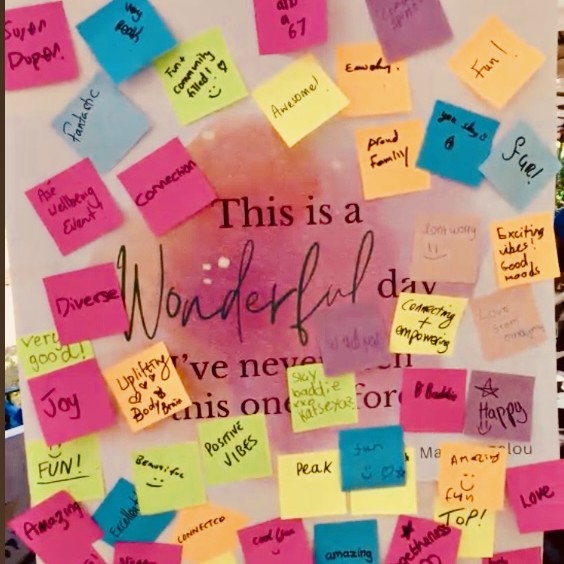
In the centre of this board are the words 'This is a wonderful life'. People have then stuck post-it notes onto it, with words and phrases like joy, connecting & empowering, diversity, and amazing.

Active Successful Engagement (ASÉ)

“It’s about showing people, ‘You're amazing. You've got lived experience. You're the expert. We're just giving you the tools so you can use those skills.”

“No one person is the same. Everyone comes with their own individual journey and story. Our job is to get to the core of what’s causing their distress, deal with that and then bring them to a stronger place. And we’re very good at doing that.”

Pauline Zepherin is Director of Development and Communications at Active Successful Engagement (ASÉ). The CIC uses holistic mentoring to help people to heal and move forward. It delivers a wide range of services in Hammersmith, including:

i-MATTER: Connections

Pauline explains, “ASÉ works with children and young people who may not be engaging with education. The programme focuses on personal development and empowers the young person to develop healthy relationships and to achieve their full potential.

“By building trust, we can help them to get back onto a stronger pathway, reengage with their education, see a positive future and decide that today they want to be here. It’s about empowering them to have hope so they can move forward confidently and positively transform their lives.”

As one pupil shares, “I used to feel really alone, but now I have a mentor who listens to me and helps me with my problems.”

ASÉ also engages with parents and carers who are working with Children’s Services. Pauline shares, “We recognise that, often, if people didn’t receive the appropriate early intervention needed in their childhood, their trauma and life challenges can continue to impact them into adulthood.

“We recognise people may not engage with statutory services because of previous negative experiences. However, we’re very deeply rooted within the community, and we’ve built trust.”

i-MATTER: Voices of Strength

This programme helps participants to better understand the different forms of domestic abuse. Pauline says, “It’s about recognising coercive behaviour and really understanding the journey that you’ve been through with domestic violence, why it happened, and how to come out of that process stronger.” The programme is delivered through a free 12-week Freedom Programme. As a rolling programme, people join at different stages. Pauline says, “This creates a group, a sisterhood, where those individuals who have gone through that healing journey can now embrace others who are just starting that journey.

“It also creates a ripple effect. People take the information out into their community. We’ve had individuals who suddenly realise, ‘My daughter, my friend or brother is experiencing coercive behaviour. My loved one is in a coercive relationship. They need this information.’”

ASÉ also has plans to expand the i-MATTER: Voices of Strength programme into secondary schools to help young people understand what a healthy relationship looks like and how to recognise coercive behaviour.

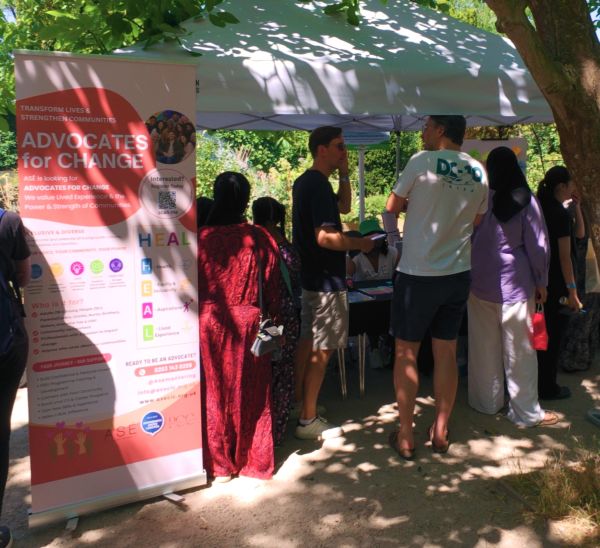
A group of people stood by a stand, outside. There is a poster saying Advocates for Change. i-MATTER: Health & Wellbeing & Tackling Inequalities

ASÉ works with families who face cultural, social and systemic barriers to healthcare and wellbeing. The CIC supported the recent H&F Active Wellbeing Event, which was attended by in excess of 550 people. As well as promoting the Advocates for Change programme (see below), ASÉ organised NHS health screenings for attendees, including BMI, blood sugar levels, hepatitis B and C, and liver function. Pauline says, “The focus is on improving health and strengthening the community by helping people to engage with the services that are available.”

Recognising that transport can be a barrier for many people, ASÉ organised a free coach for 69 people from White City and Old Oak and organised free food for the event.

Parent & Carer Champions Network (PCCN)

ASÉ developed the H&F PCCN model and trains volunteer Parent & Carer Champions to provide peer-to-peer support out in the community. Funded by MOPAC between 2020 and 2025, this programme was cited as Best Practice by MOPAC and is featured in the end-of-programme evaluation report.

i-MATTER: Advocates for Change

The PCCN programme will be closing in March, as it’s being absorbed into a new programme – i-MATTER: Advocates for Change. Pauline says, “We’re going to build on the PCCN structure. Our Advocates are not just going to be parents and carers. They’re going to be uncles, aunts, brothers, sisters, neighbours, professionals – anyone who wants to make a difference in the community. The sky’s the limit!

“We’ll teach an introduction to holistic mentoring skills, including effective communication and active listening, understanding body language and building trust. It’s about showing people, ‘You’re amazing. You’ve got lived experience. You’re the expert. We’re just giving you the tools so you can use those skills.’”

i-MATTER: Advocates for Change is part-funded by Hammersmith United Charities. ASÉ is one of our Flexible 3 Year Grant holders, so is receiving £15,000 a year for three years.

Pauline says of the grant, “The level of flexibility with the funding is brilliant. The three-year period really does help – it gives us a sense of security and enables us to plan.”

Get involved

If you’re interested in becoming an Advocate for Change in your community, contact ASÉ on 020 3143 0209 / info@asecic.org.uk or visit its website for more details.

Social media:

Facebook           Instagram          Twitter                 LinkedIn

Read More ...
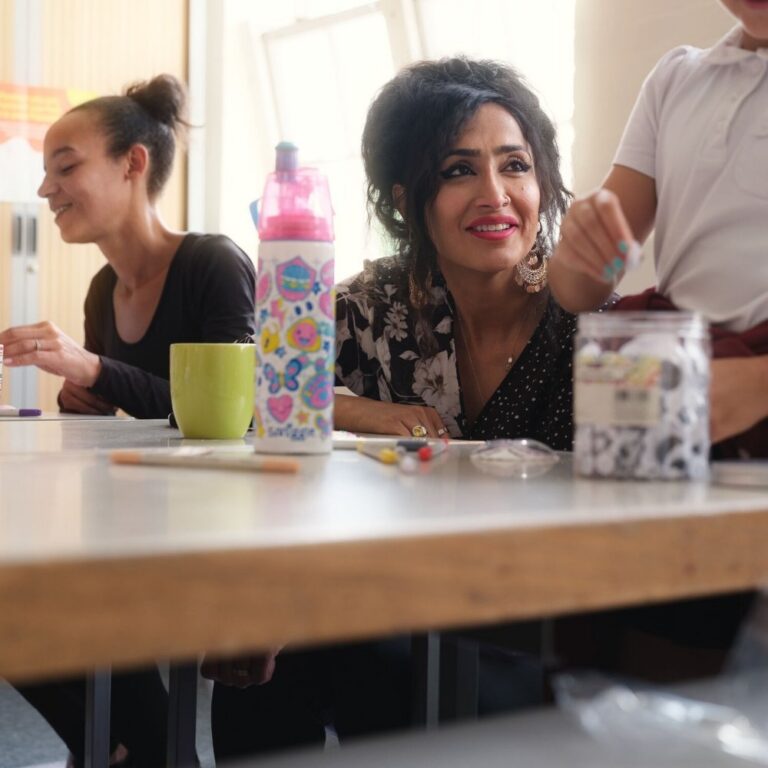
Two women sat at a table. One is looking up at a child standing by her side.

The School & Family Works

Bringing parents, teachers and mental health experts together to support children.

Children thrive when the adults surrounding them work together to meet their needs. This wider support network is even more crucial for children who are struggling.

Mark Griffiths is the founder and CEO of The School & Family Works – a charity supporting vulnerable children at 12 London schools, including Old Oak Primary School. He says, “It’s about getting the right people in the room – the child, the parent, the school representative and a mental health expert – who all work together as a community over time. Together, they intentionally set about righting something that has gone off kilter.”

Rather than support individual families in silo, the charity brings eight families together at a time for Family Group, led by a trained therapist. It’s a safe space where children and adults can discuss challenges, offer mutual support and advice, and celebrate achievements.

Mark explains, “It’s about welcoming people, not judging them. Parents want to support their children, but they don’t necessarily have the models for that. If you can engage people who have shared aims, and they’re honest and committed, then those multiple perspectives can be a real bonus. Families help families.”

Some of the children who come to Family Group have had adverse childhood experiences, as have their parents, and they’re often disadvantaged in a number of other ways. Mark says, “Life is really hard for these families. We see poverty and discrimination. Children fall through the gaps and can be blamed for the difficulties that they’re presenting, when actually their behaviour is just a manifestation of the difficulties in the wider systems around them. If we can enable change in the system – the school system, the family system, and the relationship between those two systems, then lots of new possibilities open to that child, and they’re no longer locked in this particular way of responding.”

The group may talk about challenges that the children are experiencing, such as difficulty regulating their emotions, and discuss coping mechanisms and tools that the children and their families can use. Mark adds, “We’ll discuss things that have happened that week, why they happened and what could be done differently next time.”

As one child shares, “What’s made it work? Telling people what our problems are instead of leaving them behind and making it worse. You tell someone what your problems are and they get solved. We help other people by telling them stuff they can do. You learn about yourself.”

As the child learns, so too do the parents/carers. They’re able to reflect on their own parenting style, break generational patterns that they may not have realised they were holding onto, grow in confidence and build closer bonds with their children.

The adults stay in the group for around 45 minutes after the children have gone back to class, so they can reflect on the session. As trust within the group increases, a parent may feel safe enough to open up about a challenge that they have experienced, such as something that happened in their own childhood, which is impacting their parenting. Mark explains, “Isolation is a really common feature and sometimes parents have experiences that they can’t really talk about outside of the group. As one person shares, another shares and it creates a feeling of safety where people can articulate their experiences and be listened to.”

One Family Group parent says, “I cannot express well enough in words how much good it has done me, sharing wisdom, companionship, experiences, strategies, grief, fears and laughs in such a close, open, honest, nurturing and safe environment.”

Family Group isn’t a quick fix. It requires time, commitment and willingness from each child’s parents/carers. The average length that a family stays in a group is 18 months. When they feel ready to move on, they can, if they wish, join a Parent Graduate Group and continue to receive mutual peer support. A new family will then join the Family Group, benefitting from the experience of families who are further along their journey.

While the group’s members change, the therapist stays the same. Mark says, “We build this sense of safety and community, offer that experience of belonging, and deliver it consistently. You can’t create that kind of level of relational safety without consistency because people will only learn to trust in you over time.”

The benefits of the style of therapy offered by Family Group are numerous. Children learn to better understand and regulate their feelings. At the same time, parents learn tools for guiding their children. As a result, the key relationships in the child’s life, with parents/carers, siblings, teachers and peers, improve. The child gains confidence, and they feel happier, less anxious and more settled. Their school attendance often improves, and they have greater motivation and higher aspirations.

You can hear from the children just how much Family Group helps them by watching this video:

Hammersmith United Charities grants

The School & Family Works recently received a £12,000 grant to help fund its work at Old Oak Primary School. If you want to apply for a grant for your community organisation, you can find out more here. Please complete our Eligibility Quiz before applying and then contact us at grants@hamunitedcharities.com to tell us about your project.

Find out how to apply

Read More ...
The backs of three girls. They are jumping in the air outside the Bush Theatre. Their hoodies say White City Theatre Project

White City Theatre Project

Building confidence, creativity and a sense of belonging

Lots of young people with their backs to the camera. Their hoodies say White City Theatre Project

Drama is more than a creative outlet. It’s a chance to show your personality, build your confidence, try things that might be outside your comfort zone, and explore a different side of yourself. However, tight budgets and a focus on core subjects have seen many schools significantly reduce arts subjects, including drama.

Lucy Foxell, Chief Executive & Founder of White City Theatre Project (WCTP), shares, “Young people aren’t getting the chance to take part in creative arts. Drama departments have folded. Phoenix Academy, for example, had a great drama department but now it’s gone and the students have nothing.”

While some families can pay for their children to attend drama clubs outside of school, others cannot. What’s more, it’s not just drama workshops that these children miss out on. Young people in the borough often struggle to find spaces to socialise and have fun for free, in an environment where they feel safe and protected.

The White City Theatre Project offers that safe, supportive space. At its youth theatre, children and young people can explore their love of drama, make friends and be themselves. And it doesn’t cost them a thing.

As one participant says, “Everyone takes you in, no matter who you are or what the circumstances. It is an escape from boring reality and into the world of imagination and creativity. There’s always someone to speak to and ways to have fun.”

The backs of three girls. They are jumping in the air outside the Bush Theatre. Their hoodies say White City Theatre ProjectYouth theatre workshops are held at the Bush Theatre each week, split into junior and senior sessions. While these sometimes include scripted performances, mostly the focus is on the young people’s own creativity. Lucy says, “It’s about them finding their voice through the power of theatre. They’re coming up with the ideas. They can say what they want and people can hear them.”

The national school curriculum emphasises progression and exam results, which can be demoralising for pupils who don’t achieve high marks and commendations. One of the beautiful things about drama is that it gives children and teenagers who may not excel in other areas the opportunity to show what they can do. Lucy says, “We’re trying to give these young people a chance. They’re often those who fall under the radar, who might not get on academically, who might not be sporty, who might struggle making friends. They don’t fit into many boxes, but actually, drama really works for them.

“What’s incredible about theatre is that it brings people together. It’s a very unifying way of working. We have quite a wide age span in our groups, and the older ones support the younger ones. They have to learn to work as an ensemble. They have to commit, learn their lines, turn up, and support each other.”

WCYT members are able to see the power of theatre firsthand, as they often receive free or heavily subsidised tickets for professional plays. They also take part in Connections – a nationwide project by the National Theatre – and other performances.

While WCTP doesn’t have an adult theatre group, the young people do often return as volunteers or even gain paid work supporting WCTP’s schools programme – ReAct.

ReAct

More than 800 Year 8 pupils take part in ReAct workshops each year, across several different secondary schools. Ten students from each school are then invited to take part in a longer series of workshops with professional theatre makers.

Working with their practitioner teams, the young people devise, develop and rehearse short plays around a theme over 10 weeks during the summer term. The programme culminates in the ReAct Festival, where they perform at the Lyric Theatre to an audience of family, friends and community members.

The WCTP team often see significant changes in the pupils over the course of the 10-week programme. One recent participant shares, “I could barely make eye contact because I was so shy, but now I’ve gotten better at talking to people.”

Emma Gerrard, Dramatherapist, adds, “Being vulnerable, being ready to take risks, to open up, maybe show parts of yourself that don’t always feel comfortable, to rely on each other – these are major life skills.”

Hammersmith United Charities’ funding

We’ve supported WCTP several times over the years, including with £15,000 in our July 2025 grants round. Lucy says, “HUC are part of this community. They were the first charity that funded us. A lot of the big funders want a project with a beginning and an end date. Our focus is on long-term support, so it’s great to have a funder that understands what we’re doing, the transformational effect it has on young people, and why it’s so important that we keep going.”

Changing lives

WCTP’s primary goal isn’t to develop the next generation of actors. As Lucy says, “We’re trying to build confidence, build life skills and communication skills, and open their eyes to the arts. Theatre opens doors and broadens their horizons. They gain a sense of belonging.”

Some youth club members do, however, go onto drama school or to jobs within the arts sector. Lucy shares, “One girl who’s just gone off to drama school has been with us since she was nine. She went through a very difficult time in her teens and the group became a sort of a home, a family, a place of support. She said it changed her life.”


Find out more

If you know someone who’s interested in joining WCTP’s youth theatre, please direct them to the charity’s website to find out more.

Read More ...
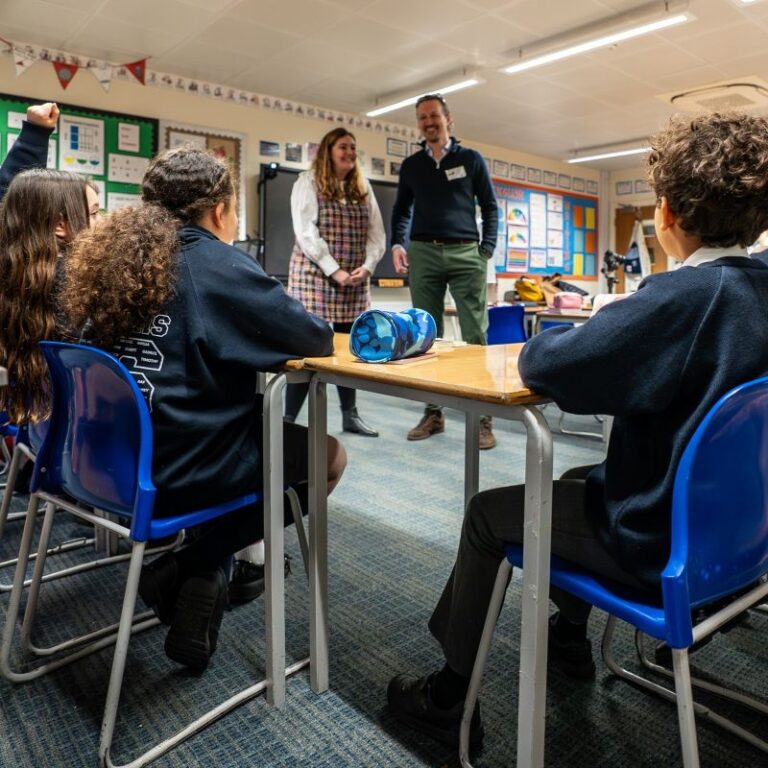
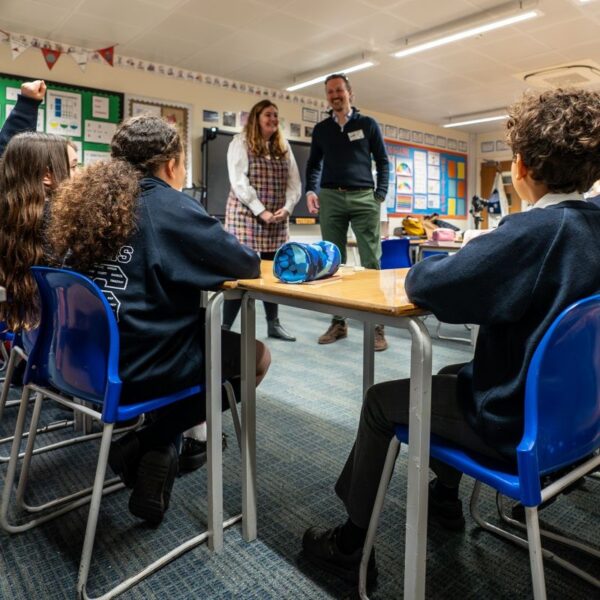
Children in a classroom. They appear to be interested in what the adults are saying. One girl has her hand raised.

Lawyers4Learners

Helping children become more confident at speaking up

Children in a classroom. They appear to be interested in what the adults are saying. One girl has her hand raised.Communication is a crucial life skill. Being able to calmly and confidently get your point across is vital throughout life – in school, workplaces and with friends and family members. What’s more, as Louise Jones, Director of Lawyers4Learners, says, “Children who can articulate their feelings are better equipped to stand up for themselves.”
Lawyers4Learners runs workshops with Year 6 children across Hammersmith. Over four sessions, children take part in mock trials designed and led by volunteer lawyers. As well as becoming more confident at speaking in front of people, the children learn critical thinking, debating and negotiation skills. One child said of the programme, “At the beginning, I probably needed a bit of persuading to get up there, but now I wouldn’t give it a second guess if someone asked me. I would just go up there and I’d start speaking.”

Louise launched the charity with barrister Caley Wright. The pair saw the gap between what was being offered in state schools compared to private schools. Louise adds, “There can also be a big gap between state schools in different areas. The schools we go to are usually under resourced. For lots of the children, English isn’t their first language and there aren’t many opportunities for them to practise any kind of formal speaking. The teachers are doing a brilliant job at doing the things that have to be done, but there isn’t much time for extras like public speaking.”

Louise and Caley realised that lawyers, who are skilled in oracy, argument and persuasion, could help to close the gap. They trialled Lawyers4Learners in five schools. Two years later, the charity is already working with 24 schools. It’s aiming to reach 45 by the end of this academic year, benefitting 2,000 children, including 330 in Hammersmith.

To realise its ambition, the charity has accepted a £5,000 grant from Hammersmith United Charities. Louise says, “We rely heavy on grants. Without the HUC grant, we couldn’t afford to extend our work to Kenmount Primary School and St John XXIII.”

Lawyers4Learners’ sessions are designed to be fun and interactive. Louise says, “It’s not just about standing up and doing a speech. It’s about speaking in a group, coming up with your argument, listening to other people’s points and maybe changing your mind. In a normal classroom situation, the teacher is speaking 85% of the time, and the children just 15% of the time. Our sessions are definitely the other way around! There are opportunities to debate and negotiate. Children who are able to look at both sides of an argument are more likely to grow into young adults who are fair and empathetic.”

78% of the children who take part say they feel more confident speaking publicly after the workshops. Louise shares, “We see children who are too frightened to speak in the first session, but by the end of session four, they’re standing up straight, taking a deep breath, and speaking. ‘B’ stood out for her quietness. English wasn’t her first language, so she avoided speaking in front of others. She avoided eye contact and deferred to more confident peers. In the workshops, she was encouraged to take small, achievable steps forward each week.

“By the fourth session, B’s transformation was striking. She stood tall in front of her classmates and presented her points. Her new confidence impacted across her wider school life. Teachers noticed she was reading aloud more willingly and contributing confidently to group discussions.”

Volunteer with Lawyers4Learners

Lawyers4Learners relies on volunteers to deliver the sessions. Louise shares, “These people are amazing. The children get so much out of it and it brings something different to the classroom. It does a lot for the children’s confidence to stand up, say their points, and then get praised by a professional lawyer. It’s really good for their self-esteem.”

As well as lawyers, Louise would love to hear from people who could volunteer to help with PR to raise the charity’s profile and reach more people.

If you want to get involved, please contact Lawyers4Learners through their website.

“It was amazing! I loved having the opportunity to act as the prosecution and the jury. The scenarios were realistic and there was no obvious decision, which made it more exciting. I now feel more confident speaking in front of my classmates and teachers.”

Read More ...
View More