White City Theatre Project
Building confidence, creativity and a sense of belonging
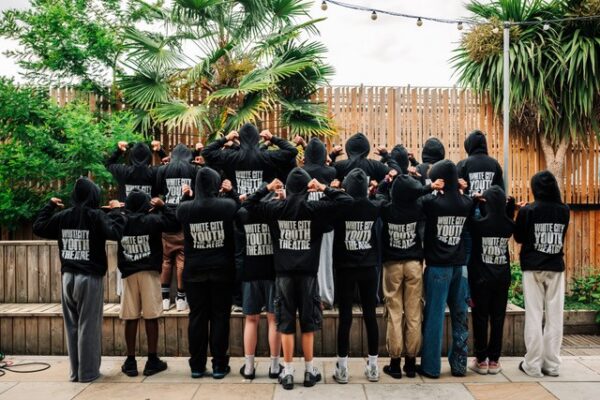
Drama is more than a creative outlet. It’s a chance to show your personality, build your confidence, try things that might be outside your comfort zone, and explore a different side of yourself. However, tight budgets and a focus on core subjects have seen many schools significantly reduce arts subjects, including drama.
Lucy Foxell, Chief Executive & Founder of White City Theatre Project (WCTP), shares, “Young people aren’t getting the chance to take part in creative arts. Drama departments have folded. Phoenix Academy, for example, had a great drama department but now it’s gone and the students have nothing.”
While some families can pay for their children to attend drama clubs outside of school, others cannot. What’s more, it’s not just drama workshops that these children miss out on. Young people in the borough often struggle to find spaces to socialise and have fun for free, in an environment where they feel safe and protected.
The White City Theatre Project offers that safe, supportive space. At its youth theatre, children and young people can explore their love of drama, make friends and be themselves. And it doesn’t cost them a thing.
As one participant says, “Everyone takes you in, no matter who you are or what the circumstances. It is an escape from boring reality and into the world of imagination and creativity. There’s always someone to speak to and ways to have fun.”
 Youth theatre workshops are held at the Bush Theatre each week, split into junior and senior sessions. While these sometimes include scripted performances, mostly the focus is on the young people’s own creativity. Lucy says, “It’s about them finding their voice through the power of theatre. They’re coming up with the ideas. They can say what they want and people can hear them.”
The national school curriculum emphasises progression and exam results, which can be demoralising for pupils who don’t achieve high marks and commendations. One of the beautiful things about drama is that it gives children and teenagers who may not excel in other areas the opportunity to show what they can do. Lucy says, “We’re trying to give these young people a chance. They’re often those who fall under the radar, who might not get on academically, who might not be sporty, who might struggle making friends. They don’t fit into many boxes, but actually, drama really works for them.
“What’s incredible about theatre is that it brings people together. It’s a very unifying way of working. We have quite a wide age span in our groups, and the older ones support the younger ones. They have to learn to work as an ensemble. They have to commit, learn their lines, turn up, and support each other.”
WCYT members are able to see the power of theatre firsthand, as they often receive free or heavily subsidised tickets for professional plays. They also take part in Connections – a nationwide project by the National Theatre – and other performances.
While WCTP doesn’t have an adult theatre group, the young people do often return as volunteers or even gain paid work supporting WCTP’s schools programme – ReAct.
ReAct
More than 800 Year 8 pupils take part in ReAct workshops each year, across several different secondary schools. Ten students from each school are then invited to take part in a longer series of workshops with professional theatre makers.
Working with their practitioner teams, the young people devise, develop and rehearse short plays around a theme over 10 weeks during the summer term. The programme culminates in the ReAct Festival, where they perform at the Lyric Theatre to an audience of family, friends and community members.
The WCTP team often see significant changes in the pupils over the course of the 10-week programme. One recent participant shares, “I could barely make eye contact because I was so shy, but now I’ve gotten better at talking to people.”
Emma Gerrard, Dramatherapist, adds, “Being vulnerable, being ready to take risks, to open up, maybe show parts of yourself that don’t always feel comfortable, to rely on each other – these are major life skills.”
Hammersmith United Charities’ funding
We’ve supported WCTP several times over the years, including with £15,000 in our July 2025 grants round. Lucy says, “HUC are part of this community. They were the first charity that funded us. A lot of the big funders want a project with a beginning and an end date. Our focus is on long-term support, so it’s great to have a funder that understands what we’re doing, the transformational effect it has on young people, and why it’s so important that we keep going.”
Changing lives
WCTP’s primary goal isn’t to develop the next generation of actors. As Lucy says, “We’re trying to build confidence, build life skills and communication skills, and open their eyes to the arts. Theatre opens doors and broadens their horizons. They gain a sense of belonging.”
Some youth club members do, however, go onto drama school or to jobs within the arts sector. Lucy shares, “One girl who’s just gone off to drama school has been with us since she was nine. She went through a very difficult time in her teens and the group became a sort of a home, a family, a place of support. She said it changed her life.”
Find out more
If you know someone who’s interested in joining WCTP’s youth theatre, please direct them to the charity’s website to find out more.



 i-MATTER: Health & Wellbeing & Tackling Inequalities